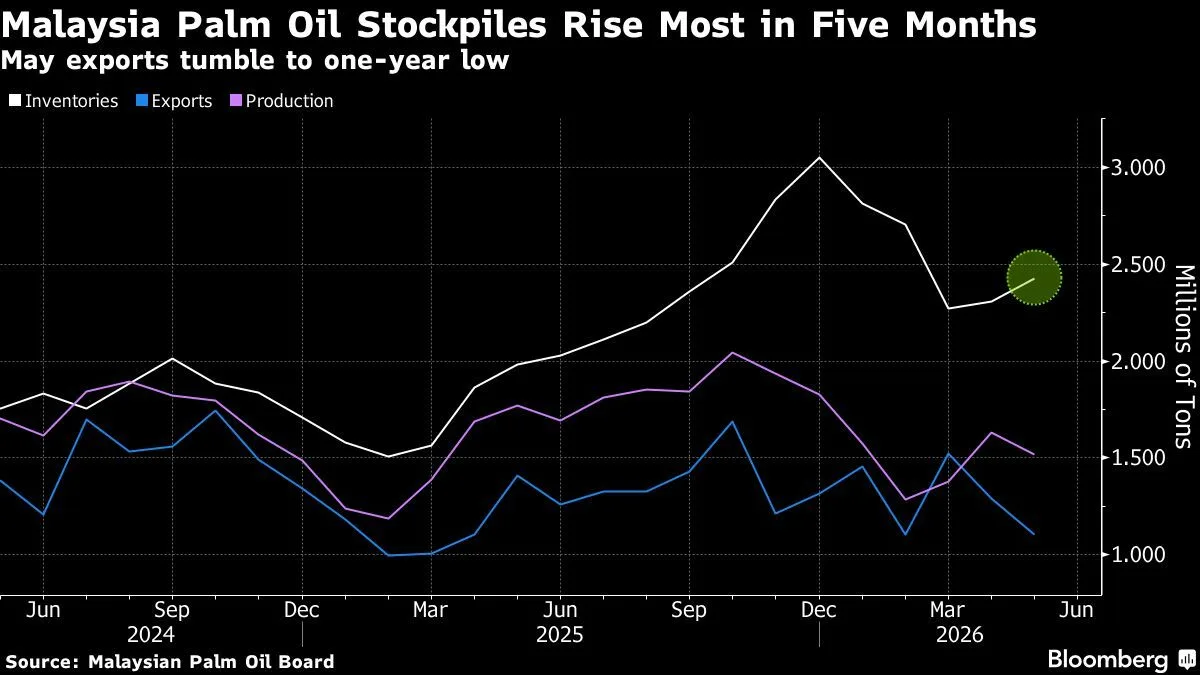
Malaysia's palm oil stockpiles climbed 5.2% in May to 2.43 million tonnes, marking the fastest increase in five months and more than double the 2.2% rise forecast in a Bloomberg survey [1, 2]. The surge in inventories came as Malaysian palm oil exports fell about 14% to a one-year low of approximately 1.1 million tonnes, while crude palm oil production declined 7% to 1.52 million tonnes during the month [1, 2].
Imports of palm oil into Malaysia also dropped sharply, with one source reporting a 42% fall to 43,816 tonnes and another noting a significant decline without specifying the percentage [1, 2]. The export slump is linked to buyers favoring cheaper Indonesian palm oil following Jakarta's recent overhaul of export regulations [1, 2].
Indonesia started a transitional phase of new export controls in June, with a formal review planned for around September. During this period, companies remain allowed to transact exports, encouraging exporters to accelerate shipments before tighter controls take effect [1, 2].
Anilkumar Bagani, head of research at Mumbai-based Sunvin Group, said, "Indonesian palm oil exporters are willing to ship as much palm oil as they can before the new export monitoring system starts operating at full scale." He added that "Malaysia is facing intense competition from Indonesia, which is selling cheaper-priced processed palm products" [2].
Top buyers such as India and China are increasingly favoring Indonesian palm oil due to more attractive pricing, intensifying regional market competition [1, 2]. Bagani noted potential inventory buildup as buyers may be preparing for supply constraints caused by Indonesia's B50 biodiesel mandate and El Nino weather impacts in coming months [2].
The shift in trade flows and pricing dynamics has put pressure on Malaysia’s palm oil sector in May, reflected in shrinking exports and rising stockpiles. The next key development will be the review of Indonesia’s export control framework around September, which could influence supply and pricing further [1, 2].