MSCI Inc will announce its final decision in June 2026 on whether to downgrade Indonesia from emerging market (EM) to frontier market status, a move that could trigger capital outflows of up to $13 billion from global funds [1, 2].
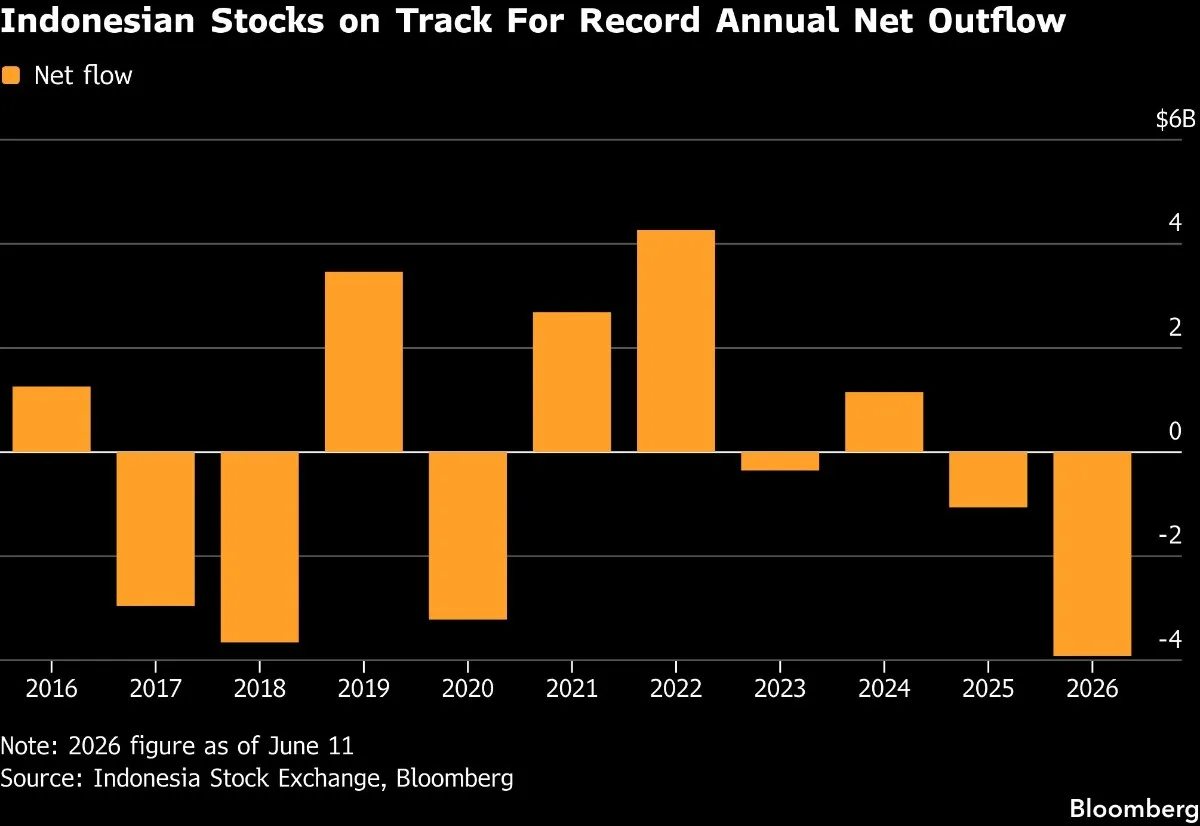
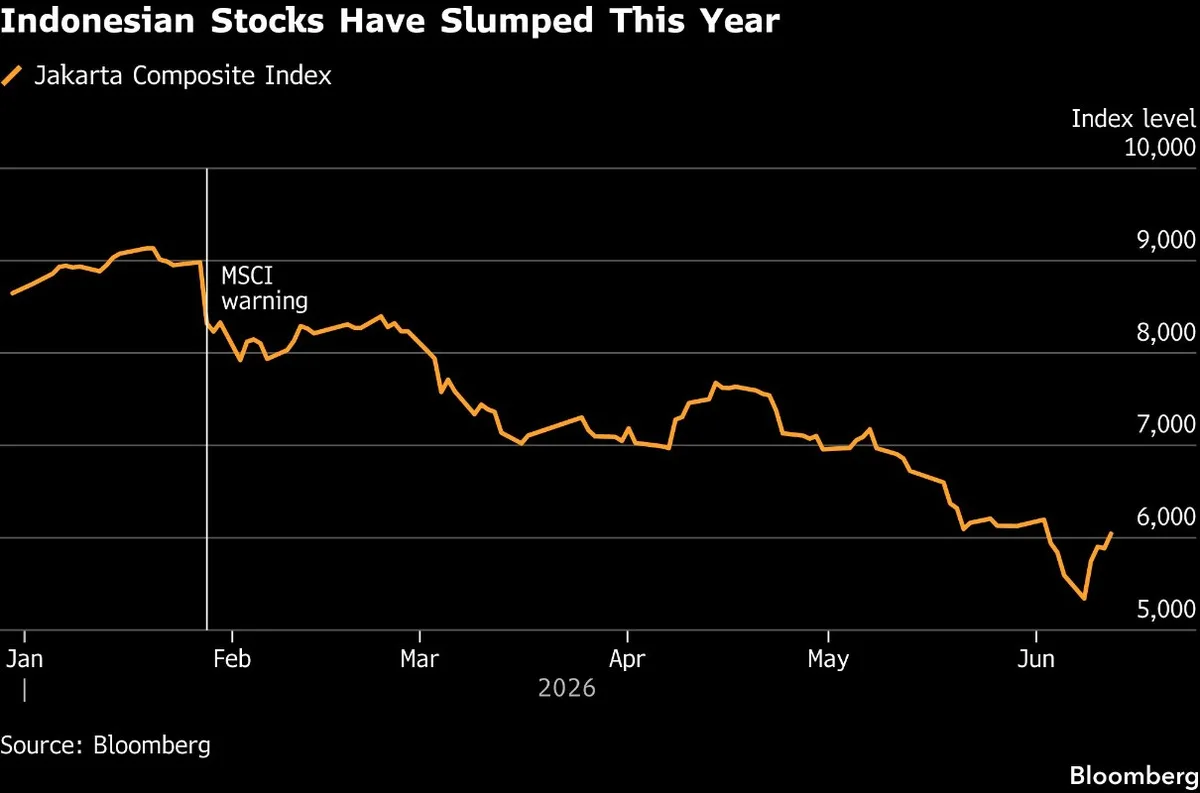
Indonesia’s stock market has already felt pressure, with the Jakarta Composite Index falling between 28% and 31% in 2026 amid concerns over the MSCI decision and questions about President Prabowo Subianto’s economic management [1, 2]. Foreign investors have pulled approximately $4 billion out of Indonesian stocks so far this year [1, 2].
The rupiah currency is also under stress, hitting record lows due to high oil prices and a widening government budget deficit [1, 2]. Investors have been unsettled by increasing state intervention in commodity exports and a corruption probe linked to the former head of Prabowo’s free meals program [1, 2].
MSCI could decide to keep Indonesia’s EM status after adjustments, keep the market under review, or go ahead with the downgrade to frontier status, which is considered the worst-case scenario [1]. A downgrade would be particularly damaging because capital has recently started returning to emerging markets, and funds generally have limited allocations to frontier markets [1].
MSCI’s decision may also prompt similar actions from other index providers such as FTSE Russell and S&P Dow Jones Indices [1].
Albert Budiman, CIO of UOB Asset Management Indonesia, noted, “There’s already progress in improving transparency, although nobody knows if that’ll be enough for MSCI” to maintain Indonesia’s EM status [1].
The MSCI announcement scheduled for June will be closely watched by investors assessing Indonesia’s market outlook amid ongoing political and economic challenges [1, 2].