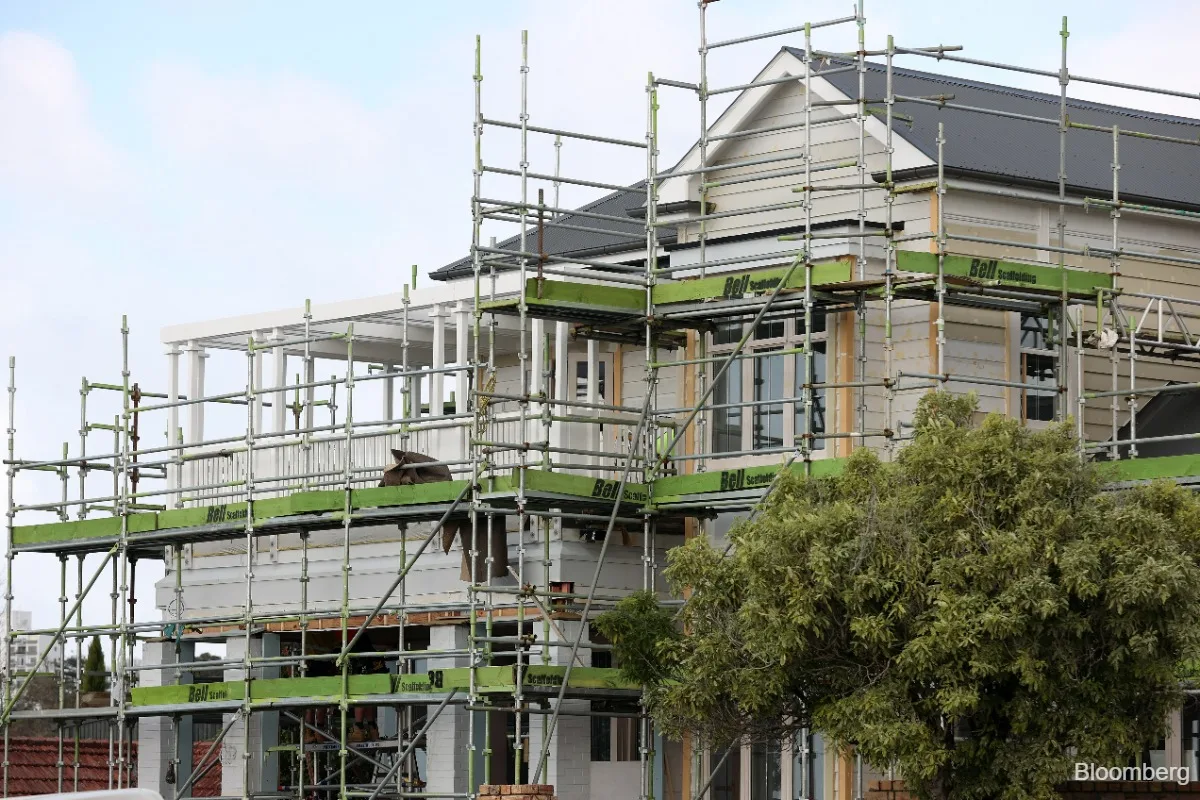
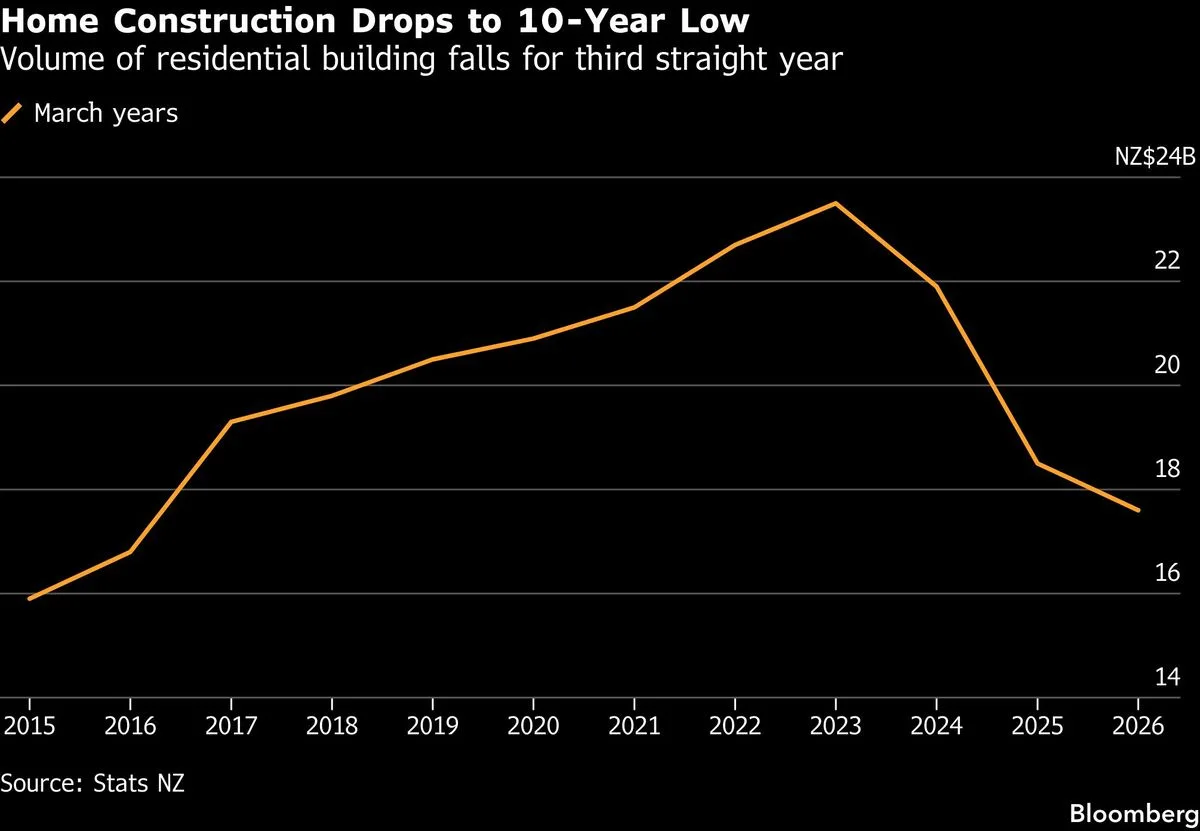
New Zealand's home building sector declined 5% to NZ$17.6 billion in the 12 months through March 2026, marking the lowest March-year total since 2016 and a 25% drop from the 2023 peak [1, 2]. Non-residential construction also fell 9.9% to its lowest level in four years. Overall building work dropped 6.9%, hitting a 10-year low [1, 2].
Economists attribute the construction slump to rising interest rates and global uncertainty, which have weakened buyer confidence and suppressed demand for new homes and renovations [1, 2]. Soft house prices combined with increasing building costs have made developers cautious about launching new projects. "We expect to see home building activity turn higher through the latter part of the year, with the number of new dwellings consented up 11 per cent over the past year," said Satish Ranchhod, senior economist at Westpac Auckland [1]. He added that rising costs and soft prices may restrain momentum into 2027 as economic uncertainty persists.
Despite the recent construction decline, new dwelling consents rose 11% in the past year, suggesting potential recovery in the sector later in 2026 [1, 2]. The Reserve Bank forecast 1% GDP growth for the first quarter of 2026 but expects zero growth in the three months to June, affected by economic headwinds including a global energy shock expected to hit New Zealand hardest in the second quarter [1, 2]. Retail sales and net exports have provided some positive contribution to GDP growth so far.
Statistics New Zealand released the report confirming construction declines and economic impacts on June 4, 2026 [1, 2]. GDP figures for the quarter ending June are expected to be released on June 18, 2026, providing further clarity on the economic outlook [1, 2].