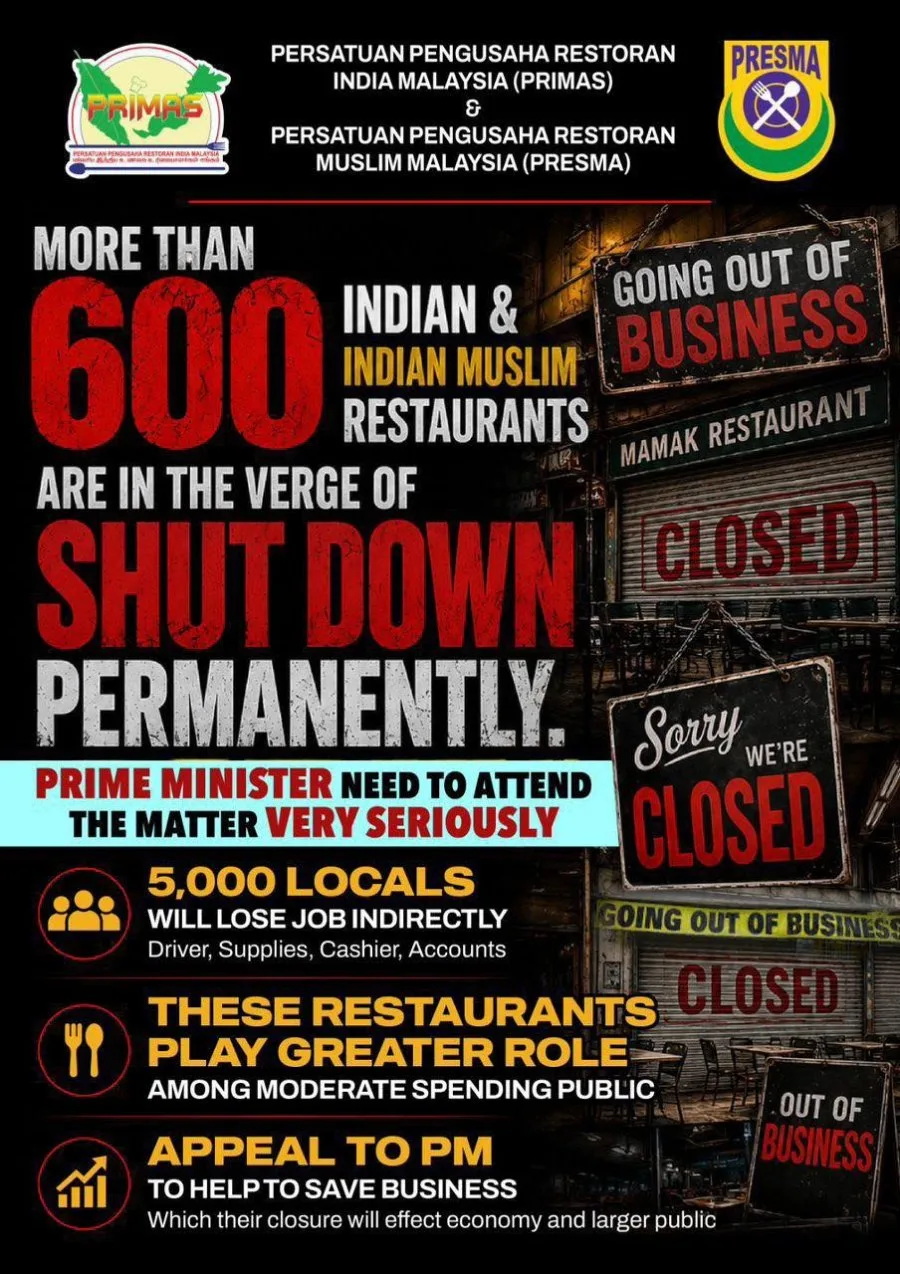
More than 600 Indian and Indian Muslim (mamak) restaurants in Malaysia face the threat of permanent closure amid worsening labour shortages, industry groups said [1, 2, 3]. Approximately 5,000 local Malaysians who work in these eateries—including drivers, suppliers, cashiers, and administrative staff—could lose their livelihoods if closures occur [1, 2, 3].
The Malaysian Indian Restaurant Owners Association (PRIMAS) and the Malaysian Muslim Restaurant Owners Association (PRESMA) have urged the government to act swiftly to address the growing shortage of workers [1, 3]. They stressed the critical role these restaurants play in providing affordable meals and supporting local economic activity [1, 3].
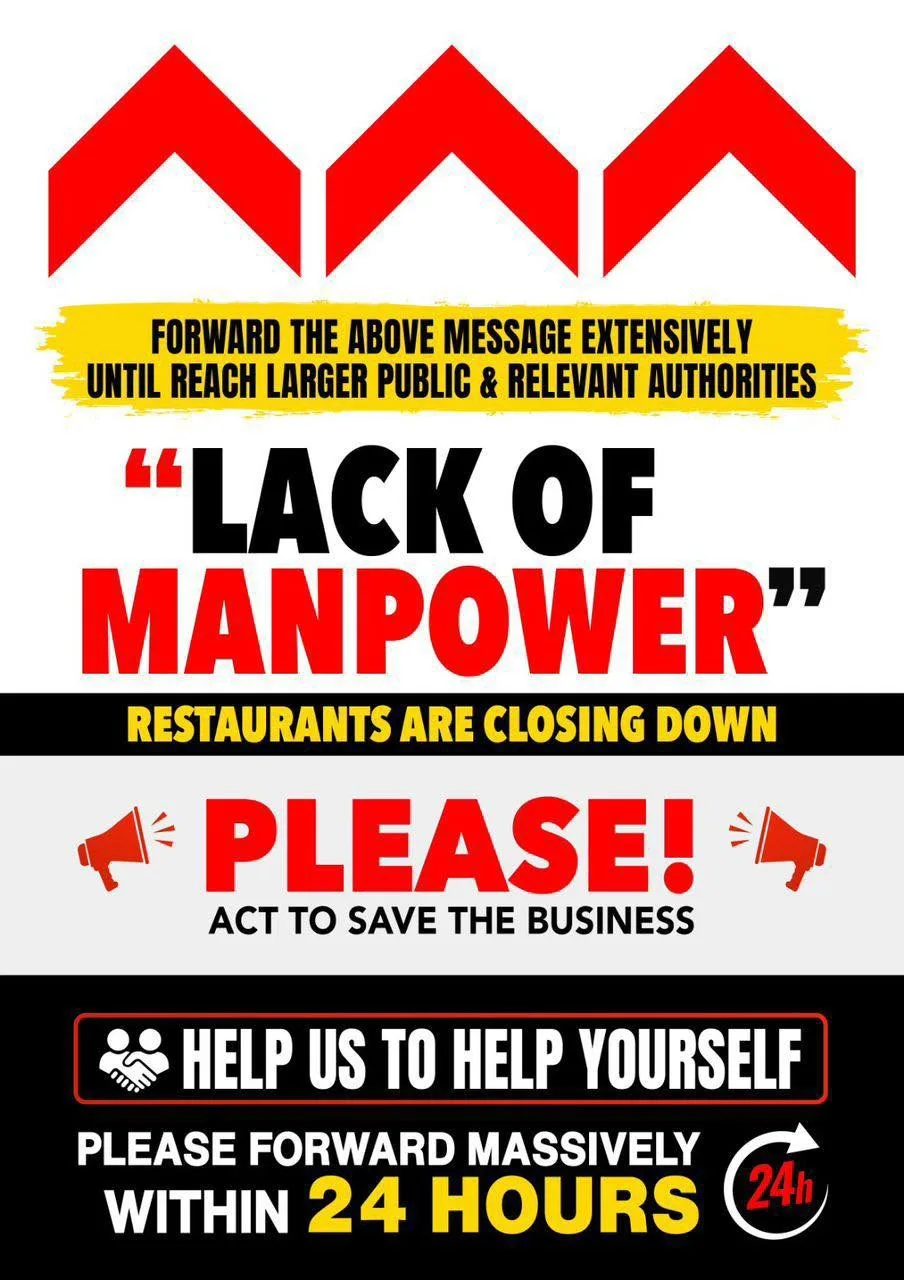
PRIMAS has specifically called on Prime Minister Datuk Seri Anwar Ibrahim to intervene in resolving the issue, citing increasing operational difficulties and burdens on restaurant operators [1, 3]. A poster raising awareness about the risk of closures quickly went viral on social media, drawing public attention to the crisis within 24 hours [1, 3].
On May 31, MCA acting president Datuk Mah Hang Soon called on the government to take practical steps, including expediting foreign worker approvals, encouraging local hiring through incentives, reviewing foreign worker quotas, promoting digital transformation in restaurants, and setting up a special committee to address labour supply in the sector [2]. He said, "The government must face the industry's difficulties and take more proactive and practical measures to ensure businesses can continue operating, protect employees' jobs, and maintain market stability and economic vitality" [2].
The issue first came to wider attention on May 29, when PRIMAS posted on Facebook about the severe labour shortage and risk to over 600 Indian and mamak restaurants [1]. Media reports and social media followed, amplifying calls for urgent government intervention [3].
Restaurant owners and labor advocates await concrete government steps to resolve the shortage and prevent closures that could disrupt the livelihoods of thousands and reduce affordable dining options.