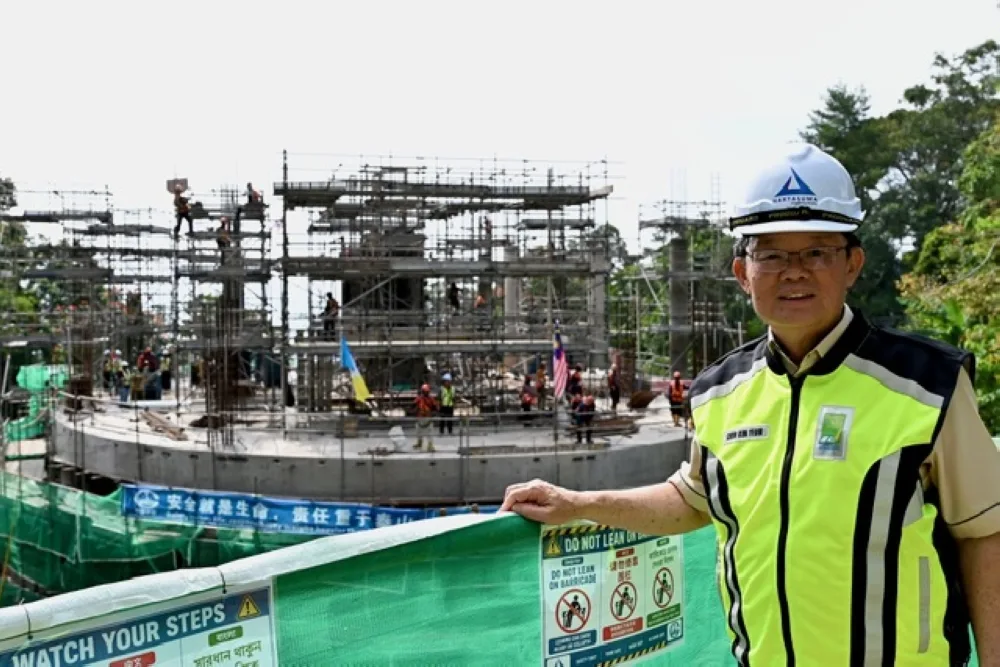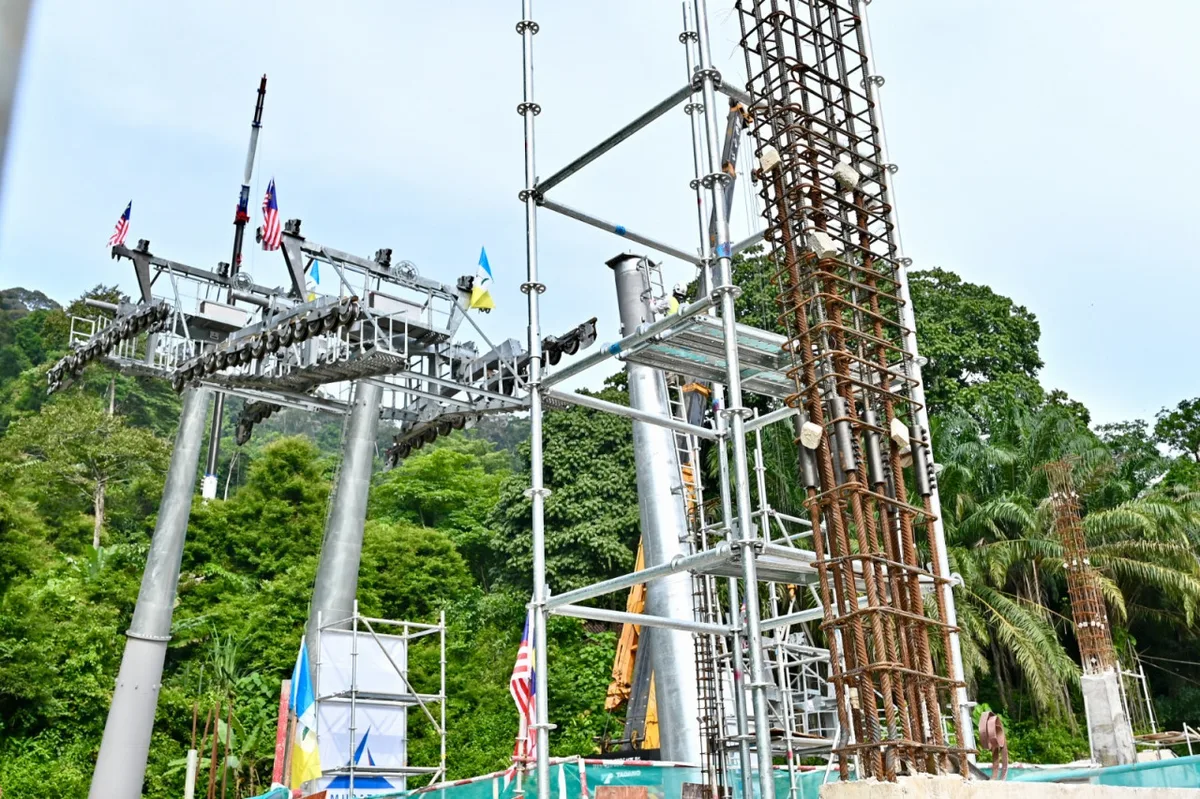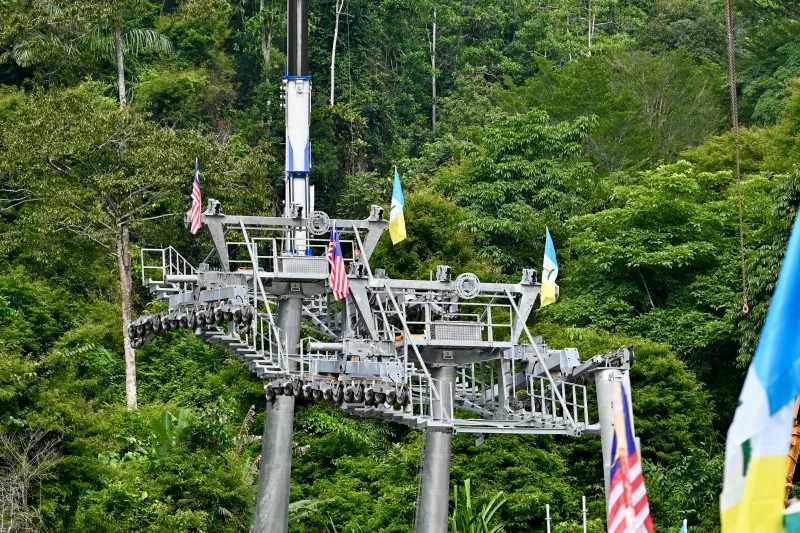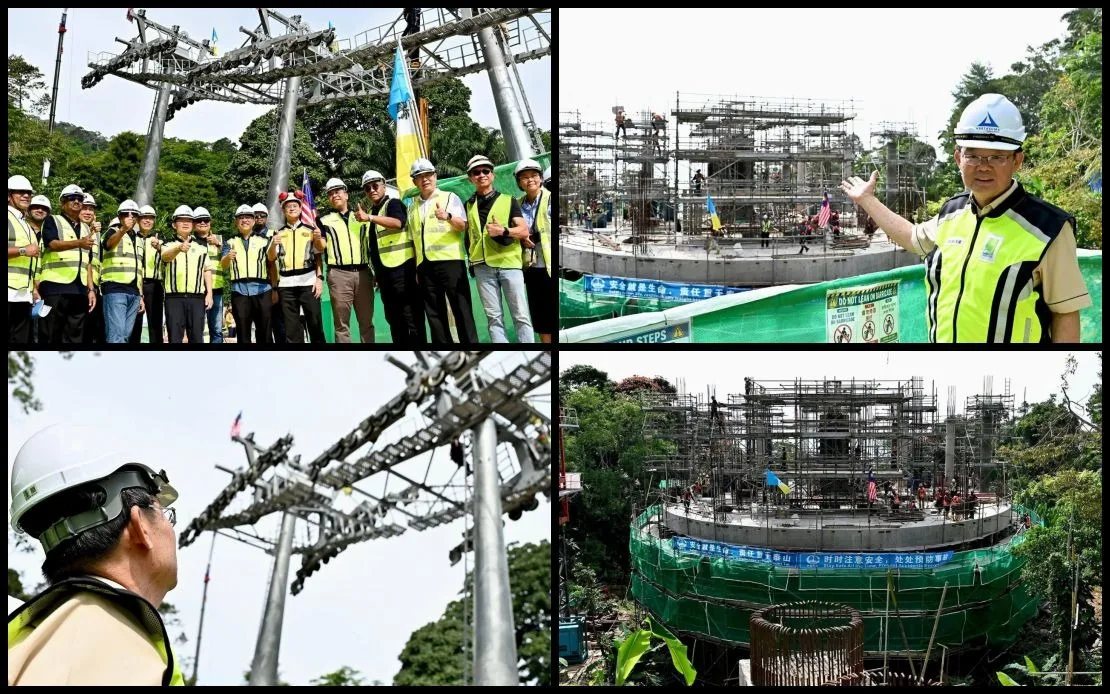
The Penang Hill cable car project has reached 32 per cent completion as of today, August 21, 2026. All underground works are finished, and the project has entered the above-ground construction phase, including the installation of the third tower along the route running from Botanical Gardens to the Penang Hill summit [1, 2, 3].
The cable car route spans approximately 2.7 to 2.73 kilometres and features three main stations: Garden Station, Turn Station, and Hill Station. The system is designed to carry up to 1,400 passengers per hour in each direction, providing a 10-minute journey time between Botanical Gardens and the hilltop [1].
Underground works were completed manually due to challenging geological conditions and strict technical requirements that prohibited the use of heavy machinery [1, 2]. Penang Chief Minister Chow Kon Yeow said, "This shows that the Penang Hill cable car project is now entering a more exciting phase following the completion of all underground works" and added, "We expect the work to progress faster because above-ground construction is easier to control compared with underground works" [1, 2]. He also noted the project "would inject a sense of confidence among the people here that the cable car would indeed become a reality soon" [3].
Additional facilities planned include multi-storey car parking, a commercial plaza near Botanical Gardens, and dedicated bus parking to support visitor access [1].
The project's private implementer is Hartasuma Sdn Bhd, part of the Hartasuma Group [2, 3]. The groundbreaking took place in January 2025, and construction progress has since continued despite initial delays caused by technical assessment during earthworks in the underground phase [2, 3].
Project cost estimates vary, with figures reported at RM200 million, RM245 million, and RM367.2 million by different sources [1, 2, 3].
An alternative cable car route from Teluk Bahang to Penang Hill, about 20 km long, was rejected due to safety and security concerns [3].
Physical construction for the cable car is expected to be completed by August 2027 or late 2027. Operations are targeted to begin in the fourth quarter of 2027 [1, 2, 3].