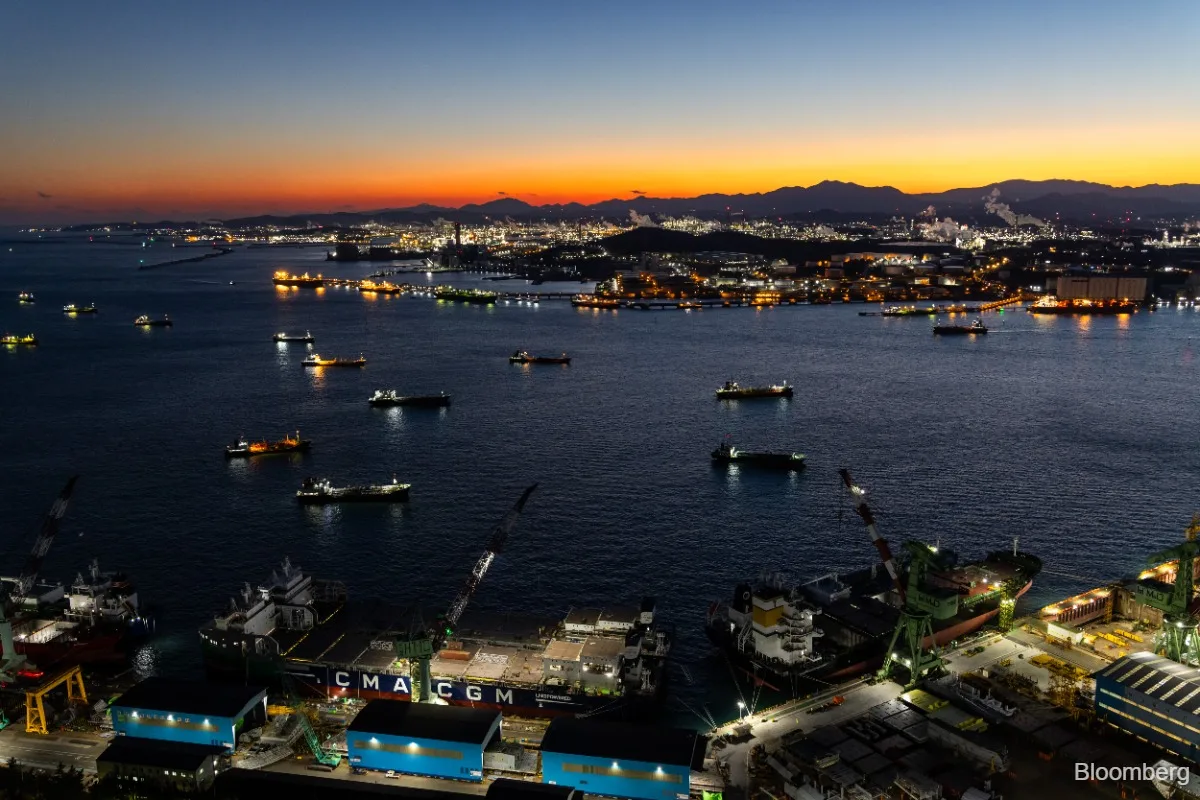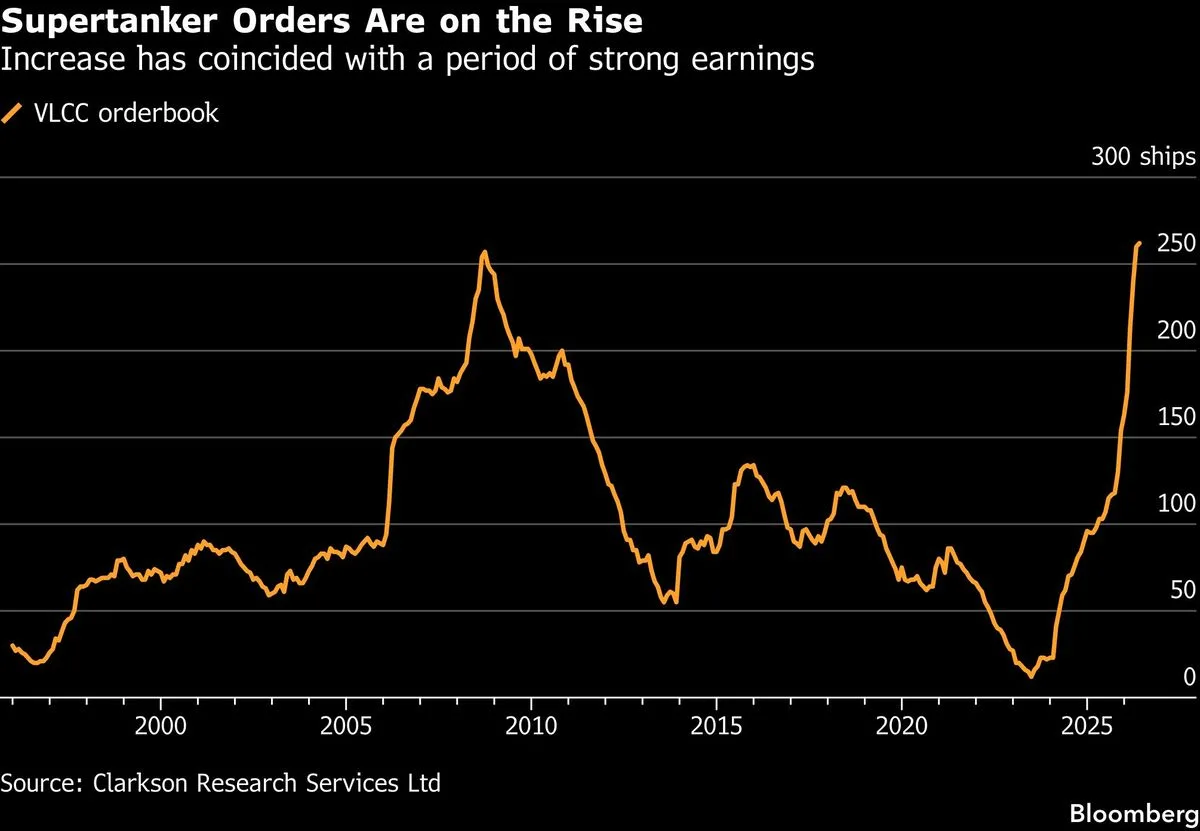
Shipyards around the world currently have 262 giant oil supertankers on order, each with a capacity to carry about two million barrels of crude oil. This surpasses the previous record set in October 2008 amid a tanker market boom linked to geopolitical tensions and supply chain disruptions [1, 2].
Deliveries of these very large crude carriers (VLCCs) are expected to continue through the end of this decade, reflecting long-term shipbuilding trends driven by market demand [1, 2]. The surge in orders follows the outbreak of the Iran war earlier this year when Tehran took control of the strategic Strait of Hormuz. About 9% of the compliant VLCC fleet was effectively locked in the Persian Gulf near the war zone at the conflict’s start [1, 2].
The disruption has slashed available tonnage for crude oil shipments outside the Persian Gulf. Tankers now need to pick cargoes from further away, which has doubled freight charges from their pre-conflict levels. Freight rates have reached record highs of several hundred thousand dollars per day as a result [1, 2].
This market boom has also propelled the tanker sector’s market capitalization. The 15 largest listed tanker stocks have surged to a combined value exceeding US$60 billion since the war began, roughly twice their valuation at the start of the year [1, 2].
However, some caution remains about the sustainability of this boom. Continued blockage of the Strait of Hormuz risks slashing oil cargo flows further, which could eventually reduce tanker earnings if the conflict extends and depresses long-term oil demand. George Economou, a Greek shipping billionaire and founder of TMS Group, said, "It’s temporarily better than when the market boomed in 2004-08. But if it continues, it’s going to be bad for the tankers." [1]
At the industry’s biennial Posidonia conference in Athens in June 2026, the tanker boom and its potential consequences were major topics of discussion [1, 2]. The current orderbook and market activity reflect the sector’s response to these heightened geopolitical risks.
Shipbuilders and industry watchers will monitor tanker deliveries, freight rates, and the geopolitical situation closely as VLCC orders are fulfilled through the decade. The scale of supertanker construction now underway sets a new milestone for the global maritime oil transport industry [1, 2].