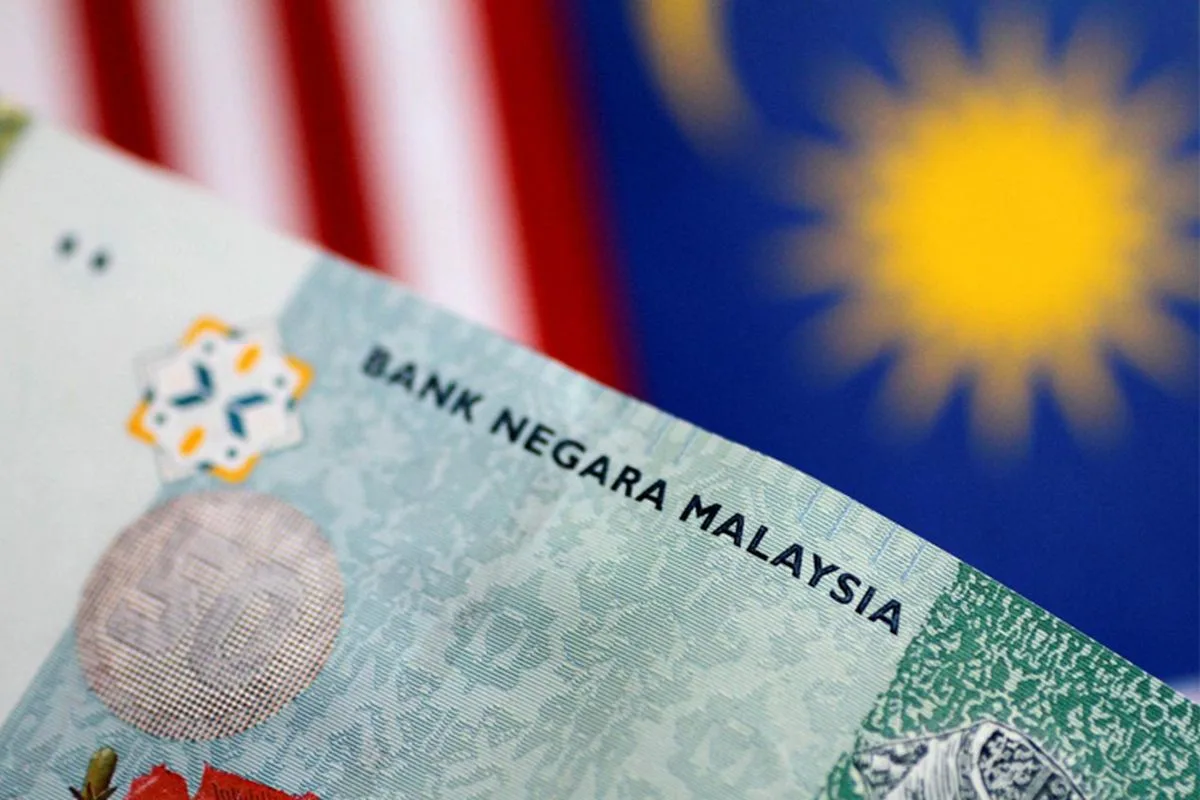
Bank Negara Malaysia’s Monetary Policy Committee (MPC) maintained the Overnight Policy Rate (OPR) at 2.75% during its meeting on September 3, 2026 [1, 2, 3]. The central bank held the rate steady amid strong domestic economic growth and moderate inflation pressures.
On the morning of September 3, the Malaysian ringgit opened firmer against the US dollar, trading at around 4.0385/0455 compared to the previous close near 4.0435/0475 [1, 2]. By market close that day, the ringgit recorded a slight gain, ending at approximately 4.0405/0445 versus the US dollar [3]. The following day, September 4, the ringgit continued to open slightly stronger at 4.0370/0420 [4].
Bursa Malaysia’s benchmark FBM KLCI index also responded positively, rising 6.39 points to close at 1,715.13 on September 3 [5, 6]. Market sentiment ahead of the MPC meeting had been influenced by remarks from US Federal Reserve officials and a softer US dollar, which helped support the ringgit [1, 2, 3, 4]. Mohd Sedek Jantan, director of investment strategy at IPPFA Sdn Bhd, noted that "weaker-than-expected US private-sector job growth strengthened expectations that the Federal Reserve may have greater scope to ease monetary policy" [6].
The ringgit showed mixed moves against other regional and major currencies, strengthening against the British pound, euro, Indonesian rupiah, and Philippine peso but weakening against the Japanese yen, Singapore dollar, and Thai baht from September 3 to 4 [1, 2, 3, 4]. The US Dollar Index (DXY) fell slightly before US nonfarm payroll data were released on September 4-5, lending additional support to the ringgit [1, 2, 3, 4].
Bank Muamalat chief economist Dr Mohd Afzanizam Abdul Rashid described Malaysia’s economy as in a "sweet spot," saying the MPC’s steady OPR amid solid growth and benign inflation "should provide support to the ringgit as BNM has policy flexibility, which can be a selling point for holding more ringgit" [1, 2, 4].
UOB raised Malaysia’s 2026 GDP growth forecast to 5.0%, citing resilient economic performance despite external risks such as the Middle East conflict and El Niño weather patterns. Malaysia posted a strong 6.0% year-on-year GDP increase in Q2 2026, driven by mining, manufacturing, and construction [7]. UOB also projected the ringgit to appreciate gradually, reaching below 4.00 against the US dollar by early 2027 due to robust fundamentals and sound currency management by Bank Negara [7].
The MPC’s decision to hold the OPR rate steady on September 3 leaves monetary policy unchanged for now, with the ringgit showing modest strength amid cautious optimism. Market participants will next watch for upcoming US employment data and Bank Negara’s future policy moves as key factors influencing the ringgit’s trajectory [1, 3, 4].