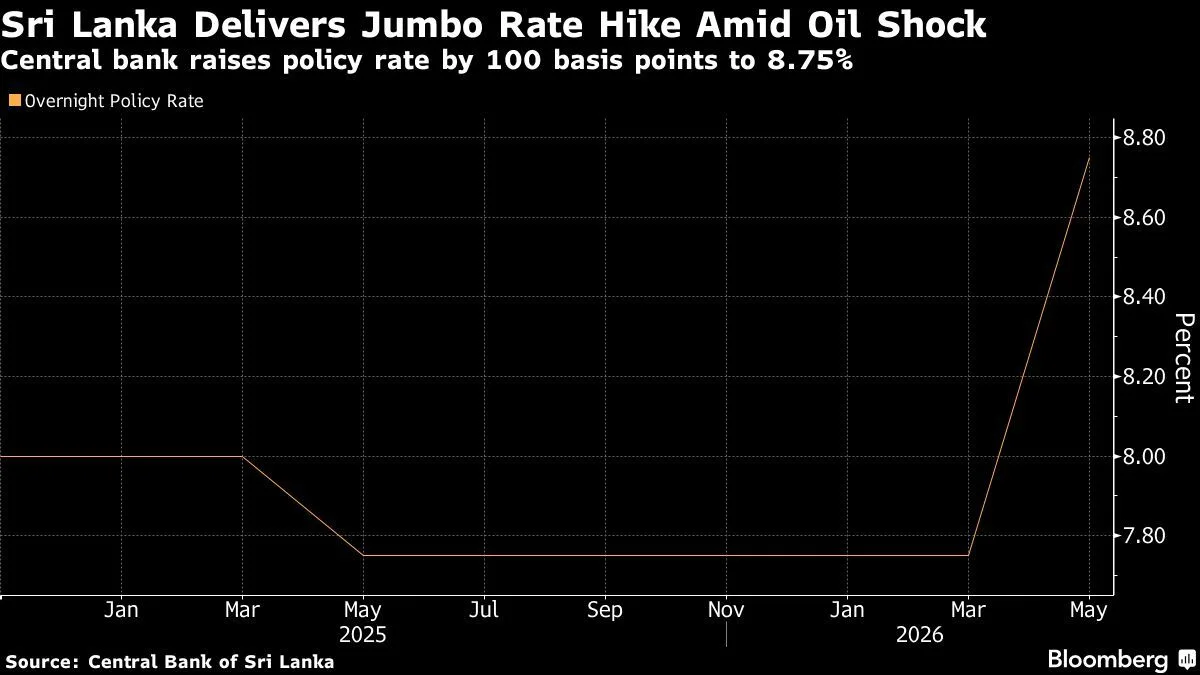
The Central Bank of Sri Lanka increased the overnight policy rate by 100 basis points to 8.75% on May 26, 2026, marking the largest hike in three to four years and the first monetary tightening in three years [1, 2, 3]. The previous rate was 7.75%, and before this, the central bank had cut the rate by 25 basis points in May 2025 to support growth [2, 3].
The rate hike responds to mounting inflation pressures driven by higher energy costs linked to the ongoing US-Israeli war with Iran and a depreciating Sri Lankan rupee [1, 2, 3]. Energy prices surged about 40%, forcing fuel rationing and scheduling public holidays on Wednesdays as a cost containment measure [2, 3].
Sri Lanka's annual inflation jumped from 2.2% in March 2026 to 5.4% in April, surpassing the central bank's 5% target and signalling rising price pressures that require urgent policy action [2, 3]. Concurrently, the Sri Lankan rupee lost about 8.7% of its value since early March 2026, although depreciation pressure has eased recently [2, 3].
Central Bank Governor P. Nandalal Weerasinghe noted, "This hike will help stabilise exchange rates and inflation," emphasizing the goal of bringing inflation back towards target [2]. The central bank stated, "Tightening of the monetary policy stance is appropriate at this juncture," aiming to curb domestic demand, reduce import growth, stabilize the exchange rate, and tame inflation [1].
Economists highlighted the significance of the full 100 basis point hike. Saurav Anand from Standard Chartered called the move "double our expectations for a 50-basis-point move," adding it will "help curb domestic demand and help lower imports" [1]. Udeeshan Jonas of CAL equity research said the hike indicates the central bank is shifting focus from growth support to defending price stability [3]. Gareth Leather at Capital Economics noted the hike underscores Sri Lanka's vulnerability to Middle East energy shocks and suggested more rate increases could follow if the crisis persists [2].
Sri Lanka's heavy reliance on imported fuel makes the economy sensitive to external energy price shocks [2, 3]. The central bank expects inflation to remain above 5% in the near term before gradually easing and stabilizing around the target [1, 2, 3].
The policy rate hike on May 26 is the most concrete recent action to address rising inflation and currency pressures, signaling a monetary tightening path after three years of accommodative policy.