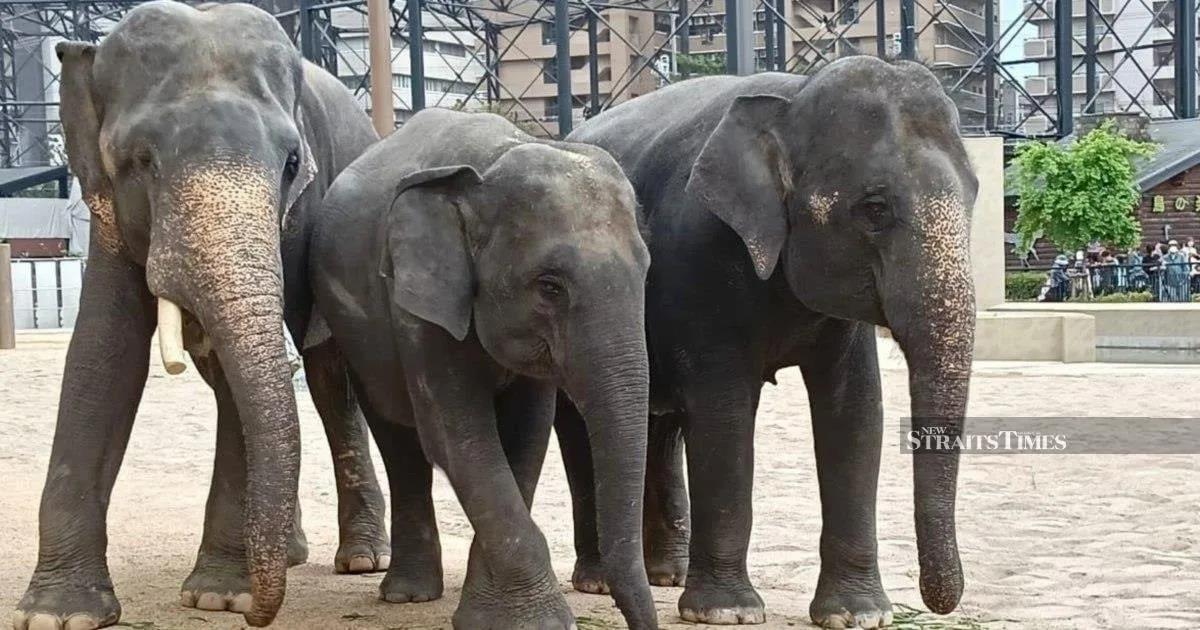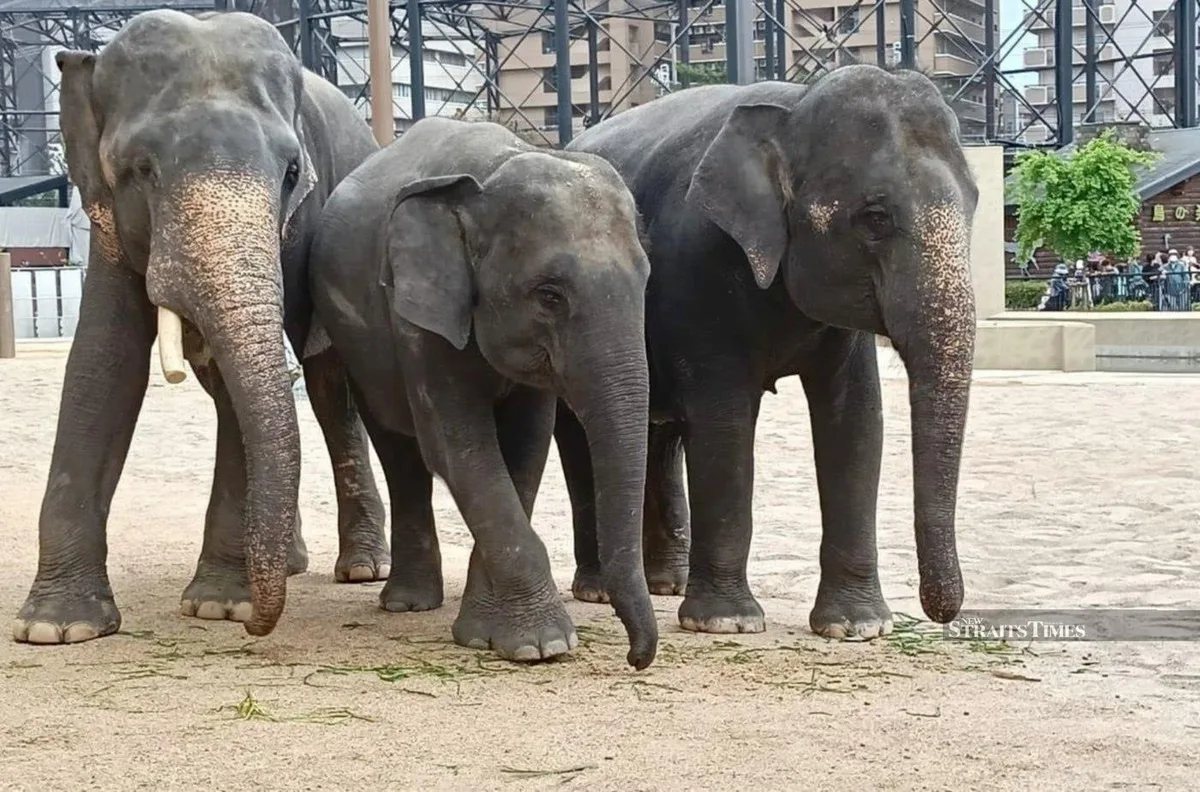
Kelat, one of three Malaysian Asian elephants housed at Tennoji Zoo in Osaka, was temporarily separated from the other elephants during a musth phase, a natural physiological period in adult male elephants characterized by increased testosterone and aggression [1, 2]. The separation was carried out as a precautionary safety measure following standard zoological practice and was not due to abuse or neglect. Mohamed Akmal Dahalan, Taiping Municipal Council President, said, "This practice is a standard procedure adopted by zoos and does not reflect any form of neglect or abuse toward the animal" and added that it is necessary "to ensure the safety of the animals, keepers and visitors, as elephants in musth may become more sensitive and display aggressive behaviour" [1, 2].
During the musth phase in June 2026, Kelat lost about 220 kilograms, reflecting a reduced appetite and hormonal changes typical of the condition. He has since completed this phase and rejoined the other elephants, Dara and Amoi, at the zoo [1, 2]. Since May, Dara and Amoi have gained 85 kg and 60 kg respectively, indicating stable health and proper nutrition [1, 2]. Daily diet records confirm the elephants receive food that meets species-specific nutritional requirements [1, 2].
The three elephants, including Kelat, were relocated from Malaysia’s Taiping Zoo to Tennoji Zoo in March 2026 under a conservation cooperation program between Zoo Taiping & Night Safari and the Osaka zoo [1]. The Taiping Municipal Council continues to receive regular updates on the elephants' welfare, health, and behavior [1, 2]. On April 28, 2026, the council submitted a copy of the cooperation agreement concerning the transfer to the Malaysian Parliament’s Select Committee on Environment, Science, and Plantation for review [2].
On June 16, 2026, the council confirmed Kelat’s musth phase had ended, and he was safely reunited with Dara and Amoi. All three elephants remain in good health under the ongoing care at Tennoji Zoo [2].