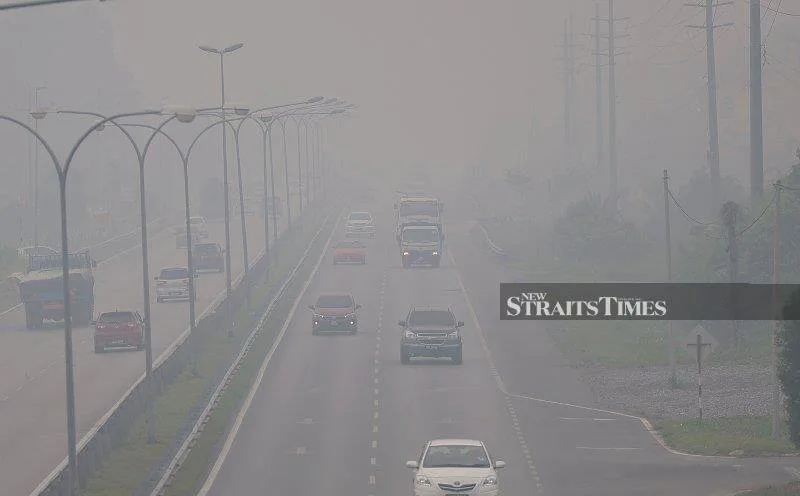
Sarawak has extended its cloud seeding operations until September 7, 2026, to counter the haze caused by transboundary smoke from fires in Kalimantan, Indonesia [1, 2, 3]. Datuk Amar Douglas Uggah Embas, chairman of the Sarawak Disaster Management Committee (SDMC), confirmed the continuation after successful rain was generated over the Bakun and Murum Dam areas [2, 3]. “Today's operation will continue as planned and will be carried out where suitable cloud and weather conditions permit,” he said [3].
The haze crisis peaked after the King of Malaysia declared a state of emergency in Serian division on September 4, after Air Pollutant Index (API) readings rose above hazardous levels, exceeding 500 [1, 4, 5]. Since then, the air quality in Serian has improved, with API readings falling to unhealthy levels ranging from 183 to 185 by September 6 [1, 2, 3]. Datuk Amar Douglas Uggah Embas noted a “downward trend for the API level in Serian as we enter the second of three days of monitoring,” attributing improvements largely to wind shifts and the fire hotspots’ location [3]. Despite some variation in reported API figures on September 6, all agree the air quality remains unhealthy but better than the hazardous peak [1, 2, 4, 3].
The haze in Sarawak is mainly attributed to 184 detected hotspots in Kalimantan with none currently spotted in Sarawak itself [2, 3]. Indonesian authorities have conducted water bombing operations near the future capital Nusantara in Borneo to contain these wildfires amid dry conditions [6, 7]. Myrna Asnawati Safitri explained that water bombing helps “accelerate cooling in areas that have been extinguished by ground firefighters” [6].
Within Sarawak, air quality remained poor on September 6, with Kuching recording an API of 218 to 223 and other divisions such as Sri Aman, Mukah, Bintulu, and Samalaju reporting very unhealthy or unhealthy levels [1, 8]. The Sarawak Department of Environment reported ongoing bush and peatland fires covering several hectares in Mukah and Daro districts, with partial control achieved over a 9-hectare fire but one hectare still burning in Jalan Sibujaya Barat, Mukah [8].
Officials have urged the public and companies to refrain from open burning amid the haze crisis. Datuk Yusuf Abd Wahab emphasized, “I urge everyone to stop open burning for now. Please do not burn rubbish or clear forests by fire. Put these activities on hold until the haze situation improves” [5, 8]. The Selangor state government also prepared to distribute face masks and advised residents in haze-affected areas to limit outdoor activities, with Jamaliah Jamaluddin urging people to “reduce strenuous outdoor activities and remain indoors if air quality is unhealthy” [9].
Rainfall from cloud seeding has also been pursued in Kedah to address low water levels in dams, which dropped slightly between September 2 and 6 to 38.46% at Pedu, 9.04% at Muda, and 45.00% at Ahning dams [10]. The Kedah government appealed for continued cloud seeding to mitigate water shortages [10].
Cloud seeding in Sarawak began on September 2 alongside operations in Kedah. The extension through September 7 aims to sustain progress, while monitoring continues across the state to ensure rapid response to air quality fluctuations [2, 3, 10].