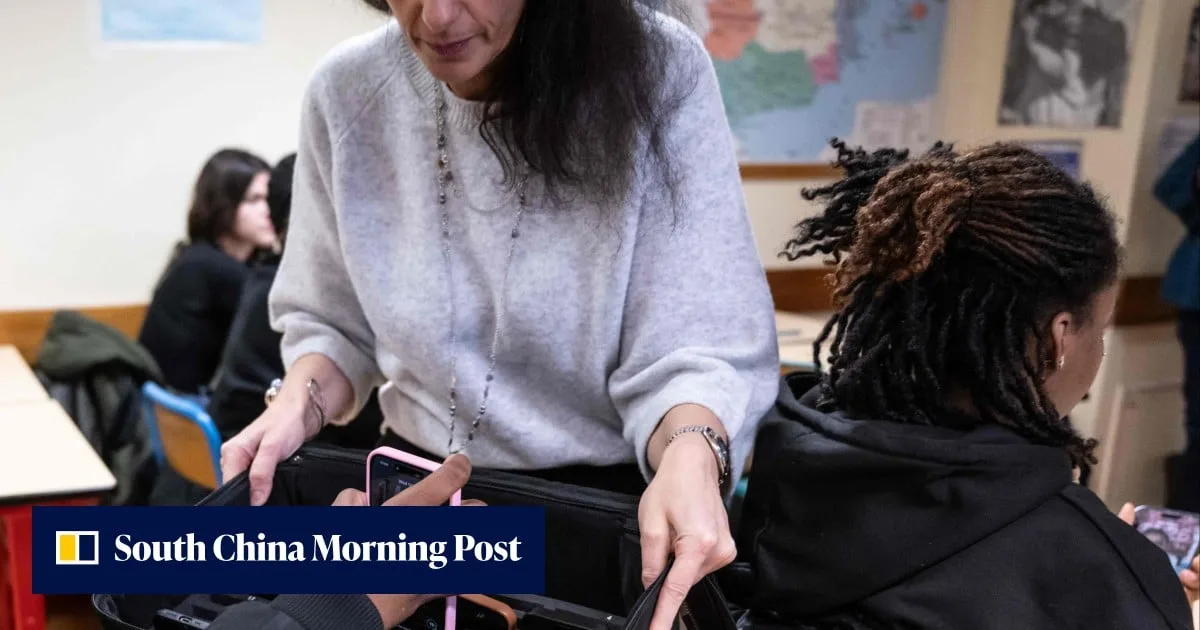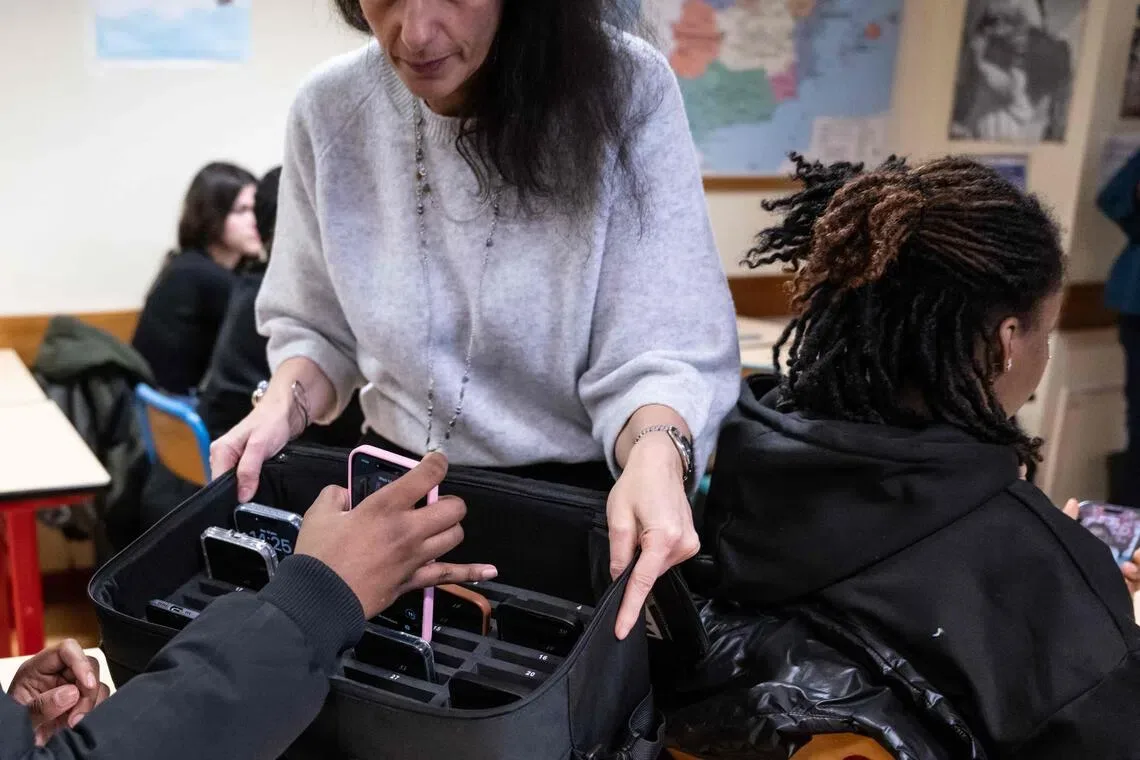
France's parliament passed legislation in July 2026 banning mobile phone use in high schools, effective from the start of the 2026/2027 school year in September [1, 2, 3, 4]. The law also included a provision banning social media access for children under 15, but the Constitutional Council struck down that part while allowing the phone ban to proceed [1, 2, 3, 4].
President Emmanuel Macron decided to promulgate the law including the phone ban despite the social media provision being overturned. He said, "Protecting children from the excesses of screens can no longer wait. A school without phones means reclaiming the serenity of learning" [4]. Government spokesperson Maud Bregeon said, "As a result, the ban on mobile phones in high schools can take effect from the start of the new school year, with a stable, consolidated and statutory legal framework" [1].
France had previously banned phone use in primary schools and collèges, which serve children aged 11 to 15 [1, 3]. The extension to high schools marks a new stage in limiting devices in classrooms.
However, trade unions and school principals warned many schools are unprepared for the ban. Francois Resnais, national secretary of SNPDEN-Unsa, said, "Schools are not ready. Schools are starting the year with a rule that is not written into their internal regulations, except perhaps for those that tried to anticipate something, but that remains very limited" [1]. Christelle Kauffmann, deputy secretary-general of a school principals’ union, said, "It is very difficult for a school committee to implement the phone ban fully before next year" [1]. Some schools have prohibited phones in corridors and buildings but still allow use outdoors, but full implementation could take nearly a year [1].
Following the Constitutional Council’s rejection of the social media ban, the government plans to redraft legislation on social media access to protect children, aiming for a revised framework by spring 2027 [3, 4]. President Macron is due to leave office the same spring [3].