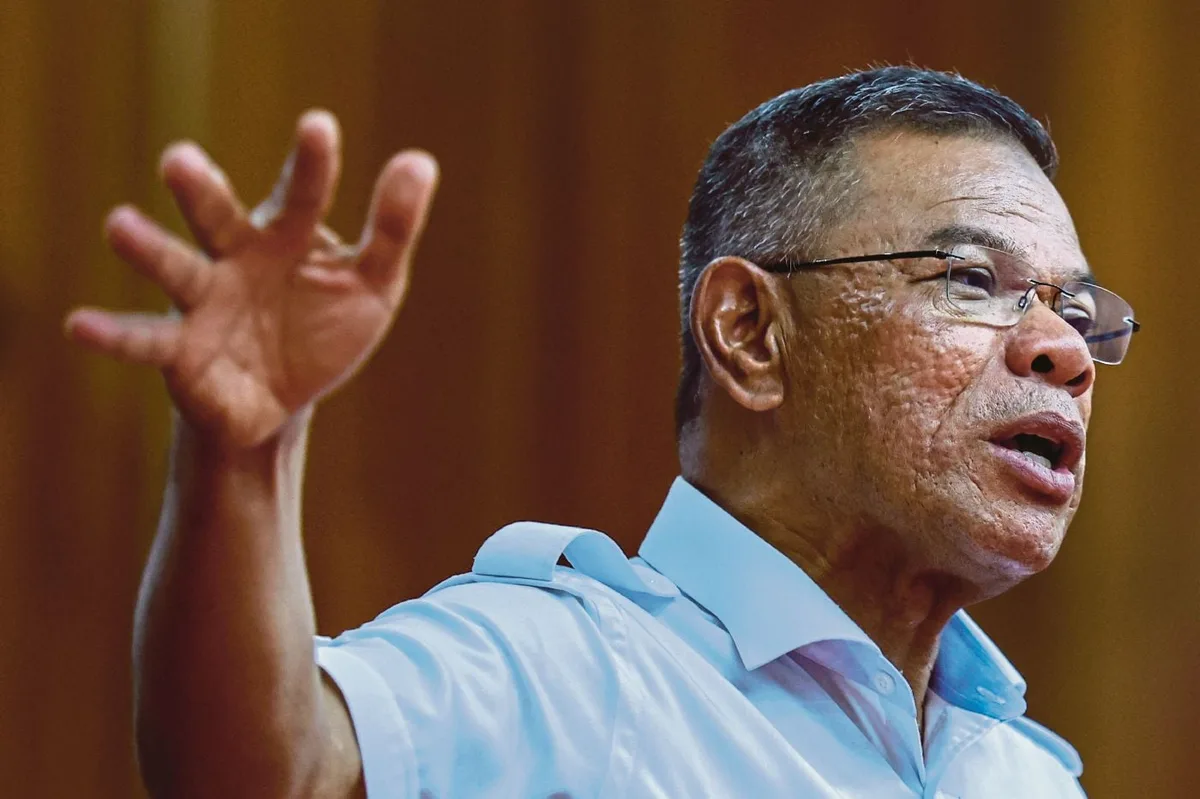
Malaysia is enhancing its refugee data management with the development of a biometric registration system to improve accuracy and enforcement, Home Minister Datuk Seri Saifuddin Nasution Ismail said on June 16 in Kuala Lumpur [1]. Saifuddin emphasized that refugees must be clearly distinguished from undocumented migrants, noting that refugees come from conflict-driven situations and fall into a separate legal category under Malaysian law. "Refugees are not the same as illegal migrants. Illegal migrants fall under the Immigration Act, but refugees are in a different category because of conflict-driven factors in their countries," he said [1].
The government aims to balance law enforcement with humanitarian considerations, making clear refugees remain subject to Malaysian laws and can be prosecuted if they commit offenses. Saifuddin said, "Any individual who commits a criminal offence or violates national laws will face enforcement action and due legal process" [2].
Malaysia is not a signatory to the 1951 Refugee Convention or its 1967 Protocol; refugee management is handled administratively in cooperation with the United Nations High Commissioner for Refugees (UNHCR) [1]. Saifuddin described the refugee issue as a longstanding challenge that has persisted through multiple administrations and reiterated that "the goal is not to protect refugees, but to protect national interests, public safety and social order" [1, 2]. He also called on academics, civil society groups, and experts to submit constructive ideas on refugee management, saying, "We cannot manage what we do not know. We cannot protect national security without knowing precisely who is within our borders" [2].
Prime Minister Datuk Seri Anwar Ibrahim stated on June 14 that the government would take action against Rohingya refugees violating Malaysian laws and regulations, including those related to business operations and illegal structures [1].
Home Minister Saifuddin publicly called for submissions of proposals on refugee management and pledged efforts to improve registration and data accuracy as early as June 15 [2]. The government plans to continue strengthening refugee data infrastructure and enforcement in the coming months.