Malaysia has maintained its policy of not recognising Israel and continues to bar Israeli citizens from entering the country, a stance it reiterated despite recent US congressional pressure. Eight members of the US Congress sent a letter on July 21 to Secretary of State Marco Rubio urging action against Malaysia over its expulsion of Israeli nationals and calling for suspension of military funding if Malaysia did not change its policy [1, 2]. Malaysia’s Minister in the Prime Minister’s Department reaffirmed on July 22 that Malaysia has never recognised Israel and condemned what it called foreign interference [1].
Defence Minister Mohamed Khaled Nordin said on July 25 that Malaysia’s expulsion of Israeli nationals aligns with longstanding policy and asserted it had no impact on US military funding under the International Military Education and Training (IMET) program [2]. This contradicted the US congressional threat linking military aid to Malaysia’s stance [1]. Khaled stated, "Our policy is simply that we do not recognise the State of Israel. If members of Congress want to make such demands, that is a matter between them and their government" [2].
Prime Minister Datuk Seri Anwar Ibrahim reaffirmed the government’s firm position, saying that Israeli nationals would continue to be expelled and that Malaysia must maintain an independent foreign policy. He also dismissed claims that his government neglects Bumiputera interests, citing the creation of 50 acres of new Malay reserve land in Kuala Lumpur after reclaiming the 480-acre Bandar Malaysia site [3]. Anwar emphasized the importance of inclusive governance, cautioning against race-based politics while defending the position of Malay language, Islam, and the Royal Institution [4]. He also highlighted his government's focus on education, saying, "The expectations placed on the Ministry of Education and our teachers are enormous... We must never lose sight of that" [5].
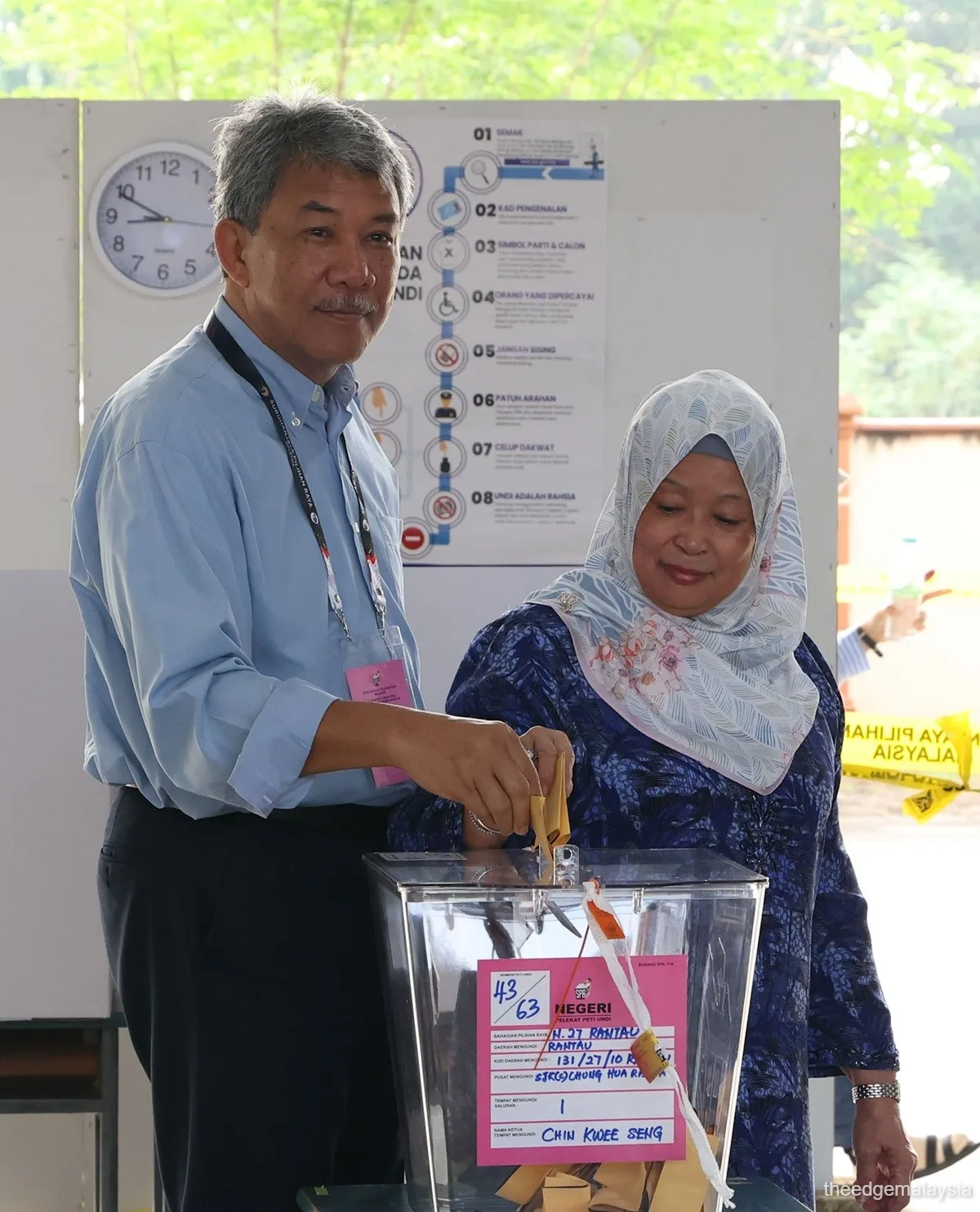
Meanwhile, the Negeri Sembilan state election concluded August 1 after a 14-day campaign with 867,151 registered voters and 103 candidates contesting [6]. Pakatan Harapan (PH) leader Anthony Loke sought to retain his seat and help PH form the state government [7, 8]. PH’s election director Datuk Seri Amirudin Shari said PH aimed to win at least 19 seats and could secure up to 22 in the 36-seat assembly [9]. PH’s communications director Fahmi Fadzil dismissed claims that PH planned to redraw electoral boundaries to reduce Malay and Muslim political power as "unhealthy and unfounded" [10].
PKR deputy president Nurul Izzah urged voters to support PH candidates to continue the development agenda, calling the contest one of the fiercest [11]. PH’s manifesto stressed sustainable development, job creation, social welfare, affordable housing, education, and unity [12].
The state election vote took place on August 1, marking a key event for PH’s hopes of forming the Negeri Sembilan government following the campaign that ended July 31 [6].