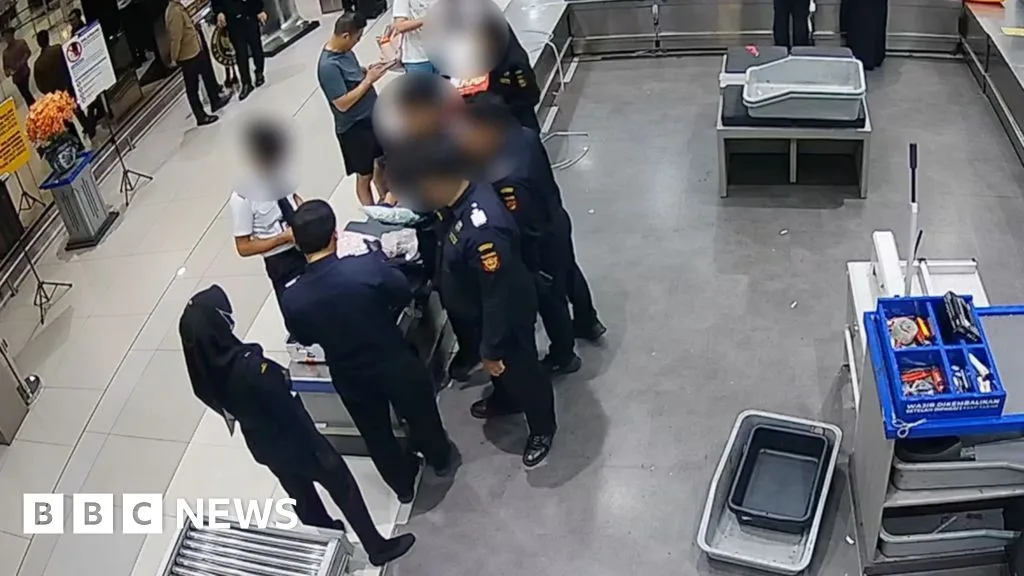
A 39-year-old Malaysian Airlines pilot was arrested on July 28, 2026, at Soekarno-Hatta International Airport in Jakarta after Indonesian authorities found 70,114 ecstasy pills and four grams of methamphetamine in his luggage, weighing around 25 to 26 kilograms in total [1, 2, 3, 4, 5, 6, 7, 8].
The pilot had flown a domestic route to Kota Kinabalu and back before departing from Sepang to Jakarta the same day, carrying the drug-laden luggage that had cleared multiple levels of security screening at Kuala Lumpur International Airport (KLIA) without triggering a secondary inspection [2, 3, 9, 5].
The baggage screening at KLIA was operated by Malaysia Airports' Aviation Security (AVSEC) division, not by Customs or the Malaysia Border Control and Protection Agency, and the pilot’s baggage did not show suspicious images on scanners, passing standard operating procedures aided by AI technology [4, 5, 10, 11]. AKPS director-general Mohd Shuhaily Mohd Zain said, "In the required screening that was conducted as per usual with our scanner machine, there had been no suspicious images that had shown up when the bag was screened" [4].
Bukit Aman Narcotics Crime Investigation Department director Hussein Omar Khan confirmed Malaysian police have identified and summoned a KLIA airport security staff member involved in the screening process for questioning and possible arrest. He said, "Investigations have identified one person and if the need arises, we will make the arrest. He is an airport staff member involved in the screening process" [2].
Indonesian investigations revealed the pilot was reportedly under the influence of drugs at arrest and had previously smuggled narcotics twice before, though these details have medium confidence [1, 12]. The pilot allegedly obtained the drugs two days prior from an apartment in Ampang near Kuala Lumpur [2, 3, 9, 5]. He was reportedly paid about £9,000 (over MYR 50,000) for the smuggling [1].
Senior Malaysian pilots and aviation experts have expressed concern over how the baggage bypassed multiple security layers. Datuk Captain Nik Ahmad Huzlan Nik Hussain said, "The question is not whether the system exists. It does. The question is how the bag got through despite multiple layers of security" [7].
Following the case, Communications Minister Fahmi Fadzil said, "We also have to identify if there are others involved and we need to ensure that all loopholes are closed immediately" [9]. The Malaysian government plans tighter airport security as well as more rigorous screening and background checks on Malaysia Airlines pilots [9, 6].
Malaysia Aviation Group and Malaysia Airlines have initiated internal and regulatory reviews of airport screening systems and personnel background checks [9, 12]. On August 4, the police announced the identification of a person of interest among KLIA security staff [2, 3, 5].
On August 7, opinion pieces and aviation experts called for mandatory harmonized employee screening standards in Malaysia’s aviation sector [12].
Malaysian and Indonesian authorities continue to cooperate on investigating the smuggling syndicate and security lapses. Further arrests and security reforms are expected as inquiries proceed [2, 3, 9, 5, 11].