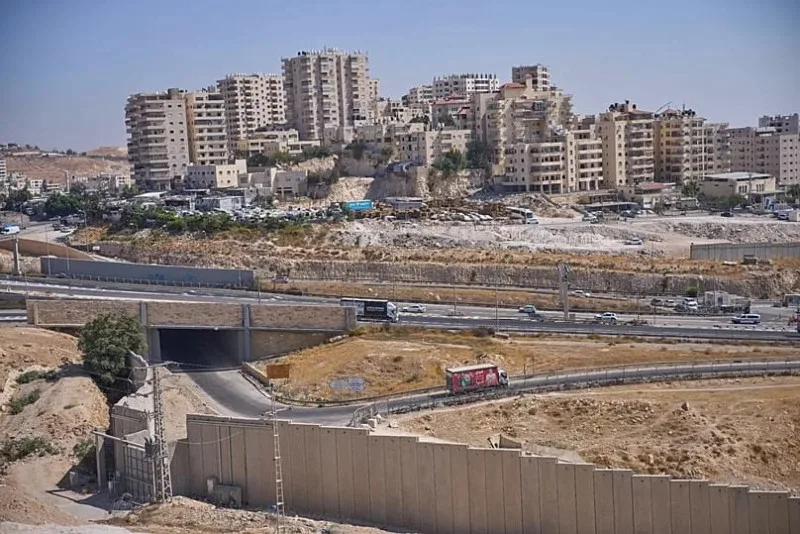
Malaysian Prime Minister Anwar Ibrahim publicly condemned Israel’s decision to issue construction tenders for the contested E1 settlement project in the occupied West Bank on August 21, 2026 [1, 2, 3]. Israel opened tenders on August 18 for 1,234 housing units in the E1 area east of Jerusalem as part of a larger plan for roughly 3,400 homes linking the Ma’ale Adumim settlement with East Jerusalem on Palestinian land [1, 2, 3].
Anwar described Israeli settlements in the West Bank as illegal under international law and accused Israel of acting with impunity [1, 2, 3]. He said, "This tract of land east of Jerusalem has long been critical to the viability of a Palestinian state. Building on it would divide the West Bank and gravely undermine the prospect of a contiguous Palestinian homeland" [1].
The E1 project covers about 12 square kilometers between East Jerusalem and Ma’ale Adumim and is feared to sever the West Bank's territorial continuity by isolating East Jerusalem from other Palestinian areas and dividing the northern and southern West Bank [3]. Israeli rights groups reported that tenders were issued without notifying petitioners who had challenged the project, despite prior commitments to provide advance notice [2].
Anwar also warned that Malaysia will monitor any international companies participating in the tenders and respond accordingly. "Malaysia will take careful note of any international company that chooses to participate in these tenders and will act accordingly," he said [1].
The condemnation came amid escalating settler violence across the West Bank and ongoing conflict in Gaza [1, 2, 3]. Britain, France, Germany, and Italy have also criticized the E1 tenders and called for their cancellation [1].
The E1 settlement plan remains controversial internationally due to its potential to undermine the feasibility of a two-state solution by fragmenting Palestinian territory. Officials have not announced a timeline for construction following the tender awards.