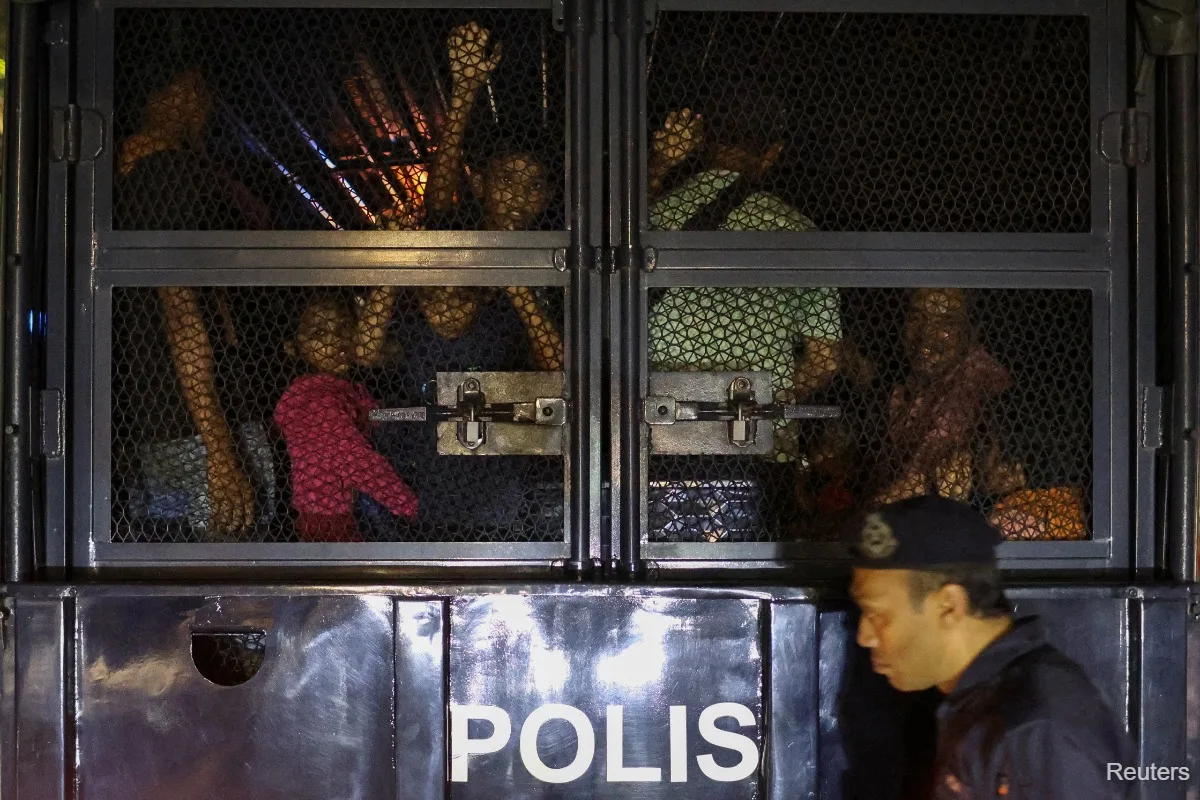
About 110 to 121 Rohingya refugees were evicted from a temporary settlement in Penaga, Penang, in late July 2026 and moved to the UNHCR office in Kuala Lumpur [1, 2, 3, 4]. The community voluntarily relocated following tensions with local residents over social and economic issues, as well as threats of eviction, said Penang Chief Minister Chow Kon Yeow: "Those who wanted to move sought assistance from the UNHCR and went to Kuala Lumpur" [1].
The refugees traveled by three buses from Penang to Kuala Lumpur on July 26 and 27 [2, 3, 4, 5]. The group included 110 Rohingya asylum seekers plus three other foreign nationals: an Iraqi man, a Somali woman, and an Indonesian woman married to a Rohingya refugee [2, 6, 7]. The refugees were roughly composed of 36 adult men, 21 adult women, 31 boys, and 22 girls [2, 7].
Upon arrival on July 27, Malaysian police detained the refugees at the UNHCR site and transferred them to the Kuala Lumpur police headquarters for processing and temporary housing [2, 6, 5, 8, 7, 9]. Police chief Datuk Fadil Marsus said, "A total of 113 refugees, including 110 Rohingya, were transferred to the police headquarters... All the Rohingya refugees possessed valid UNHCR documents" [7]. At the police headquarters, detainees received five meals a day, health monitoring, and medical care [6].
The refugees were released from detention on July 29. About 109 Rohingya were sent to locations across Kuala Lumpur, Selangor, and Penang based on existing contacts and relatives arranged by the UNHCR and NGOs [10].
Malaysia has not signed the 1951 Refugee Convention and does not formally recognize refugee status, leaving the Rohingya vulnerable to arrest and detention [11, 10]. Amnesty International Malaysia criticized the government, stating, "Malaysia cannot build a credible refugee protection system while simultaneously treating refugees as people to be rounded up, detained, and removed. Refugees and asylum seekers should be treated with dignity and in accordance with their human rights" [11].
Prime Minister Datuk Seri Anwar Ibrahim said the government would not tolerate refugee groups disrupting public order or attempting to dominate any area. He said, "Enforcement agencies... had been instructed to take firm action against anyone found violating the law" [5, 7].
The Rohingya are a Muslim minority from Myanmar's Rakhine State facing persecution. They form Malaysia's largest registered refugee community [11, 3, 12].
The relocation and detention followed a volatile situation in Penang, where local residents reportedly felt economic competition and social pressures from the refugee community [1, 3, 12, 4]. Refugee Rizuan said, "I don't know why they chased us out. They didn't give us much time to leave, so we brought whatever we could. All our belongings were left behind in Penang. I have lived there for 14 years and there were no problems before this" [3].