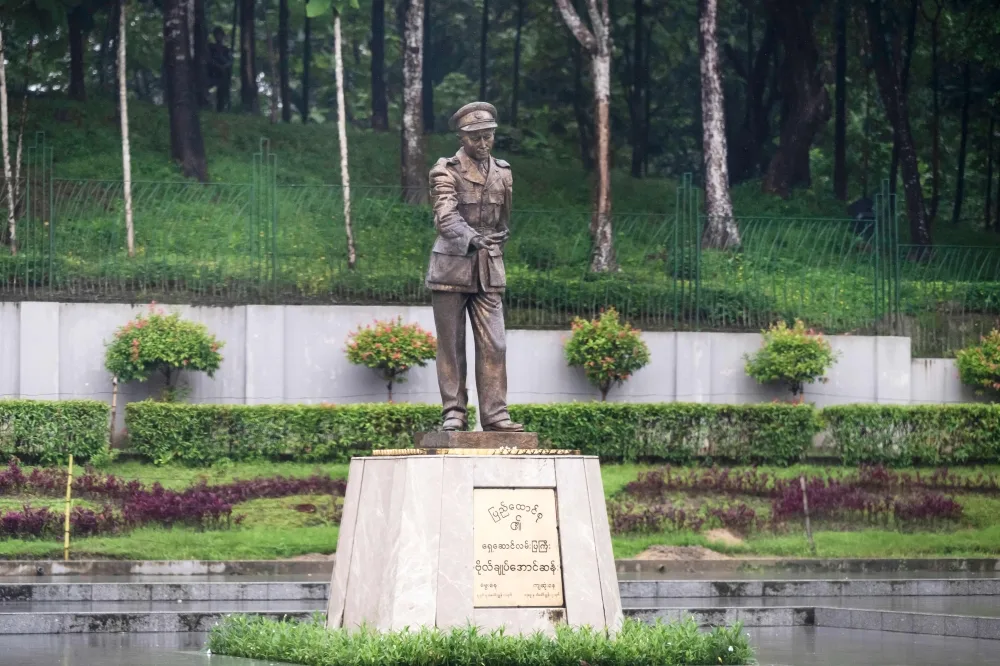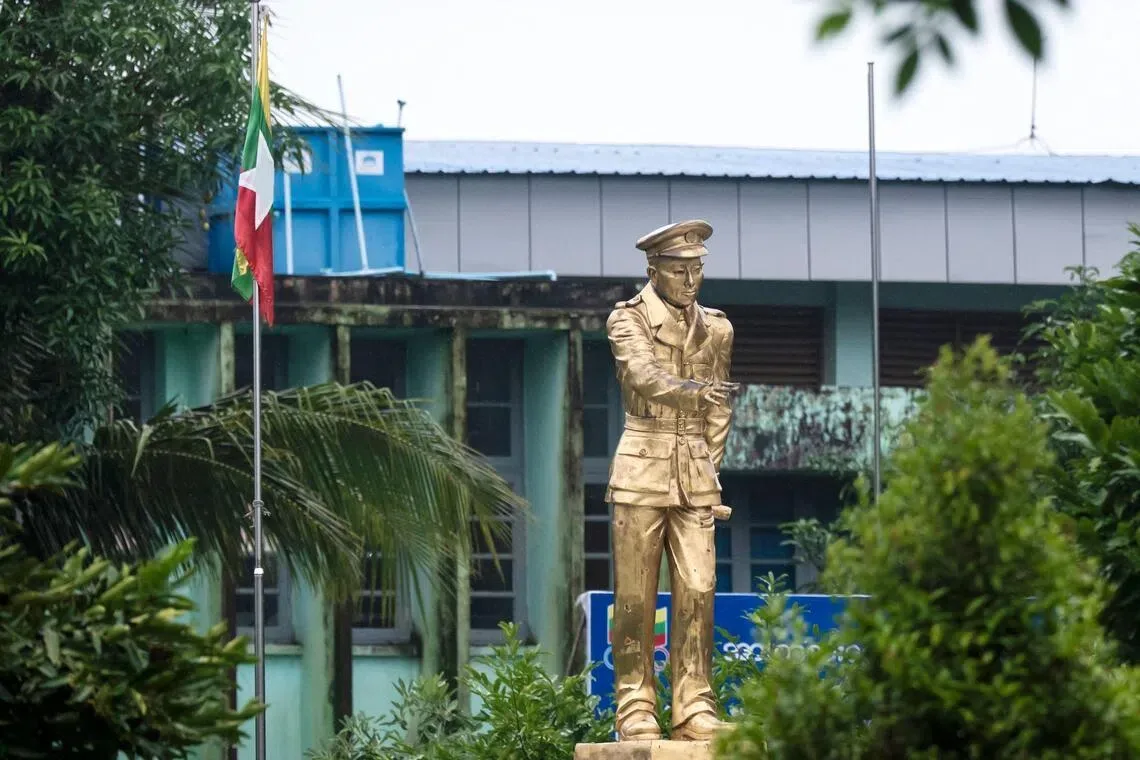
Statues of General Aung San, Myanmar’s independence hero and father of Aung San Suu Kyi, have been quietly removed from public spaces across the country in recent weeks [1, 2, 3]. Many of these statues were erected during the 2016-2020 rule of the National League for Democracy (NLD), led by Suu Kyi, when his image was also restored on local currency notes [1, 3].
The removals are linked to the military government under Min Aung Hlaing, who overthrew Suu Kyi’s administration in a 2021 coup [1, 3]. The government has officially cited technical reasons such as "incorrect proportions and shapes" for taking down some statues, but analysts suggest the effort is politically motivated [1, 3]. Myanmar specialist Moe Thuzar said the military aims to make Suu Kyi and the NLD "politically irrelevant" and sees the removal of Aung San statues as part of erasing the legacy associated with them [1]. She also noted that some actions could be viewed as an attempt to revive Aung San’s historical legacy on terms favorable to the military [1].
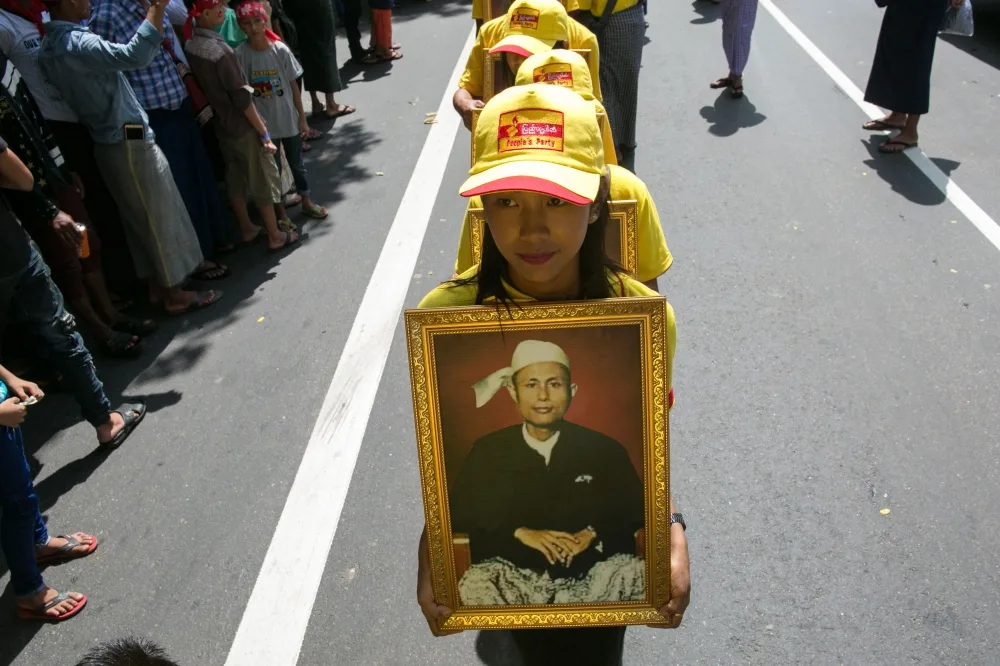
General Aung San was assassinated on July 19, 1947, just months before Myanmar's independence was declared. Despite these removals, he remains a central symbol of Myanmar’s national identity and is commemorated annually on Martyrs’ Day [1, 2, 3]. An anonymous resident in Yangon said, "They can remove the statues, but they can never erase Bogyoke’s image. They already hold power, and they have the weapons and the military. I don’t know what they are still so afraid of" [1, 3].
Reports highlighting the disappearance of Aung San statues surfaced in mid-July 2026 [2, 3]. By early July, the government had acknowledged some removals citing aesthetic reasons [1, 3]. The situation underscores ongoing tensions over the founder's legacy amid Myanmar’s fragile political landscape.