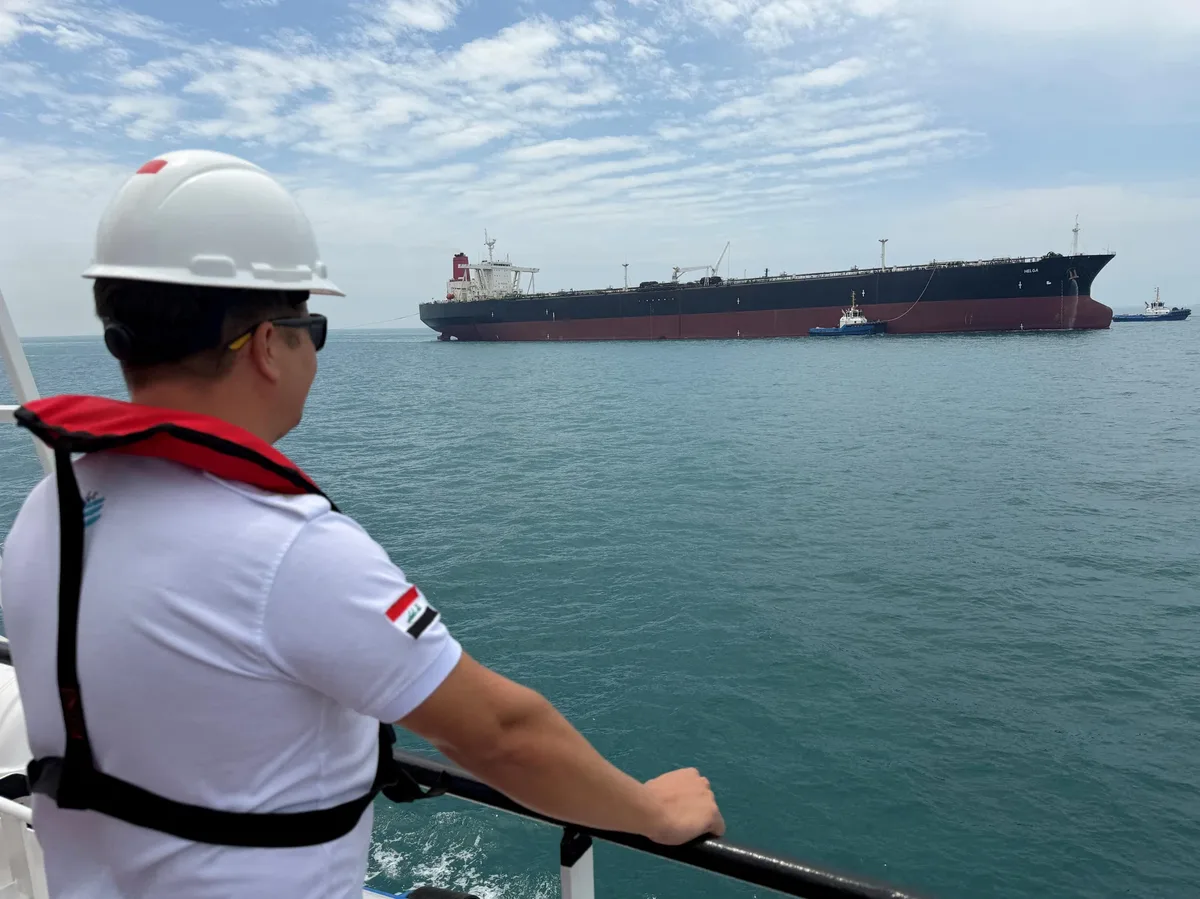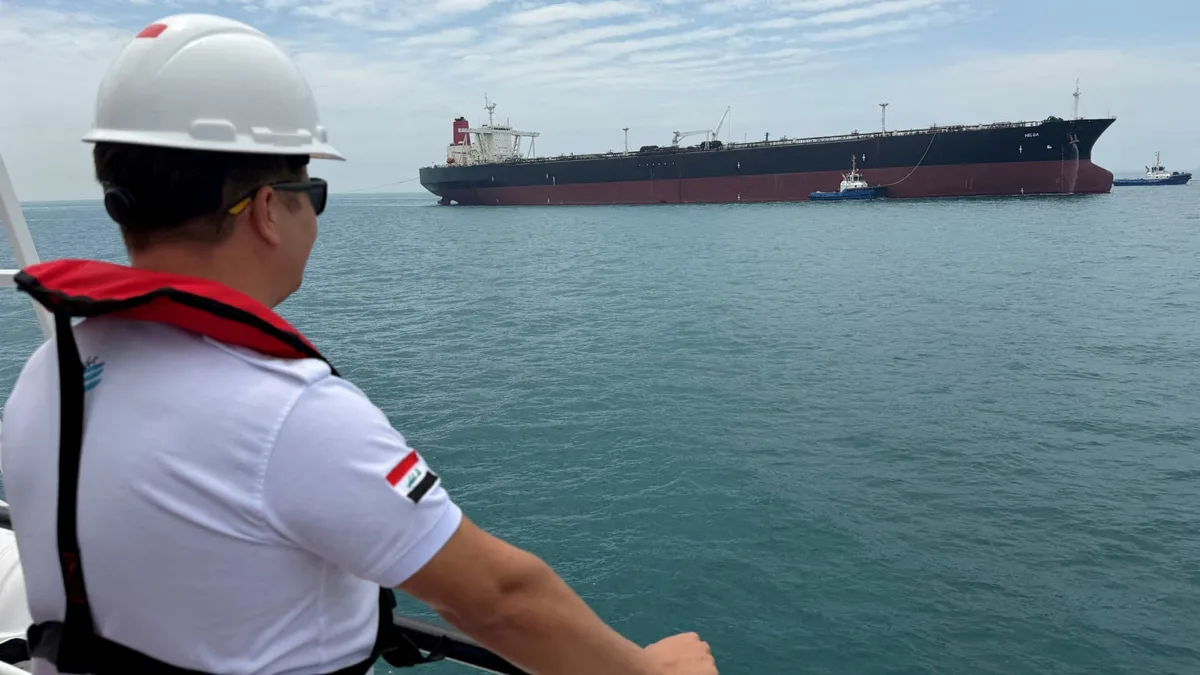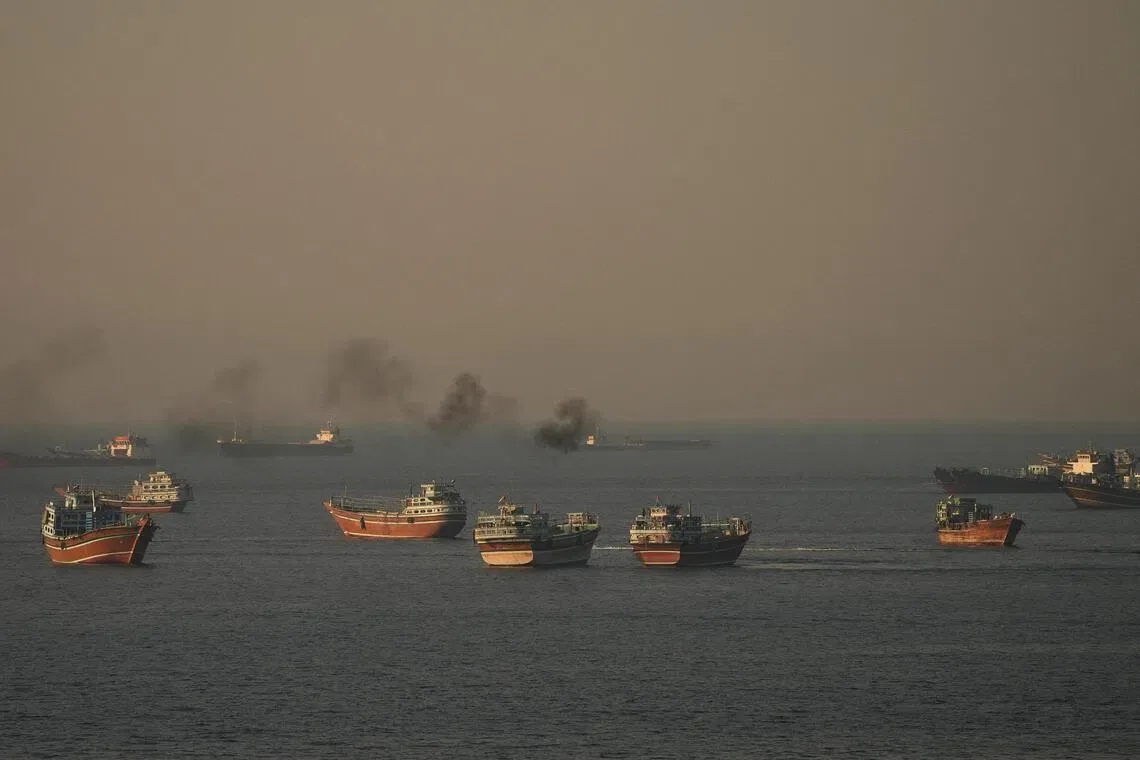
A natural gas tanker traveling southbound in the Strait of Hormuz was hit by a projectile about eight nautical miles east of Limah, Oman, on July 6, causing a fire but no casualties, according to multiple sources [1, 2, 3, 4]. The vessel involved was identified as the Al Rekayyat, a natural gas carrier [3].
US officials reported that Iran fired at least two missiles targeting commercial ships in the Strait the same day, damaging at least two vessels, though no casualties were reported [3, 4]. These claims rely on US intelligence, and independent verification was not available at the time [3, 4]. Some sources described only one tanker hit, while others reported multiple vessels damaged [1, 2, 3, 4].
The Strait of Hormuz had recently partially reopened after near-total closure due to the US-Iran war but shipping traffic remains below pre-conflict levels [1, 2, 3]. The tanker attack reignited concerns about stability in the crucial oil shipping route.
Following news of the attack, Brent crude oil rose about 0.4% to roughly $72.27 per barrel, while US West Texas Intermediate reached $68.85 per barrel [1, 2]. Oil prices had fallen roughly 30% in Q2 as a US-Iran interim peace deal eased supply disruption worries, removing an earlier war premium [1, 2, 3]. Saudi Aramco had announced an $11 per barrel discount on August deliveries of Arab Light oil to Asia earlier in July [1, 2, 3]. OPEC+ members, including Saudi Arabia, also agreed just prior to July 6 to raise output quotas for August, signaling intent to increase supply [1, 2, 3].
The US Energy Information Administration raised its 2027 US crude production forecast by 220,000 barrels per day, projecting output of 13.83 million barrels daily [1, 2]. Washington and Tehran signed a memorandum of understanding last month to end their nearly four-month conflict, but indirect talks last week produced no major breakthroughs [4]. US President Donald Trump warned the US would "either make a deal or finish the job," renewing military threats [4].
Warren Patterson, head of commodities strategy at ING Groep, said the attack shows the region remains unstable and any price rise is likely short-lived amid a weak physical market [3]. Jay Hatfield, CEO at Infrastructure Capital Management, noted Saudi price cuts typically reflect market prices and expected OPEC to maximize production to rebuild reserves [1]. Holger Schmieding, chief economist at Berenberg, said US and Iranian interests should ultimately lead to conflict containment ahead of US midterm elections in November [4].
Oil markets remain cautious as the Strait continues to see disruption risks. The next key oil market assessment will come with OPEC+ production data for August and upcoming US-Iran diplomatic activity.