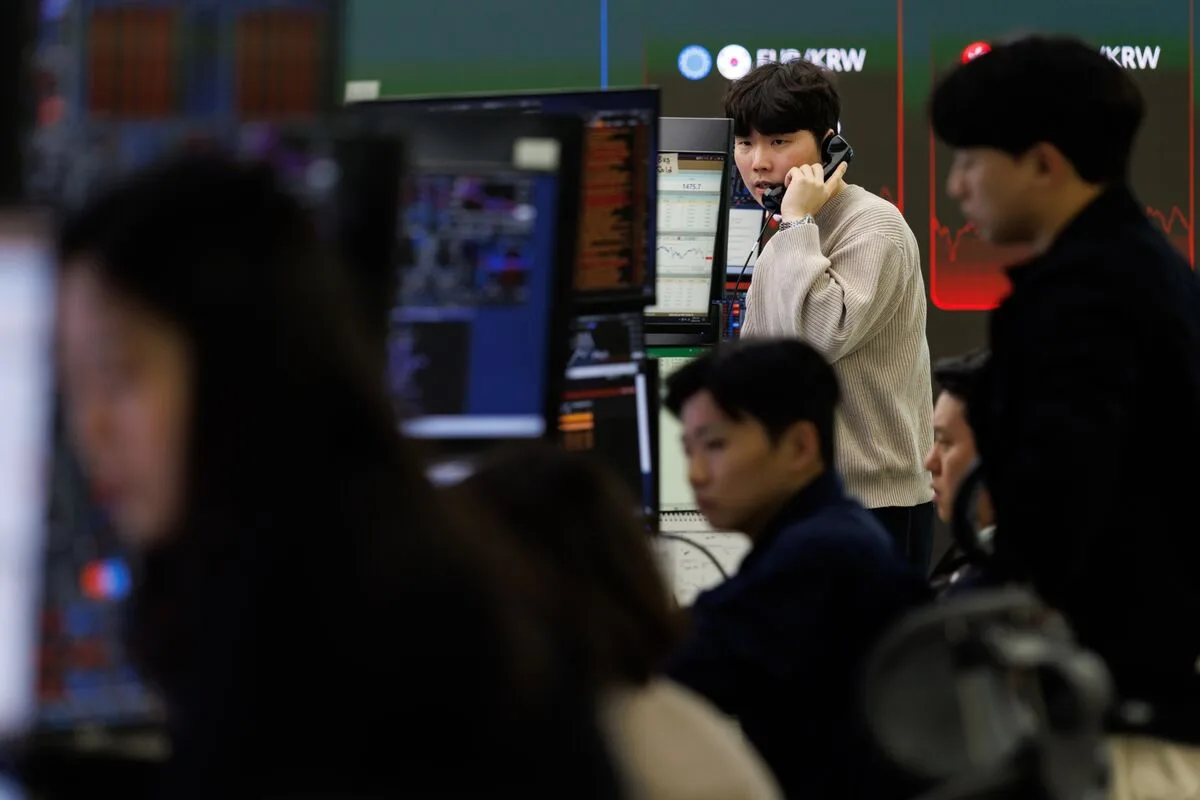
Holdings in contracts-for-difference (CFD) products by South Korean retail investors climbed nearly 66% in the past year, reaching about 3.3 trillion won ($2.2 billion) as of July 20, 2026 [1]. The rapid growth of these leveraged investment products has drawn scrutiny over their role in amplifying stock market swings.
At a cabinet meeting on July 21, 2026, South Korean President Lee Jae Myung acknowledged rising criticism, stating, "There has been criticism that leveraged investment products have amplified stock market volatility." [2] The concerns have centered on single-stock leveraged exchange-traded funds (ETFs), many tied to major companies like Samsung Electronics and SK Hynix, which are seen as exacerbating fluctuations in share prices [2, 3].
Despite the unease, Financial Services Commission Chairman Lee Eog-weon defended the presence of leveraged products in the market. He said, "I believe the products, listed in South Korea, helped ease downward pressures on the Korean won against the US dollar by attracting investments from local retail investors." [3] The implication is that these products not only engage domestic investors but also support the currency by mitigating the won's depreciation.
The discussion around leveraged instruments reflects a complex trade-off between increased retail participation and heightened volatility. The surge in CFDs indicates growing retail appetite for high-leverage financial products even as regulators weigh their market impact.
No policy changes have been outlined yet, but monitoring is expected to continue amid growing volumes and volatility.
Authorities are likely to follow the developments closely as the July 20 data set a new benchmark for retail holdings in leveraged products.