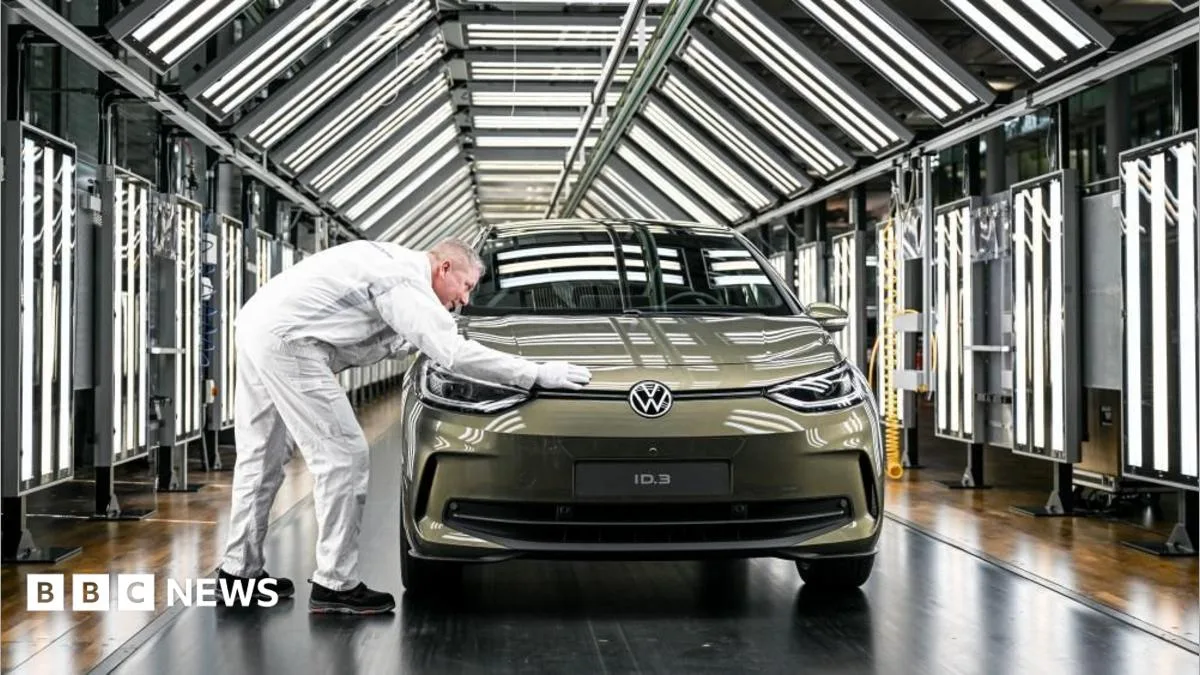
Volkswagen's supervisory board unanimously approved its "Future Plan" for transformation on September 3, 2026, which includes cutting 100,000 jobs worldwide by 2030, marking the largest restructuring in the automotive industry’s history [1, 2, 3].
The plan adds approximately 50,000 new job cuts on top of an earlier agreed 50,000, representing about 15% of Volkswagen's global workforce that currently exceeds 650,000 employees [1, 2, 3, 4, 5]. Volkswagen’s group includes 10 major brands such as Audi, Porsche, Skoda, Seat, Bentley, Lamborghini, and VW itself [1, 2, 3, 4].
Four Volkswagen plants in Germany—Emden, Zwickau, Hanover, and Neckarsulm—face uncertain futures. Production capacity at these sites exceeds current demand, with potential closures contemplated between 2031 and 2034 or later. However, no factory shutdowns have been authorized yet, as labor representatives oppose closures and Volkswagen may explore alternative uses for these plants [1, 2, 3, 4, 5, 6, 7, 8].
Volkswagen plans to reduce its model portfolio by up to 50% by around 2035 to lower costs and improve competitiveness [3, 8]. The restructuring responds to falling profits, weak sales in China, high US tariffs on imported cars, shifting market demand, and growing competition from Chinese manufacturers [1, 2, 3, 4, 9, 6, 8].
CEO Oliver Blume said, "This is a strong signal for the future of the Volkswagen Group. We are taking responsibility for our entire workforce, for our partners and for industrial jobs worldwide," emphasizing accountability amidst industry challenges [1, 2, 3, 9, 6, 8]. He noted that the supervisory board’s unanimous approval reflects commitment to the company's transformation [3].
Volkswagen plans to invest around 135 billion euros from 2027 to 2031 in capital expenditures and research and development to achieve about 9% operating profit and sell 9 million vehicles annually by 2030 [4]. The announcement prompted Volkswagen shares to rise sharply, gaining up to 7.9% at the Frankfurt close on September 3–4, 2026 [4, 9].
Union official Christiane Benner of IG Metall said, "In this crisis situation, we fought hard for good solutions. The executive board now has the foundation to tackle the major tasks ahead," acknowledging efforts to balance workforce impact and company viability [6].
Volkswagen will continue evaluating the future of the four German plants and has not authorized any immediate closures, with further developments expected in the coming years [4, 5, 6]. Potential plant closures could be phased in between 2031 and 2034 if alternative uses are not found [7, 8].