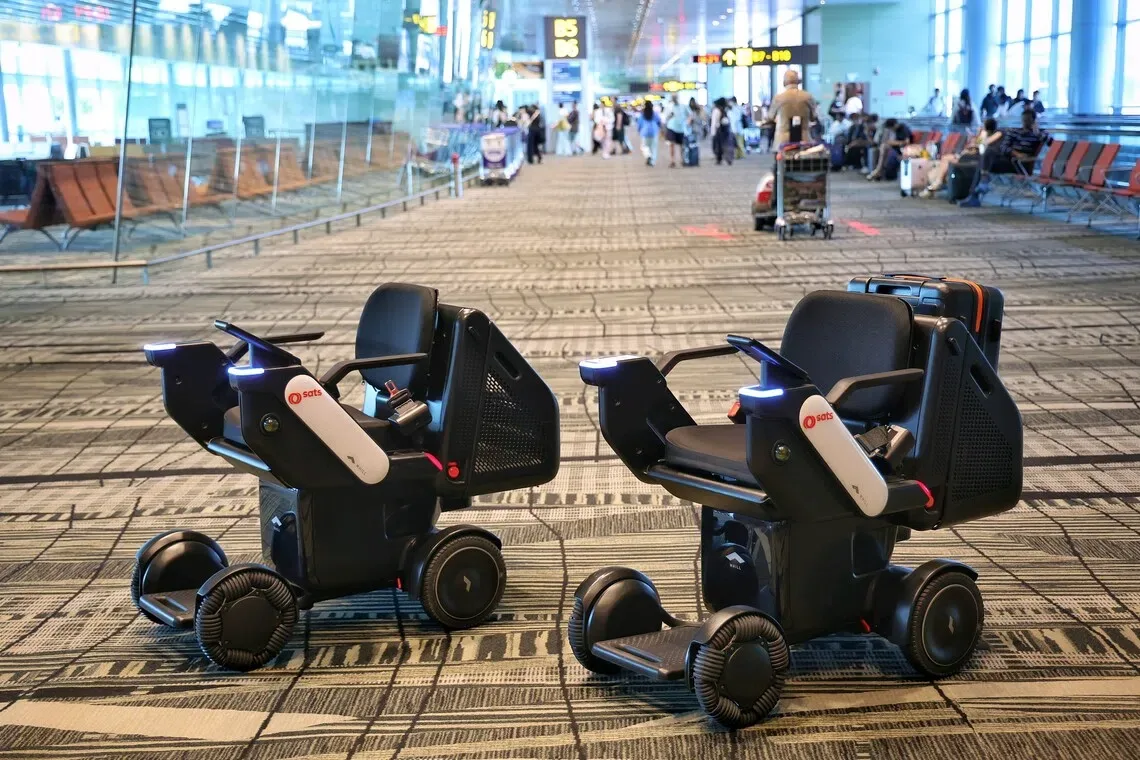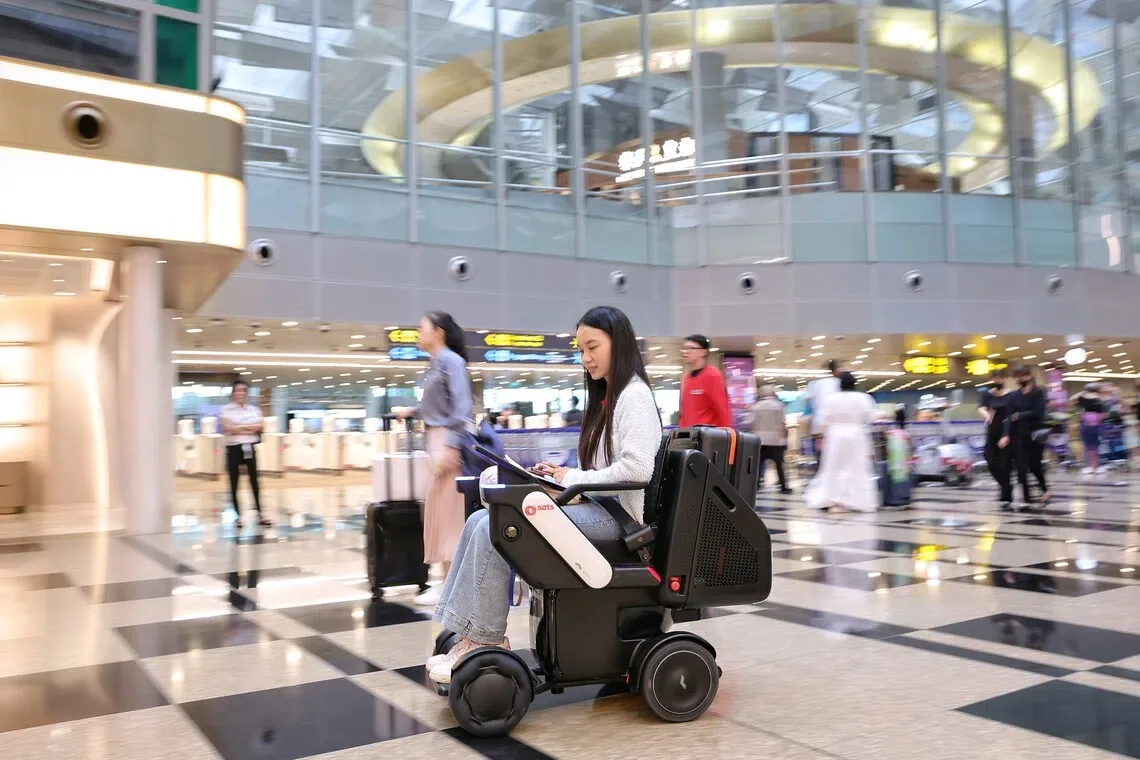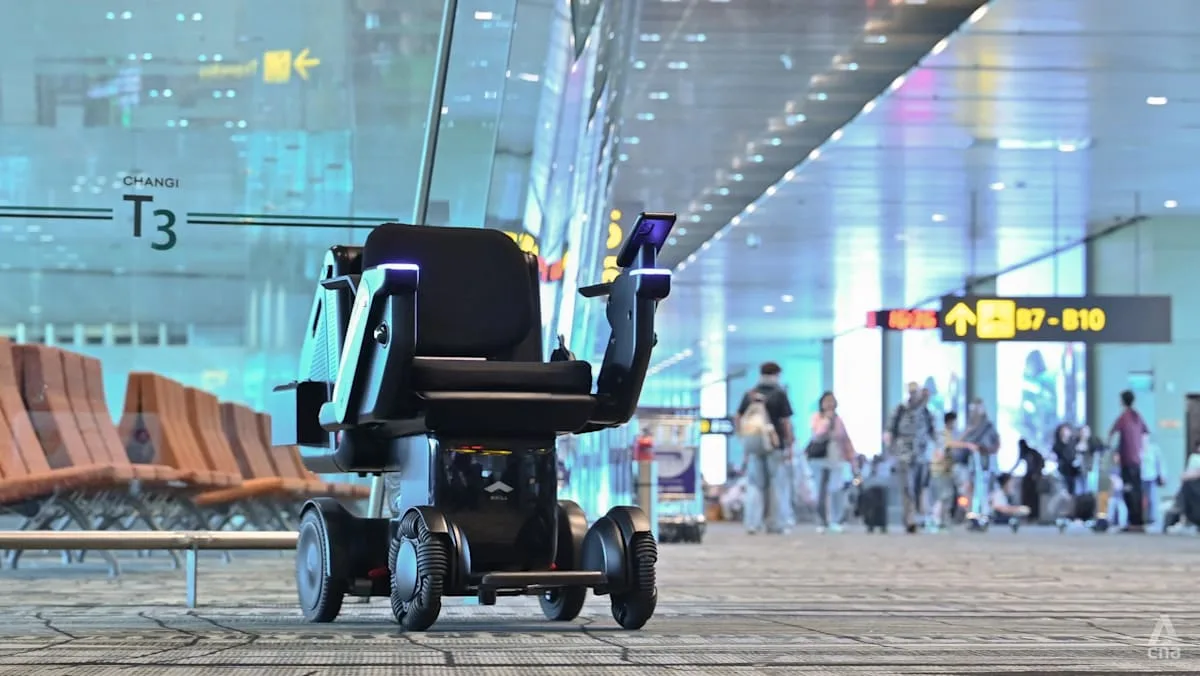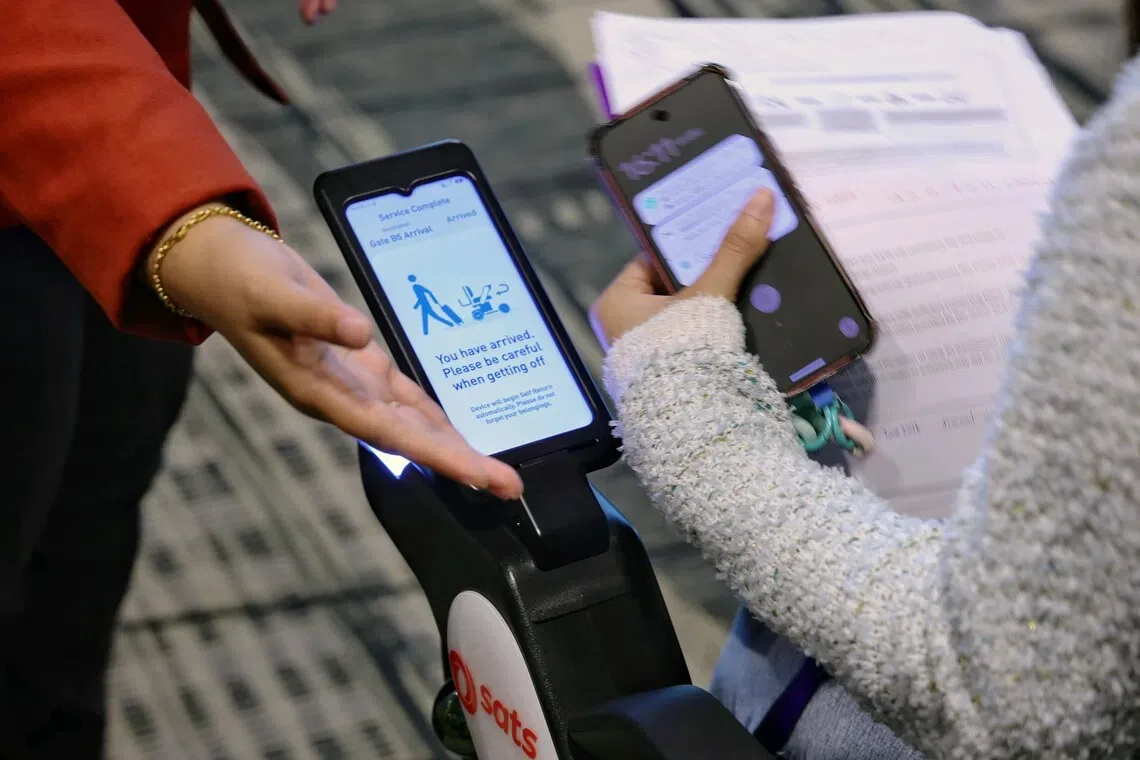
Changi Airport rolled out 18 autonomous wheelchairs across its Terminals 2 and 3 to help transit passengers with reduced mobility travel independently between gates. The launch took place on August 4, 2026, following trial runs from March 2025 through June 2026 [1, 2, 3, 4].
Nine wheelchairs were deployed per terminal during this first phase, complementing existing mobility services such as manual wheelchairs, buggies, and electric caddies. The autonomous units serve passengers with connecting times longer than 90 minutes who require wheelchair assistance but can walk short distances independently. Current service is limited to airlines handled by SATS ground staff, including Singapore Airlines and Air India [1, 2, 3, 4].
The wheelchairs operate on preset routes inside the departure transit areas and cannot travel between terminals yet. They move at a safe maximum speed of 3.5 km/h, allowing family members to walk alongside. Each unit can carry passengers weighing up to 136 kg and has a rear compartment that holds up to 10 kg of cabin luggage [1].
Several safety features are integrated, such as seatbelt monitoring that prevents movement unless fastened, an emergency stop button, obstacle sensors, and an assistance call system connecting to a control center. The wheelchairs also emit a soft musical hum to alert nearby pedestrians while moving [1, 2, 3, 4].
A trip from the far end of Terminal 3 to the shopping area takes roughly 15 minutes. Demand for wheelchair assistance at Changi has risen about 20% between 2023 and 2025, with around 2,300 daily requests, 80% coming from transfer passengers. Changi Airport Group noted this growth while unveiling the autonomous wheelchairs in early August [1, 2, 3, 4].
Passengers must request mobility assistance when booking tickets. SATS staff then use passenger profiles and itineraries to allocate autonomous wheelchairs as appropriate [2, 3, 4].