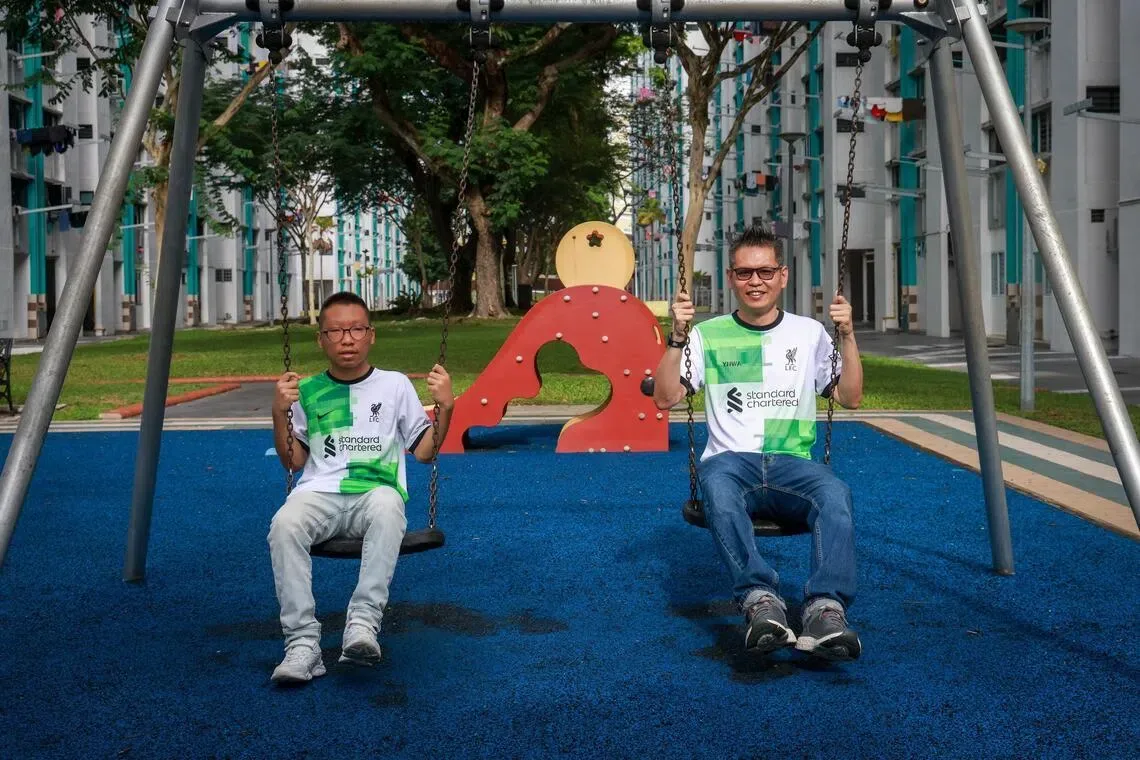
Jason Tan’s son, Isaac, was diagnosed with Autism Spectrum Disorder and mild intellectual disability at age eight following academic difficulties and behavioral signs, including plucking his own hair, which the family initially thought was stress-related [1, 2, 3]. Isaac struggled particularly with English comprehension and math in mainstream school, failing exams in Primary 3 and showing restlessness that distracted peers as the year progressed [1, 2, 3]. "He couldn’t even pass (his exams), and that pushed us to go and find out whether Isaac had some needs we were not aware of," Jason said [1].
Despite these struggles, the school declined to have Isaac repeat Primary 3 because he performed well in some subjects such as Mandarin [1, 2, 3]. The mainstream classes had teacher-to-student ratios around 1:40. Jason noted, "I did not expect educators to put in ‘extra extra effort,’ noting that mainstream classes typically have teacher-to-student ratios of 1:40" [3]. The school provided one-to-one sessions for math and allowed Isaac 10 extra minutes on exams to assist him [1, 2, 3].
By Primary 5, Isaac moved to foundational-level subjects and later transferred to a Special Education (SPED) school. There, with a simpler curriculum and better teacher support, Isaac showed significant improvement in both happiness and learning [1, 2, 3].
Jason and his wife initially did not understand autism and felt uncertain about how to help their son after his diagnosis. Jason reflected, "To be honest, at the time, (my wife and I) did not know what autism really was. We thought maybe he was just slow... We had no direction, and we didn’t know who to ask" [2]. Inspired by Isaac’s progress, Jason, now 48, pursued diplomas in autism and disability practice with a view to supporting others facing similar challenges [1, 2, 3].