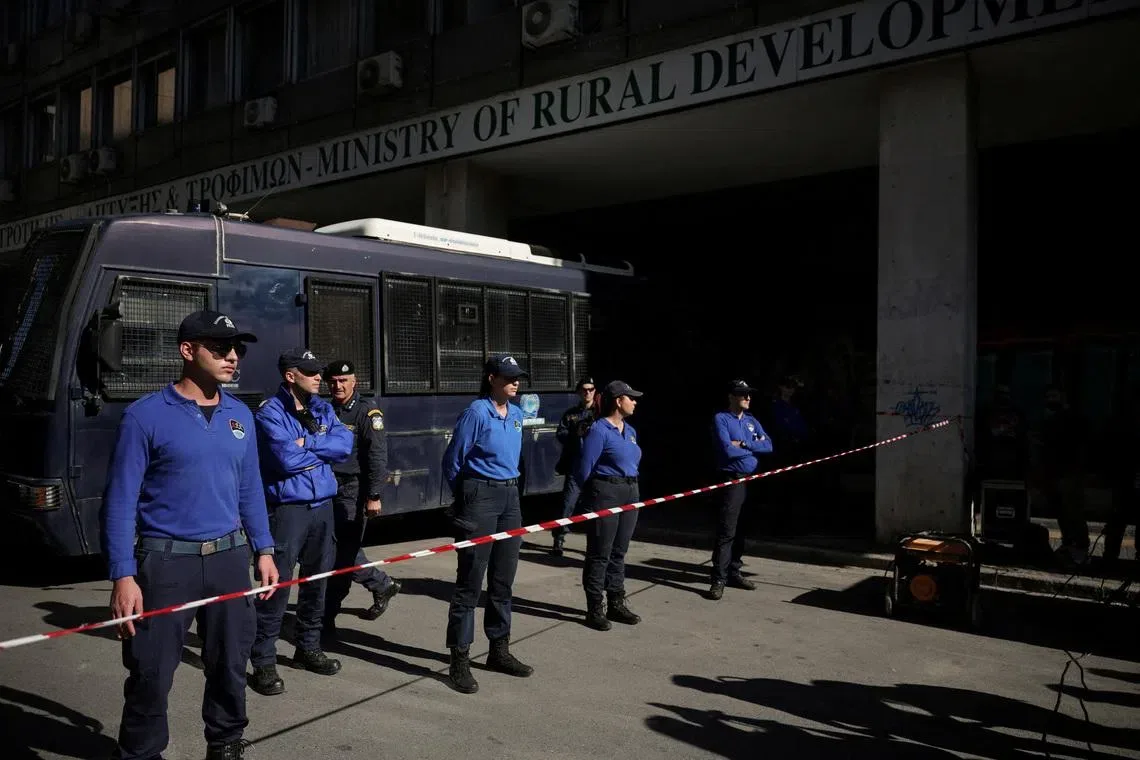
Greek police arrested 20 people on Crete on May 25, 2026, suspected of defrauding the EU through false land declarations to claim agricultural subsidies [1]. A day later, authorities arrested an additional 17 suspects, bringing the total arrests in this case to 39 [2].
The suspects include two accountants and some state employees accused of helping falsify the EU farm subsidy claims [1]. Police say the criminal network has operated since 2019, generating illegal revenue exceeding €3 million [1]. Initial investigations estimate the fraud caused losses of over €19 million (about NT$650 million) [2].
The scandal forced multiple government ministers and deputy ministers in Greece to resign [2]. In April 2026, the Greek parliament voted to lift immunity for 13 ruling party lawmakers amid investigation of separate subsidy-related cases [1].
The European Public Prosecutor's Office has launched an investigation into the fraud as well as related money laundering and corruption activities [1, 2]. Prime Minister Kyriakos Mitsotakis called on EU prosecutors to quickly decide whether to indict the implicated lawmakers to limit political fallout before the next parliamentary election, expected by spring 2027. "Prime Minister Kyriakos Mitsotakis urged EU prosecutors to decide swiftly whether to indict the lawmakers, as he seeks to stem the political fallout from the probe before the next parliamentary election due by spring 2027," according to sources [1].
The arrests mark a significant step in uncovering the decade-long fraud network that exploited EU farm subsidies. Authorities continue their investigations as more details emerge.