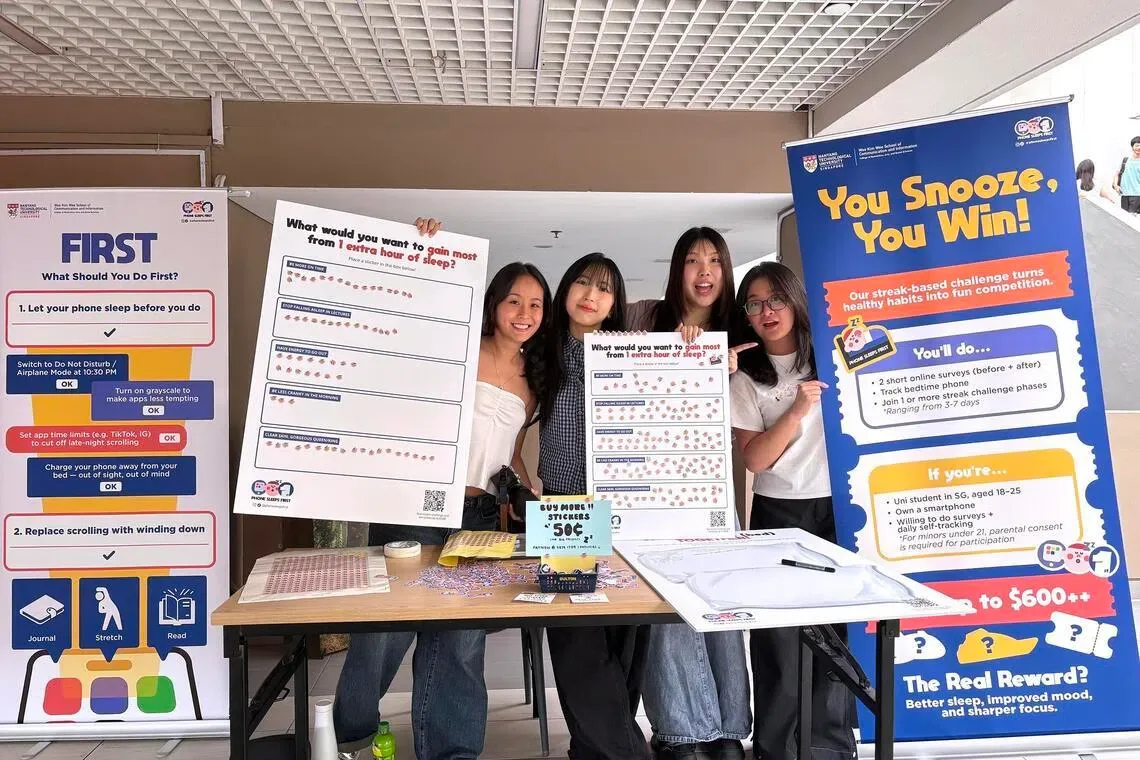
Four final-year communication studies students from Nanyang Technological University (NTU) launched the 'Phone Sleeps First' campaign in October 2025 to address late-night phone addiction among university students in Singapore. The campaign involved 313 undergraduates from six autonomous universities across the island, making it a broad effort targeting youth bedtime habits [1, 2, 3].
The campaign aimed not just to raise awareness but to drive actual behaviour change in phone use at bedtime. Participants were encouraged to adopt practical strategies such as keeping phones away from their beds, activating 'Do Not Disturb' mode, and replacing screen time with offline activities like reading or journaling [1, 2, 3].
Participants engaged in one or more of four challenge rounds, each lasting between three and seven nights. They completed surveys before and after these periods to track changes in sleep quality, daytime tiredness, and phone use at bedtime. To verify compliance, students submitted phone screenshots showing screen time between 10pm and 6am [1, 2, 3].
The results were significant. Participants reduced their nightly screen time by 58 to 81 minutes on average. This reduction correlated with improved daytime energy and healthier sleep habits, confirming the campaign’s effectiveness [1, 2, 3].
Experts warned that phone use before sleep rewires the brain for entertainment rather than rest, contributing to poorer sleep quality among youth. The campaign's approach responded directly to these concerns by focusing on practical, measurable behaviour changes [1, 2, 3].
One participant, Nurul Izzah, a 25-year-old marketing undergraduate at Singapore University of Social Sciences, shared how her previous habit of doom-scrolling until 3am changed after joining the campaign. She credited the programme for helping her improve her bedtime routine and overall well-being [1, 2, 3].
The next step is to assess whether the behavioural changes can be sustained long term and to explore expanding the campaign to benefit more students across Singapore’s universities.