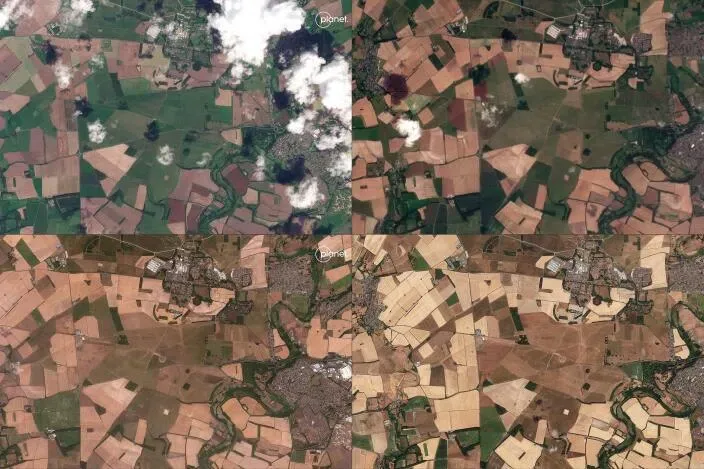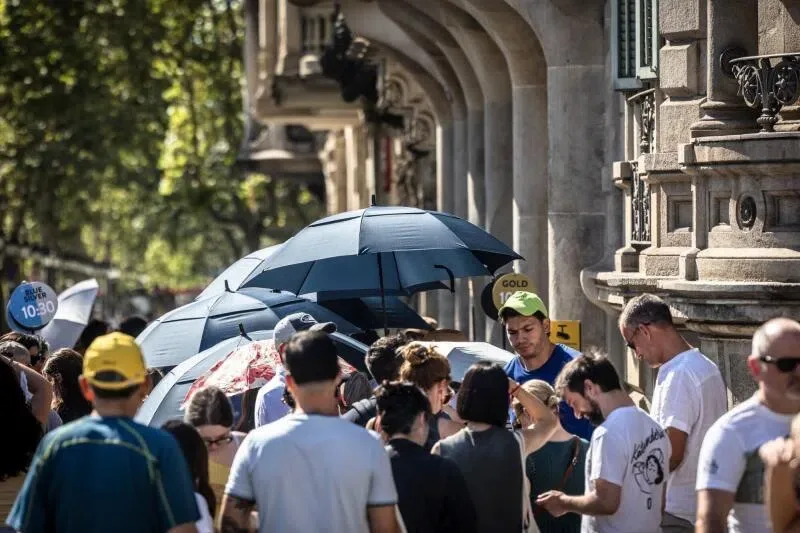
Europe experienced an intense heatwave on August 13, 2026, with over 135 million people across mainly France, Italy, Spain, and the UK facing temperatures exceeding 35°C [1, 2, 3, 4, 5, 6, 7, 8]. Around 340 million people, nearly three out of five European residents excluding Turkey, were exposed to temperatures above 30°C on the same day [1, 2, 3, 5, 6, 7, 8].
France recorded some of the highest temperatures, reaching up to 42.5°C in central regions and 38°C in Paris [2, 4, 7]. About 50 million people in France experienced heat above 35°C on August 13 [5, 6, 8]. The UK faced its fifth-hottest day on record with 38.1°C measured at Kew Gardens in London; approximately 23 million people were affected by temperatures above 35°C there [1, 2, 4, 5, 6, 7, 8]. Bailey Williamson, a UK pharmacist, described the conditions as "unbearable," adding, "People in beds are really, really sick, and they can’t even breathe because of the heat problem – so it’s really bad," highlighting the strain on health services [1, 2]. Hospitals in the UK reported increased heat stroke cases, putting pressure on NHS resources amid soaring temperatures [1, 2, 3, 7].
Italy saw about 29 million people affected by temperatures above 35°C, especially along the west coast, the Po Valley, and southern regions [9, 4, 5, 7]. Spain had roughly 25 million people exposed to these extreme temperatures, with some central areas reaching up to 37°C [4, 5, 6].
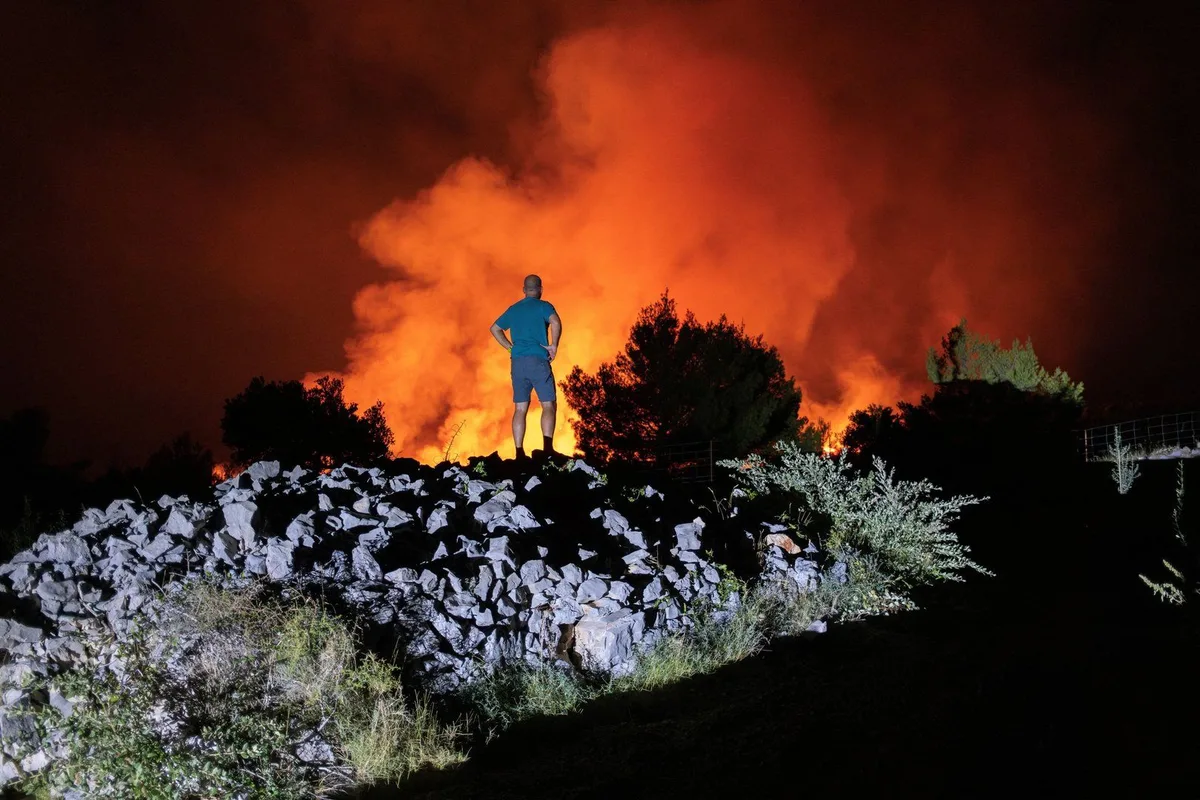
Wildfires fueled by drought and high temperatures burned approximately 500,000 hectares across Europe. In Croatia, the fires forced the evacuation of 2,000 people around Omis, caused one death, and resulted in 40 hospitalizations [10].
Experts link the intensifying and increasingly frequent heatwaves in Europe to human-driven climate change, noting that the continent is the fastest-warming region on the planet. Some areas are ill-equipped to handle such extreme heat [9, 1, 2, 3, 4, 5, 6, 7]. Forecast models used to estimate heat exposure have limited resolution and may underestimate the impact in urban heat islands, where temperatures tend to be higher [9, 6]. Population exposure estimates are based on German weather service forecasts and 2025 projections from the European Commission’s Joint Research Centre, cross-checked with Austrian NGO Klimadashboard data [9, 1, 2, 3, 5, 6, 7].
On August 12, forecasts predicted around 92 million people would face temperatures above 35°C, primarily in France, Italy, and Spain, with approximately 300 million exposed to temperatures over 30°C [9, 11, 12]. By August 13, the heatwave intensified significantly as observed. Prior to this, on August 11, the UK Met Office warned the country might record its hottest summer ever due to repeated heatwaves [9, 11, 5, 6].
Australian visitor Tim Wallace remarked on the unusual heat, saying, "I’ve never seen it like this, and it’s clearly, it is concerning. We might have summers like this more often... But it’s all part of the planet getting hotter" [2].
The heatwave’s impacts are ongoing as authorities continue to monitor extreme temperatures and wildfire risks across Europe.