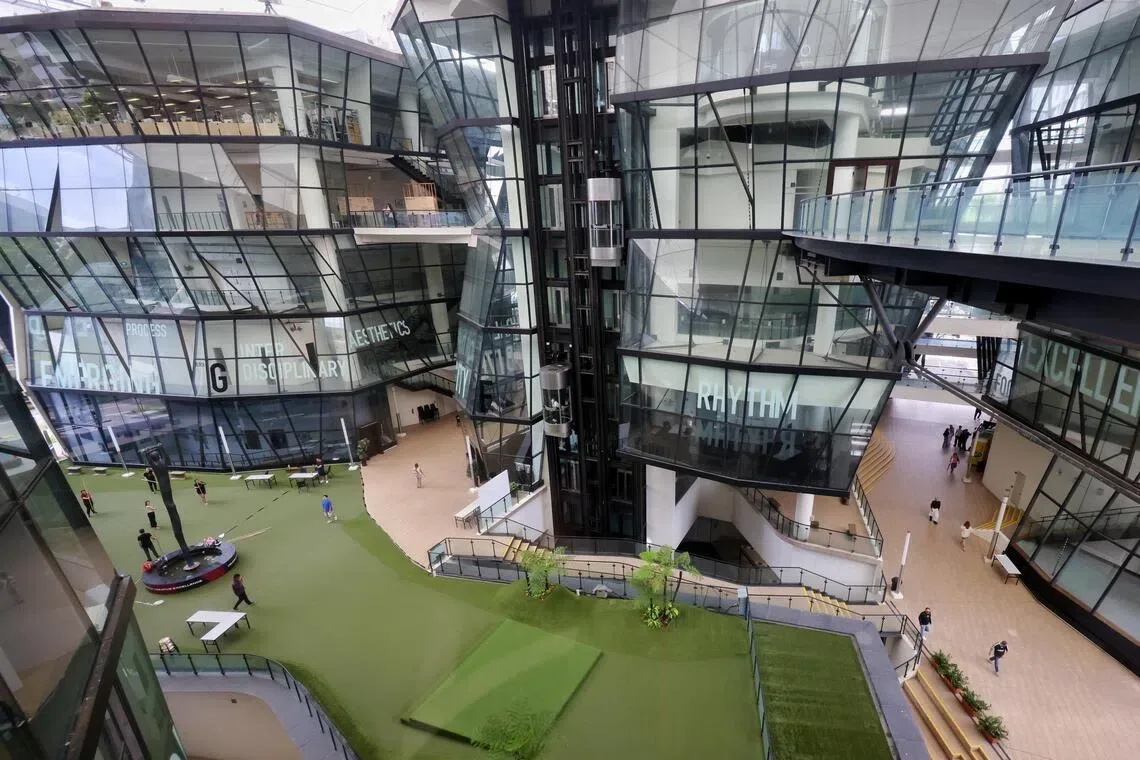
LASALLE College of the Arts, the School of the Arts (SOTA), and Nanyang Academy of Fine Arts (NAFA) in Singapore have integrated generative AI (GenAI) into their arts education programs to support creativity and learning.
In 2024, LASALLE formed a working group to study GenAI’s impact and established guidelines for faculty on student AI use in assignments. LASALLE’s president Venka Purushothaman said, "Students have been using AI as a learning partner in the process of creative thinking," adding, "We emphasise process-oriented assessment so that student voice and authorship remain visible and verifiable" [1, 2].
Students at SOTA are permitted to experiment with AI for specific learning goals such as brainstorming and refining their work. Their use of AI is supervised to align with tool terms, and students must declare AI use in assignments [1, 2].
At NAFA, some students and faculty explore AI for creative experimentation and research [1, 2].
Both LASALLE and SOTA have shifted assessment practices to focus on the creative process instead of relying on AI content detection tools. Many LASALLE programs require students to keep "creative process journals" documenting their work progress, including any AI tools used [1, 2]. LASALLE also introduced oral presentations, where students explain their work in their own words, and some assessments require verifiable citations such as DOIs, ISBNs, or web links [1, 2].
The schools aim to encourage exploration of AI rather than restrict it, supporting student creativity while maintaining transparent authorship. LASALLE’s guidelines and process-based assessments reflect a strategy to integrate AI responsibly within arts education.
The next steps include continued application and refinement of AI-related teaching and assessment methods across these institutions.