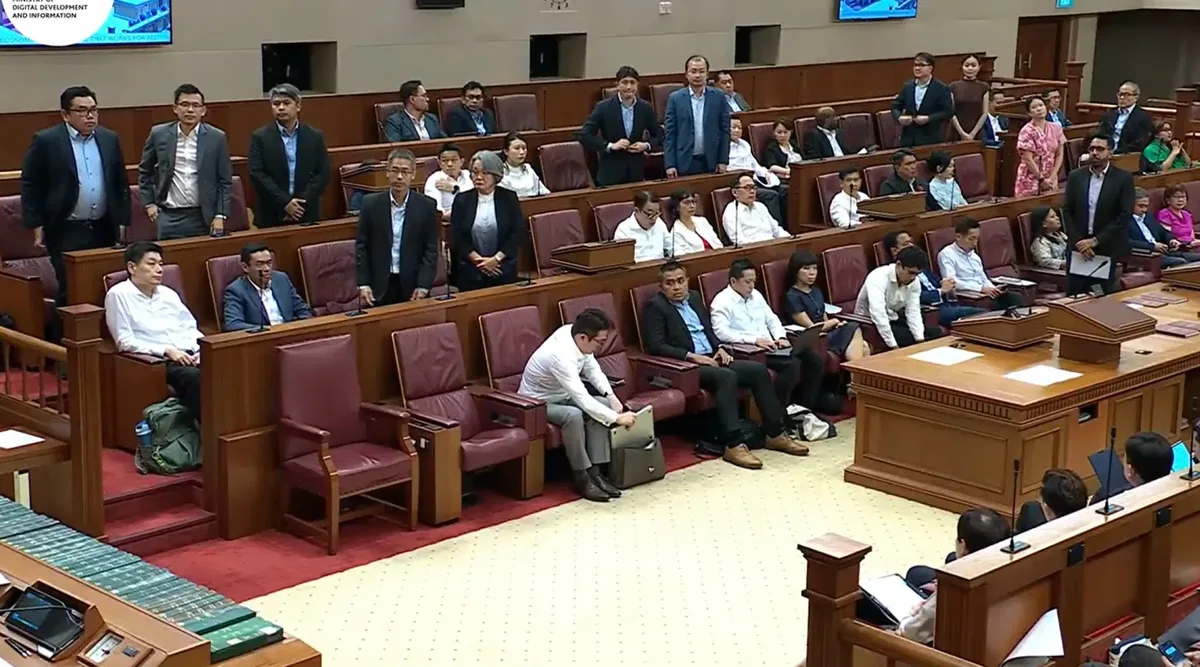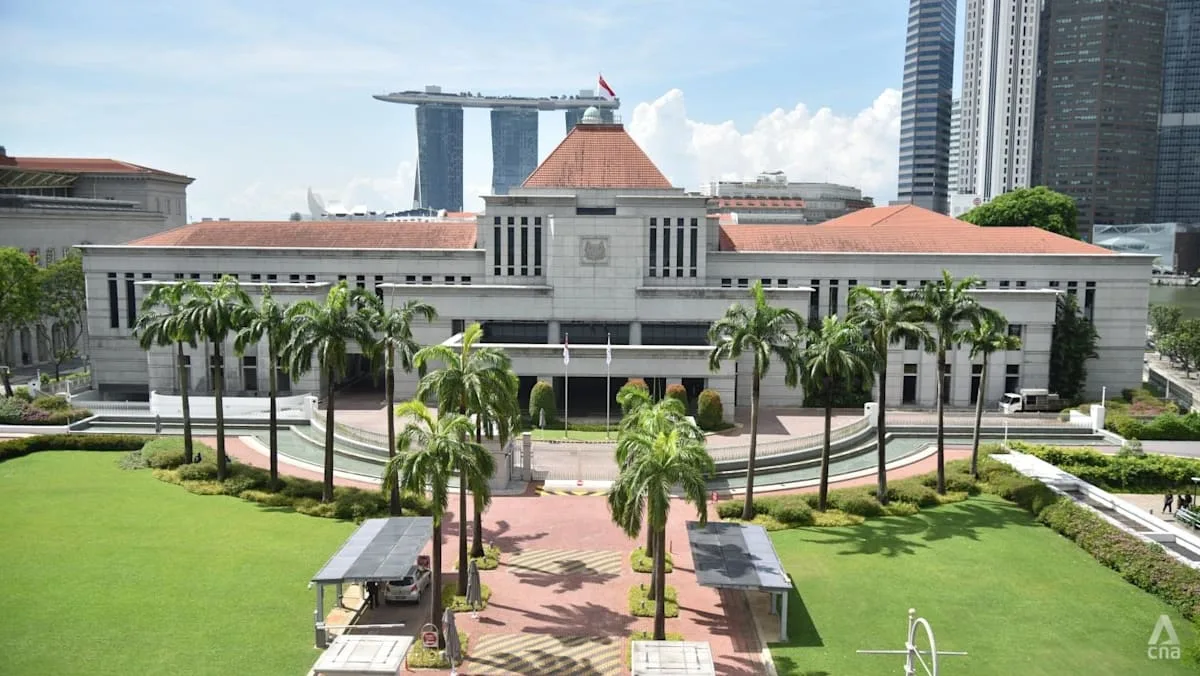
Singapore Parliament voted on August 5 to approve an amended Workers' Party (WP) motion advocating a more equal and inclusive economy that benefits local companies, global enterprises, workers, and innovation [1, 2, 3, 4].
The original motion was introduced by WP MPs Kenneth Tiong (Aljunied) and Jamus Lim (Sengkang), who sought an economic model ensuring fair distribution is built into growth rather than relying solely on later redistribution measures, as Tiong put it, "Rather than grow first and then redistribute by vouchers and rebates" [1, 2, 3, 4].
During the nine-hour debate, which featured 24 MPs including nine WP members and four political office holders, PAP MP Edward Chia (Holland-Bukit Timah GRC) proposed four amendments aligning the motion with the government's Economic Strategy Review (ESR) and emphasizing the role of global enterprises [1].
All 12 WP MPs unanimously opposed the amendments and the final amended motion, highlighting their rejection of the ESR alignment [1, 2, 3, 4]. In contrast, all five nominated MPs supported the amended motion, with each participating in the debate [1].
Minister for Trade and Industry Tan See Leng described the amended motion as capturing "mutually reinforcing parts of one united economic strategy" and said, "Singapore's economic strategy has never been about growth for its own sake, but for it to percolate through the broad economy to improve people's lives" [1, 2, 3, 4]. He added the government aims to "maintain a place where every person has a fair chance to try, a pathway to progress, and support to recover from setbacks" [2, 3, 4].
Kenneth Tiong criticized Singapore’s reliance on large foreign multinational corporations, saying it has faltered in producing quality jobs for youth and stunted local enterprises [2, 3, 4].
The vote concluded with Parliament endorsing the amended WP motion, reflecting the government's approach to balancing inclusive growth and international enterprise roles [1, 2, 3, 4].