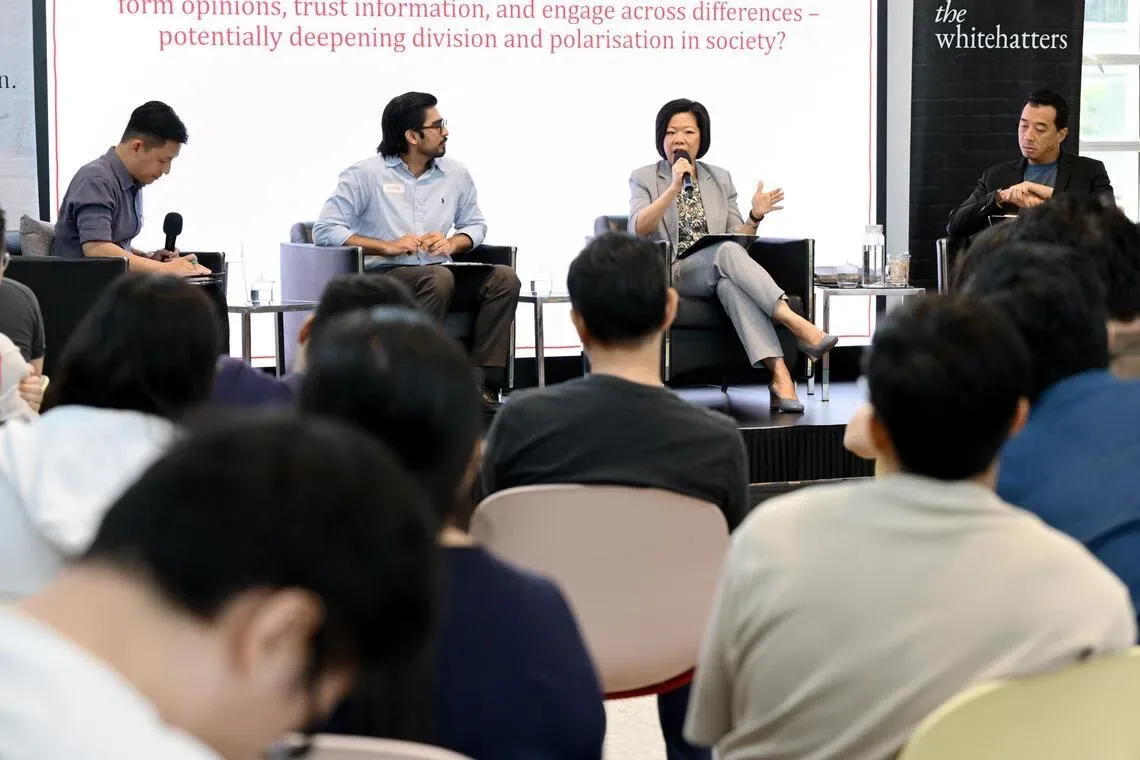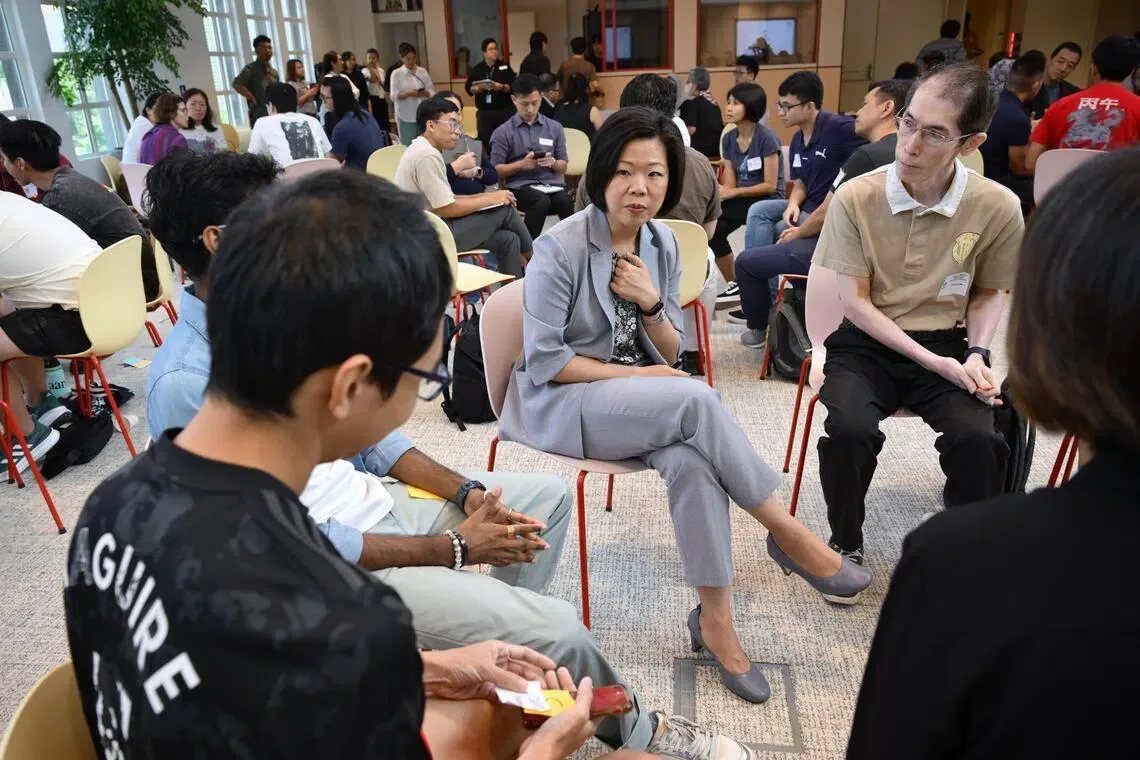
Singapore is focusing its online regulatory efforts strictly on issues that impact national and public interest, rather than broadly regulating all online content, authorities said at a public forum held yesterday at Temasek Shophouse in Singapore [1, 2, 3].
The forum, titled "Holding the Centre: Navigating Online Polarisation," attracted about 100 members of the public and included group discussions on the challenges of online polarisation and misinformation on digital platforms [1, 2, 3]. Senior Minister of State for Home Affairs Sim Ann spoke at the event, emphasizing the importance of distinguishing subjective perspectives from contested facts. She said, "We accept that there can be subjective perspectives on many things, but it would be problematic if a statement of fact is contested and not validated" [1].
Singapore’s approach involves using the Protection from Online Falsehoods and Manipulation Act (POFMA), which empowers authorities to issue correction notices to those spreading misleading statements [1, 2, 3]. Sim Ann also highlighted that frameworks are in place to identify individuals who have become radicalized, supported by community and family efforts to detect early signs [1, 2, 3].
Concerns at the forum included the rise of 'manosphere' online communities that promote masculinity and male supremacy. Saddiq Basha, a senior analyst at the International Centre for Political Violence and Terrorism Research, warned about the increase in such content and its potential to drive males toward extremist ideas and violence. He cited examples such as youths role-playing as ISIS fighters in video games [1, 2, 3].
Nicholas Fang, managing director of Black Dot, noted how social media algorithms tend to amplify content that grabs attention, often favoring outrageous or polarizing posts. He also explained that social media companies operate as commercial entities in Singapore, and authorities cannot impose overly draconian regulations on them. Fang added that younger users may not be fully equipped to handle explicit or extremist content online [1, 2, 3].
The forum was organized by Reach and The Whitehatters, a community development NGO focused on digital issues [3].
As a next step, authorities continue to monitor online spaces for harmful content using existing legal frameworks like POFMA, while engaging community efforts to address misinformation and radicalization.