Singapore's government plans to raise the minimum age for social media access beyond 13 if platforms fail to implement strong safeguards, Prime Minister Lawrence Wong said during the National Day Rally speech on August 23, 2026 [1, 2, 3, 4, 5]. Wong emphasized that "these features are hard enough for adults to resist – for teenagers, the risks are greater" [1]. He noted that current enforcement relying on self-declared ages is inadequate and warned, "If its safeguards remain inadequate, we will consider additional restrictions – including raising the minimum age for access to that platform beyond 13" [1].
Singapore mandates robust, reliable age verification methods for children under 13, replacing weak self-declaration systems to better protect youths [1, 3, 4, 5]. A 2023 study cited by Wong found 1 in 6 young Singaporeans aged 10-24 showed problematic social media use, with some spending six to seven hours daily, often late at night [1, 3, 4, 5]. The government draws parallels between the risks social media poses to youths and those posed by emerging technologies like AI, stressing the need to anticipate dangers and protect users [1, 2, 3].
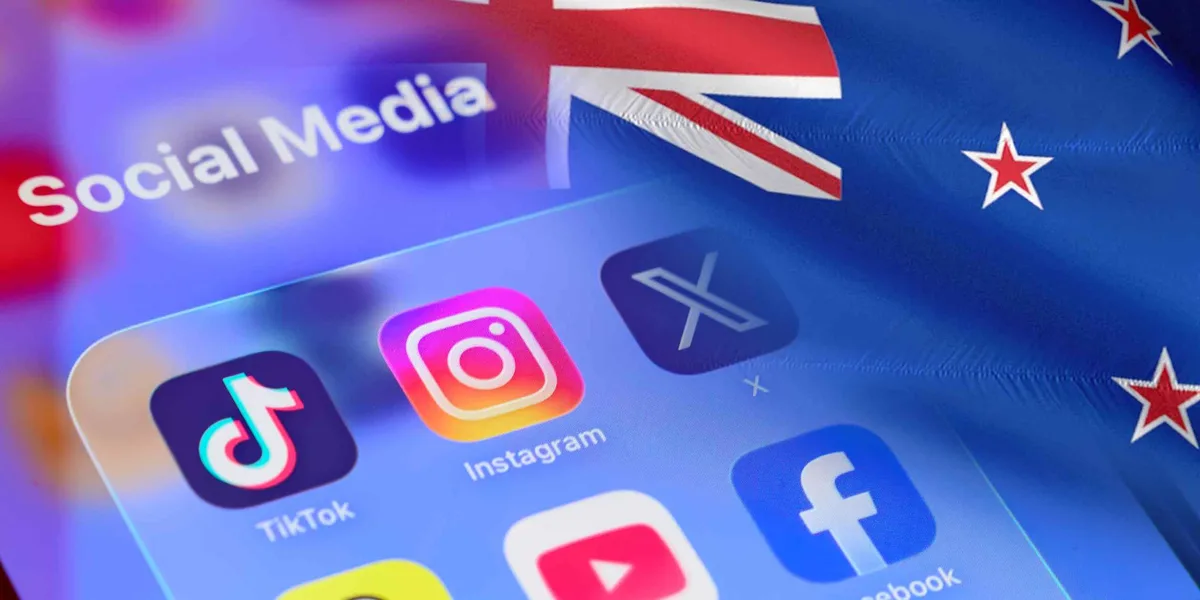
Across the Tasman Sea, New Zealand announced on August 24 a bill that would ban social media use for children under 16 [6, 7, 8, 9, 10]. The Online Safety (Minimum Age and Child Safety Risk Assessment) Bill would require platforms to verify users’ ages using methods including existing account info, facial age estimation, digital IDs, and formal identification [6, 7, 11, 9, 10]. Platforms face fines up to 10% of their global revenue for noncompliance [6, 7, 11, 9, 10].
Prime Minister Christopher Luxon said social media is harming New Zealand children under 16 by exposing them to harmful content, addictive technology, and pressures that affect family life, mental health, sleep, and education [6, 7, 11, 9, 10]. "We simply cannot accept the harm being done to a generation of New Zealand children," Luxon stated [7]. He acknowledged challenges in enforcement but insisted, "It’s just way too important not to at least try" [10].
The bill gained momentum on August 25 when the Labour Party declared its support, improving chances for passage ahead of the November 7 election [12]. However, some coalition partners like New Zealand First oppose the legislation, calling it unworkable and arguing social media management should be parental responsibility. Party leader Winston Peters labeled Australia’s similar under-16 ban a "colossal failure" [7, 12, 10]. Australia implemented the world's first nationwide ban for under-16s in December 2025 [6, 7, 12, 9, 10].
One in three New Zealand children aged 13-17 reportedly spends at least five hours daily on social media [6, 9]. The new bill aims to curb these figures through stricter age controls and potential penalties.
Singapore and New Zealand’s actions mark recent concrete steps to strengthen protections for young social media users. New Zealand’s bill is set to be debated and possibly passed before the November 7 general election.