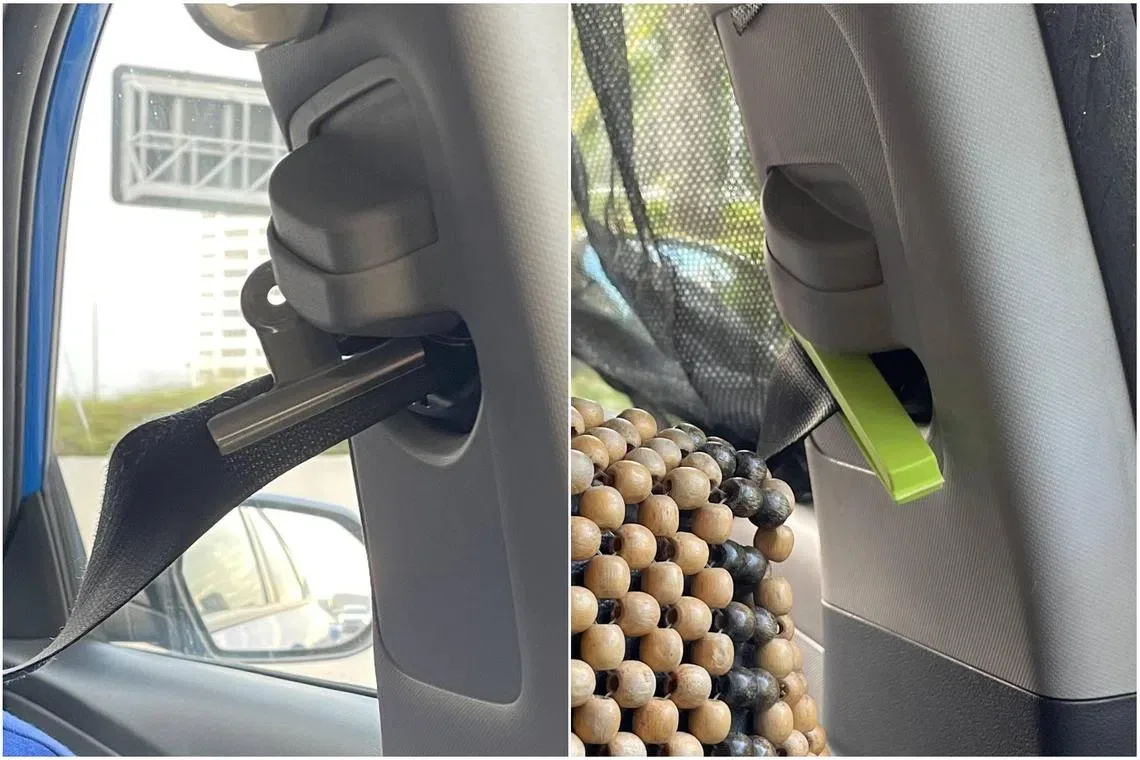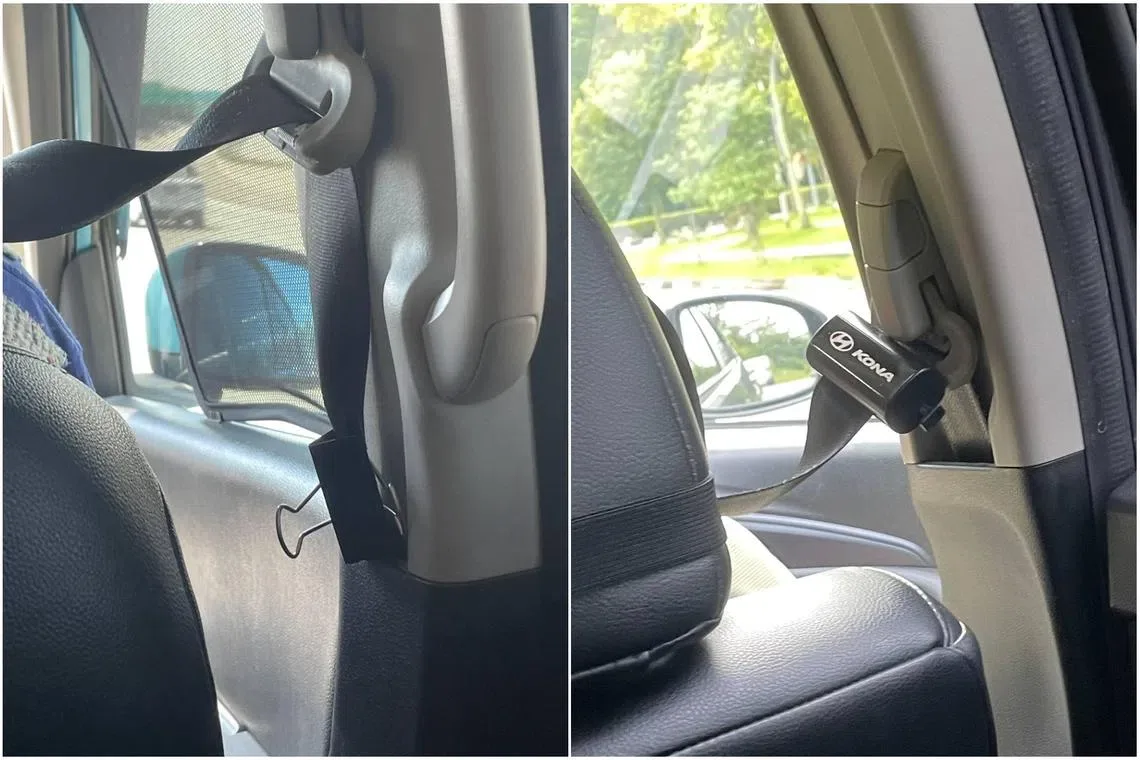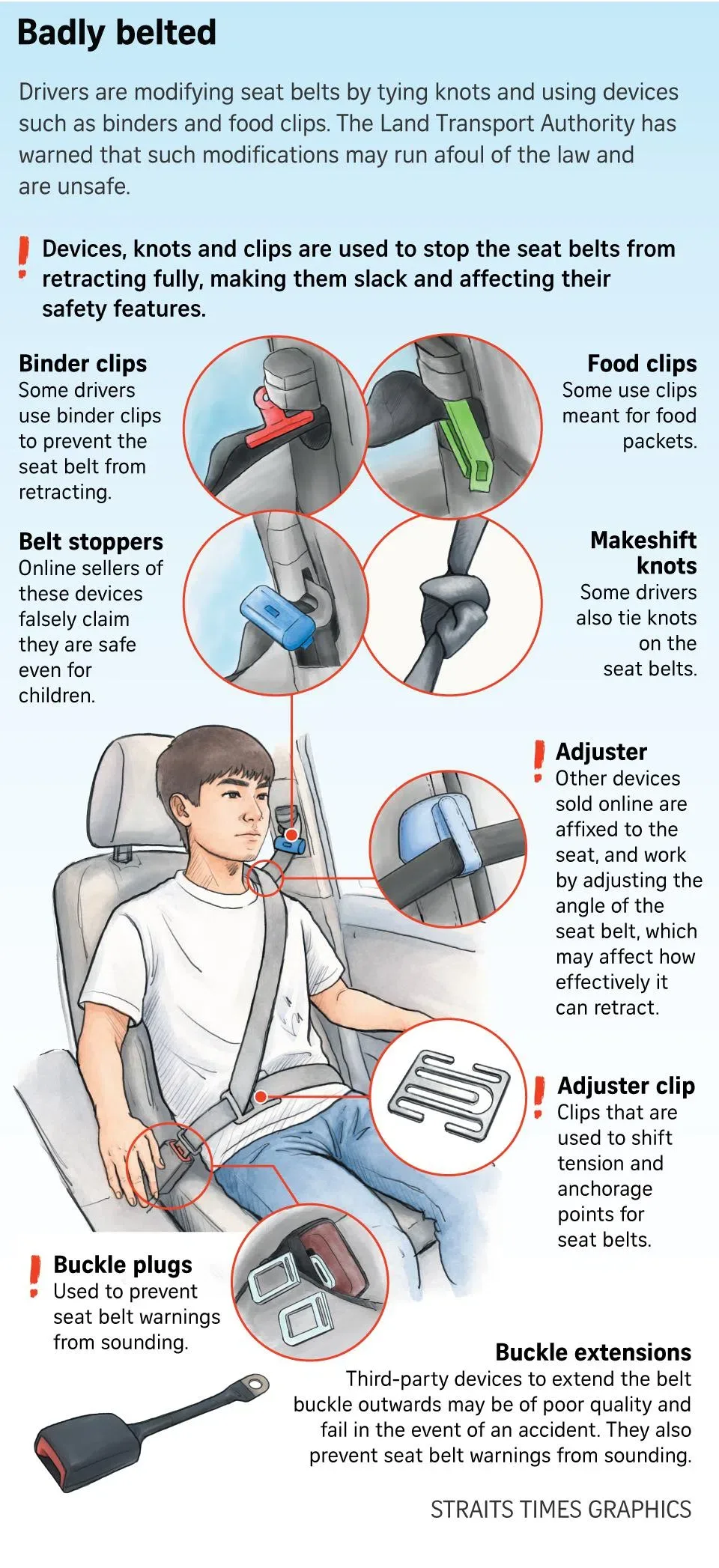
Some taxi and private-hire drivers in Singapore use binder clips, knots, food clips, or online-purchased seat belt stoppers to keep seat belts slack for comfort during long hours on the road, according to observations made between late April and early June 2026 during 20 rides where seven drivers were found using such modifications [1, 2].
The Land Transport Authority (LTA) and the Association of Automotive Singapore (AAS) issued warnings that these alterations are illegal and dangerously compromise the safety function of seat belts in a collision [1, 2]. An LTA spokeswoman explained, "Devices or modifications that may interfere with the proper operation of the seat belt, such as belt stoppers, should not be used as they could compromise the effectiveness of the seat belt in a collision. Seat belts must also be properly anchored to the designated seat belt anchorage points in the vehicle" [2].
Taxi driver Lee, 69, admitted to folding his seat belt and securing it with a binder clip to keep it slack for comfort, but acknowledged enforcement challenges: "Actually, I know this is not allowed, but the Land Transport Authority (LTA) and the police only check to see if you’re wearing a seat belt, I’ve never seen them check for such clips. I don’t think it’s that dangerous. We didn’t even have seat belts (in some cars) when I first started driving in the 70s" [1].
The Road Traffic Act penalizes the use of non-approved seat belt modifications with fines of up to $20,000 and jail terms of up to two years [1, 2]. For not wearing seat belts, fines can reach $1,000 and imprisonment up to three months, with penalties doubled for repeat offenses [1, 2]. Following the LTA warnings, online platforms have removed unapproved seat belt modification devices from sale [1, 2].
The authority's response comes as Singapore’s road traffic deaths reached a 10-year high of 149 in 2025, exceeding the 141 fatalities recorded in 2016 [1, 2]. The rise in traffic fatalities adds urgency to enforcing proper safety standards.
Authorities will continue monitoring seat belt compliance and enforcement following the observations made in early 2026, emphasizing that all seat belts must remain unmodified and correctly anchored to ensure occupant safety [1, 2].