Two Singapore residents, a 67-year-old Singaporean and a 65-year-old permanent resident, completed their hantavirus quarantine on June 6 after testing negative for hantavirus, including the Andes virus [1, 2].
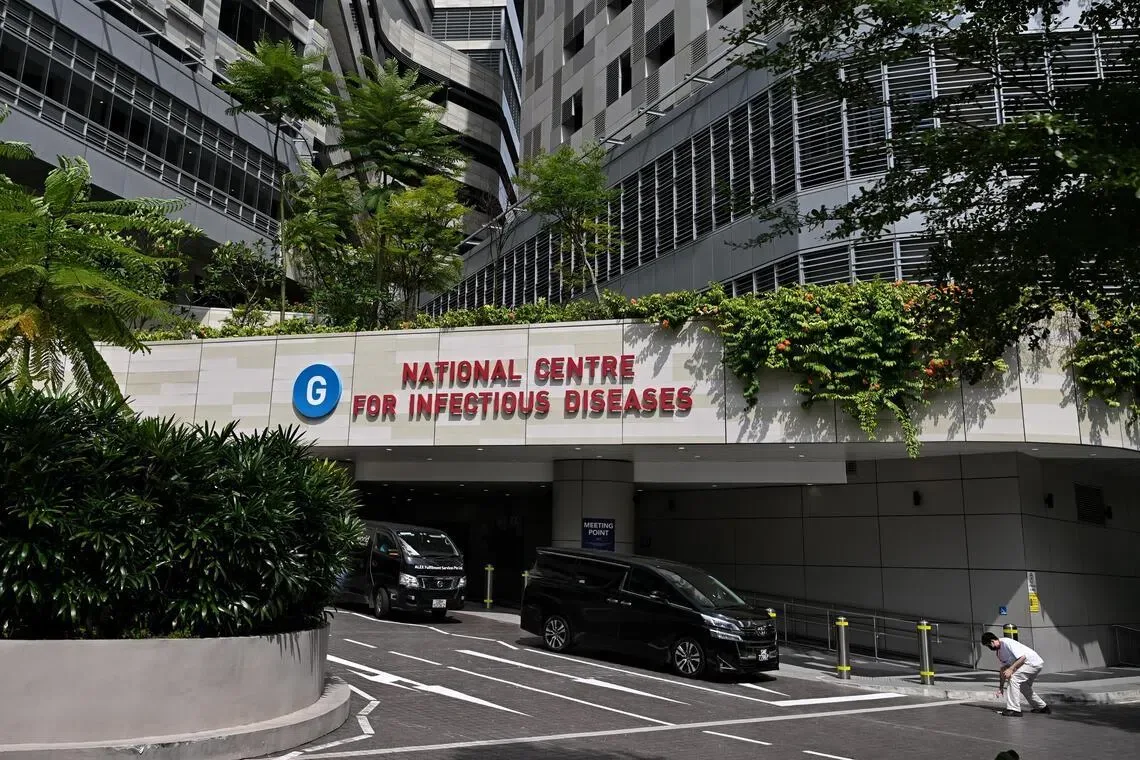
The men were last exposed on April 25 during a flight from St Helena to Johannesburg with a confirmed hantavirus case who later died in South Africa [1, 2]. They returned separately to Singapore on May 2 and May 6, where they were isolated at the National Centre for Infectious Diseases and tested negative [1, 2]. The Communicable Diseases Agency said, "Both of them are well, and have tested negative for hantavirus, including the Andes virus, before release from quarantine" [1, 2].
The monitoring period after hantavirus exposure lasts 42 to 45 days from last exposure, reflecting the virus’ incubation period [1, 2]. During the last 12 days of quarantine from May 25 to June 6, the men could have transitioned to home quarantine, though it is unclear if they did [1].
The MV Hondius cruise ship departed Ushuaia, Argentina on April 1 and docked at St Helena on April 24 [1, 2]. The WHO has recorded 13 confirmed cases linked to the outbreak associated with the MV Hondius, including three deaths as of May 27 [1].
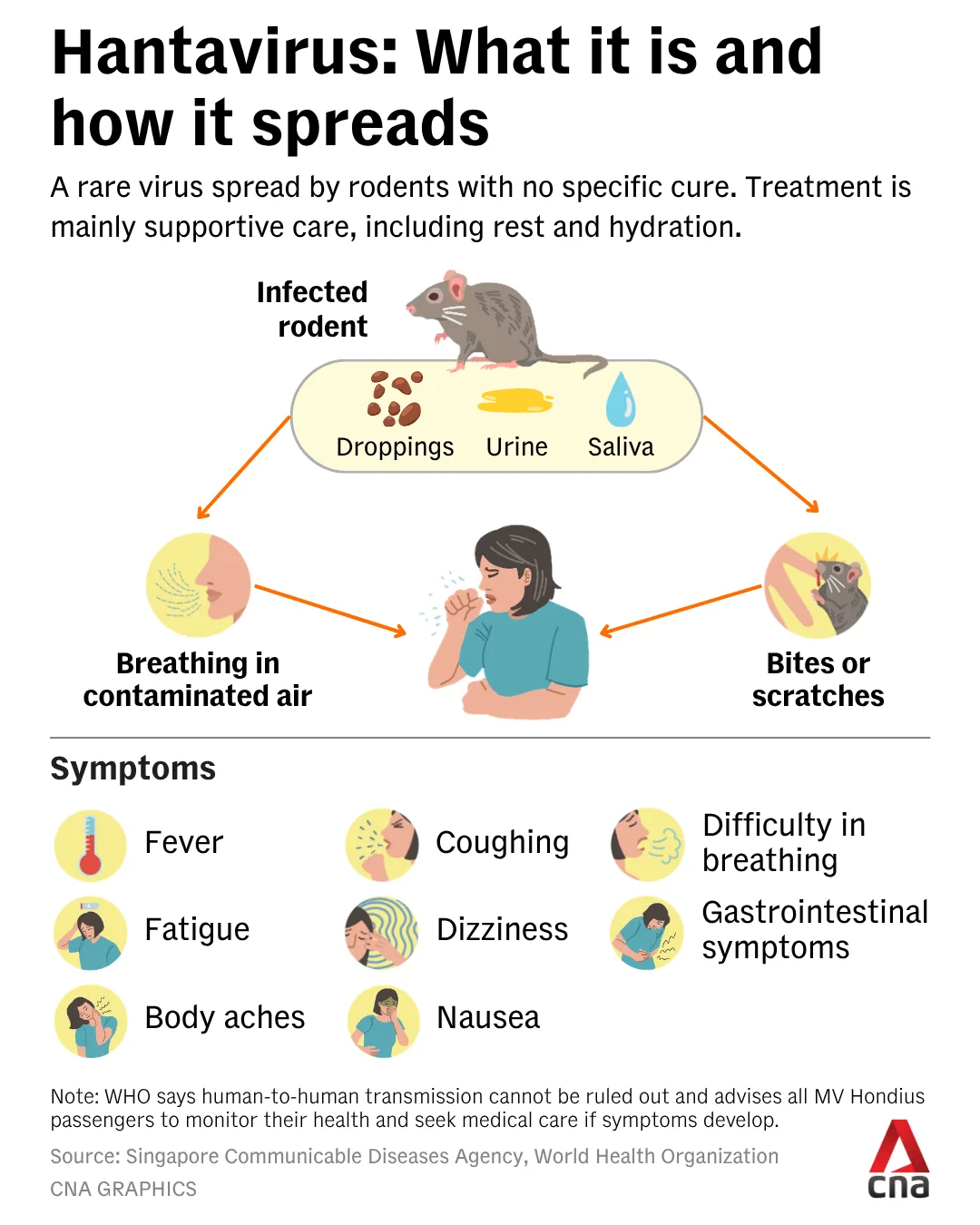
Hantavirus is carried by rodents and infects humans through inhaling dust contaminated by rodent excreta. The Andes virus variant has been linked to rare human-to-human transmission [2]. Symptoms include fever, body aches, fatigue, gastrointestinal issues, and breathing difficulties, and can progress rapidly to shock and death [2]. There is no specific antiviral treatment or vaccine; care is supportive in hospitals if required [2].
Authorities have said the overall risk of infection for the general public outside of close contact or exposure on the ship remains low [1].