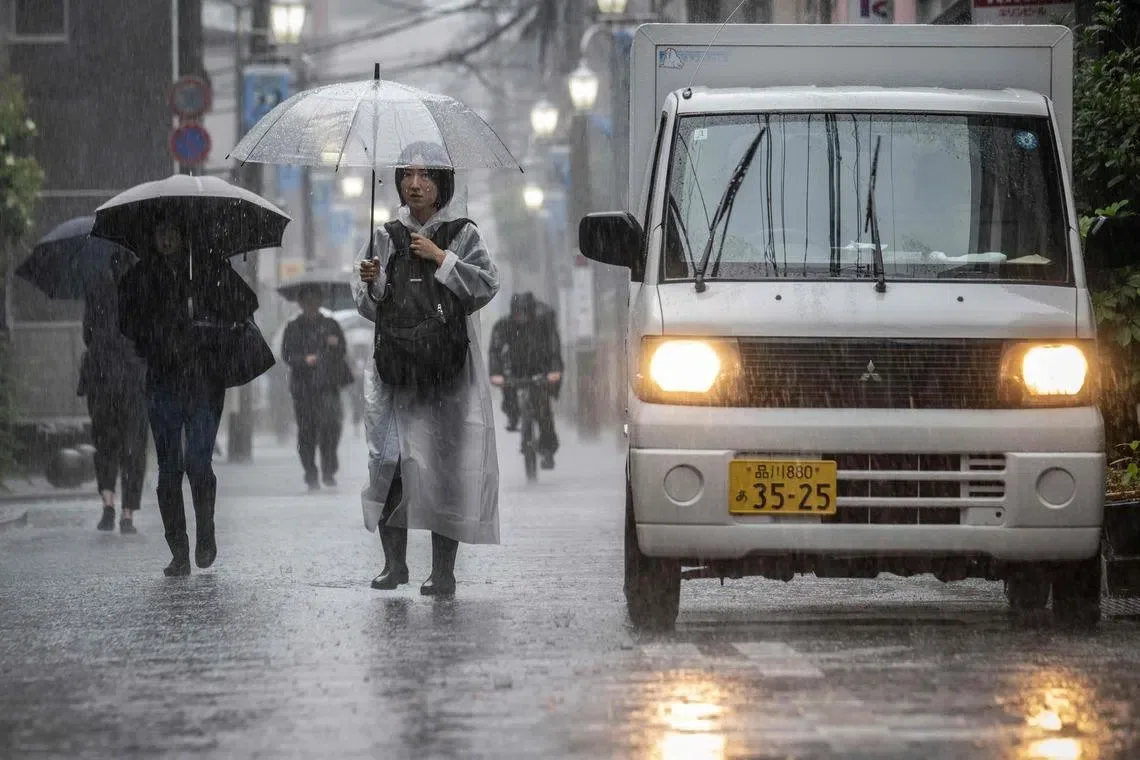
Typhoon Jangmi made landfall in Wakayama Prefecture in western Japan at around 4:30 a.m. JST on June 3, 2026 [1] [2]. The Japan Meteorological Agency (JMA) issued warnings for heavy rain and strong winds from June 2 to June 4 affecting Japan's Pacific Coast side regions including Shikoku, southern Kinki, Kanto-Koshin, Tokai, and Tohoku [1] [2].
Rainfall was forecasted to reach up to 200 millimeters over a 24-hour period in the Tokai and Kanto-Koshin regions, with up to 120 millimeters expected in the Tohoku region by 6 a.m. on June 4 [1] [2]. The JMA also warned of landslides, flooding in low-lying areas, and potential river overflows, particularly in western Japan [1] [2].
By June 2, at least 15 people had been reported injured across Kyushu and the Amami regions due to torrential rain and strong winds [1] [2]. In Okinawa, homes sustained damage, roads flooded, and trees fell as the typhoon moved northward [1] [2].
The severe weather disrupted transport links. Singapore Airlines rescheduled 14 flights between Singapore and Japan on June 2 and June 3 because of the storm [1] [2]. The Singapore embassy in Tokyo advised Singaporean residents to monitor local conditions closely and prepare evacuation plans, including knowing evacuation center locations and securing valuables in waterproof bags. They cautioned that "Flights, shinkansen, ferries and other public transport services may be cancelled or severely delayed, so plan around it and stay indoors as much as possible," according to the embassy [1].
The typhoon's impact was expected to continue through June 4, with the JMA maintaining alerts for further heavy rain and wind across affected regions until 6 a.m. that day [1] [2].