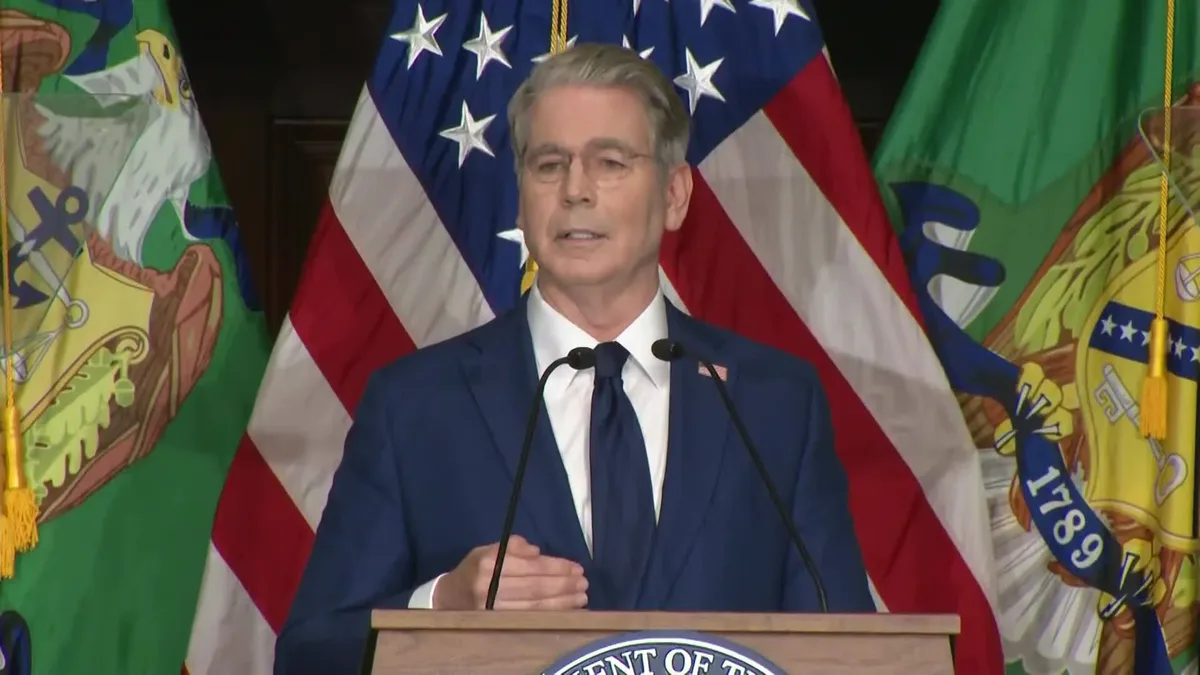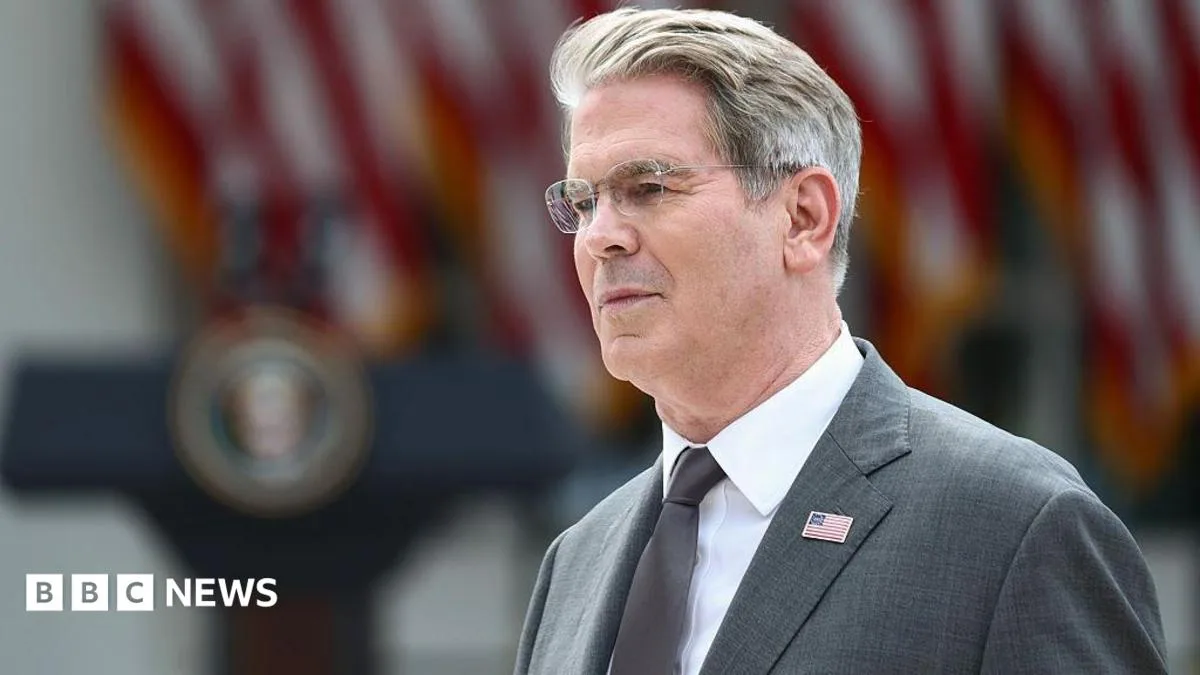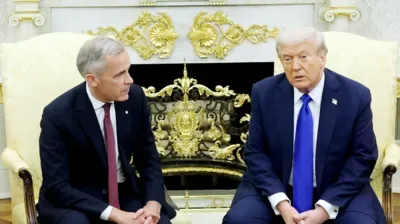
US Treasury Secretary Scott Bessent unveiled a new series of stringent economic sanctions on Iran, describing it as "the single greatest financial offensive ever marshalled against an adversary" and dubbing the campaign "economic D-Day" on August 24 [1, 2, 3, 4, 5]. The sanctions target Iran's economic lifelines and extend to its trading partners, including Chinese and Hong Kong entities; in total, 60 organizations were sanctioned [1, 6, 7, 8, 2, 3, 4, 5].
Bessent warned any nation or entity that facilitates economic ties with Iran risks isolation or expulsion from the US dollar financial system. "The world should understand that our objective is to sever every economic lifeline that sustains the tyrannical regime until Tehran stands alone," he said [1, 5].
Iran responded with a firm threat to halt all oil exports from the Persian Gulf if the economic pressure continues. Mohsen Rezaei declared, "If the economic war continues, not a single drop of oil will be exported, neither through the Strait of Hormuz nor from anywhere in the Persian Gulf" [1, 2, 3, 4, 9]. Tehran also told ships to avoid passing the Strait of Hormuz without Iranian permission, effectively maintaining the blockade that has cut most tanker traffic [1, 6, 7, 8, 2, 3].
The Strait of Hormuz remains a critical chokepoint for global oil, with daily flows reduced to about 8 million barrels during the conflict, down from more than 20 million barrels before the fighting began in February [6, 7, 8, 2, 3]. The US military has helped sustain this reduced flow amid ongoing tensions [6, 7, 8, 2, 3].
Iran's Foreign Ministry spokesperson Esmaeil Baghaei dismissed the US sanctions as lacking any basis in international law and warned that countries aligning with the US campaign would face consequences [6, 7, 8, 10, 11]. Iran’s deputy foreign minister Kazem Gharibabadi mocked US claims that Iran’s military and nuclear capabilities had been dismantled, calling the large-scale financial offensive an admission of US defeat [10, 11].
The six-month conflict began on February 28 with US and Israeli strikes against Iran, resulting in thousands of deaths and severe degradation of Iran’s conventional military assets, though missile and drone capabilities remain intact [1, 2, 3, 4, 9]. On April 8, a ceasefire ended nearly 40 days of intense bombardment [10, 11].
The crisis escalated as Pakistan’s army chief visited Tehran on August 24 for mediation talks amid rising tensions and ahead of the US sanctions announcement [9]. By August 20, only four commodity ships had passed the Strait of Hormuz, none carrying crude oil or LNG, reflecting Iran’s effective blockade [6, 7, 8].
The US sanctions campaign is ongoing, with pressure expected to intensify on Iran and its economic partners to curb Tehran’s access to global markets [1, 5].