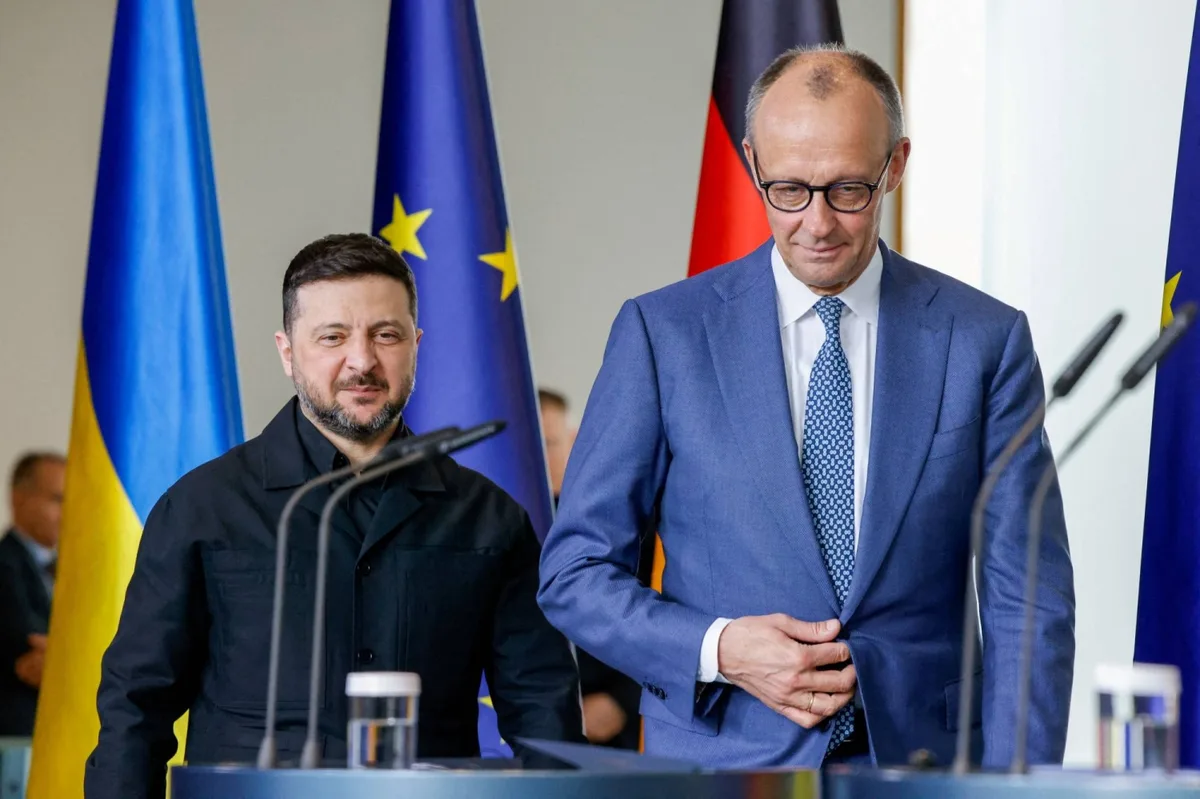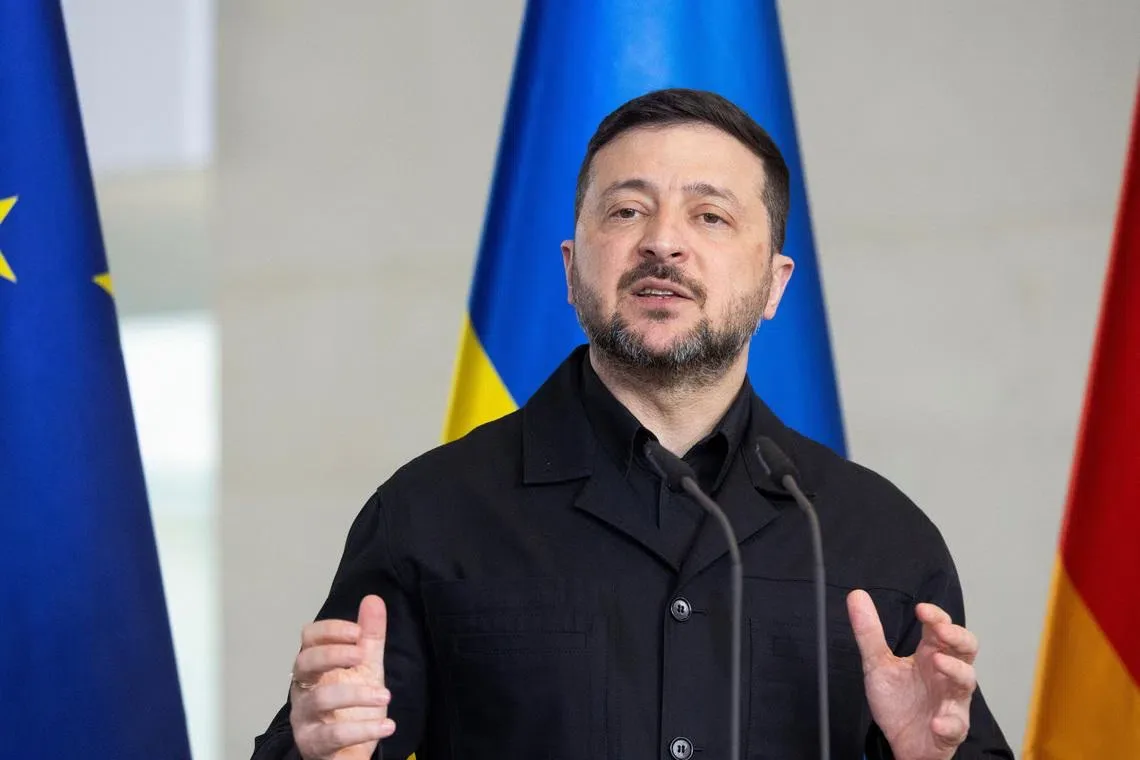
German Chancellor Friedrich Merz proposed granting Ukraine associate membership of the European Union, allowing Kyiv to attend meetings but without voting rights, as an interim step to full membership early in May 2026 [1, 2]. Ukrainian President Volodymyr Zelenskiy described the plan as unfair because it would leave Ukraine voiceless within the EU. "It would be unfair for Ukraine to be present in the European Union, but remain voiceless," Zelenskiy said [1].
On May 22, 2026, Zelenskiy sent a letter to EU leaders rejecting the associate membership proposal. He argued that Ukraine deserves full and meaningful EU membership with equal rights. "We are defending Europe – fully, not partially, and not with half-measures. Ukraine deserves a fair approach and equal rights within Europe," Zelenskiy said [1, 2].
Zelenskiy highlighted Ukraine’s role as a bulwark against Russian aggression for all 27 EU member states amid a war triggered by Russia’s invasion about four years ago [1, 2]. He also noted that the recent removal of Hungarian Prime Minister Viktor Orban, a strong opponent of Ukraine’s EU membership, opens an opportunity to advance accession talks [1]. Orban was ousted following elections in April 2026 [1].
Merz’s associate membership proposal envisions Ukraine participating in EU meetings but without voting rights or full membership privileges, intended as a temporary stage before eventual accession [1, 2]. Kyiv rejects this interim status as infringing on its sovereignty and equal standing.
Zelenskiy’s letter aims to press the EU leadership for full membership negotiations rather than accepting partial inclusion. The president frames Ukraine’s contribution to European security during the ongoing conflict as justification for immediate and equal EU membership.
Ukraine awaits the EU leaders’ formal response to Zelenskiy’s appeal and the next steps in accession talks as the war and diplomatic efforts continue.