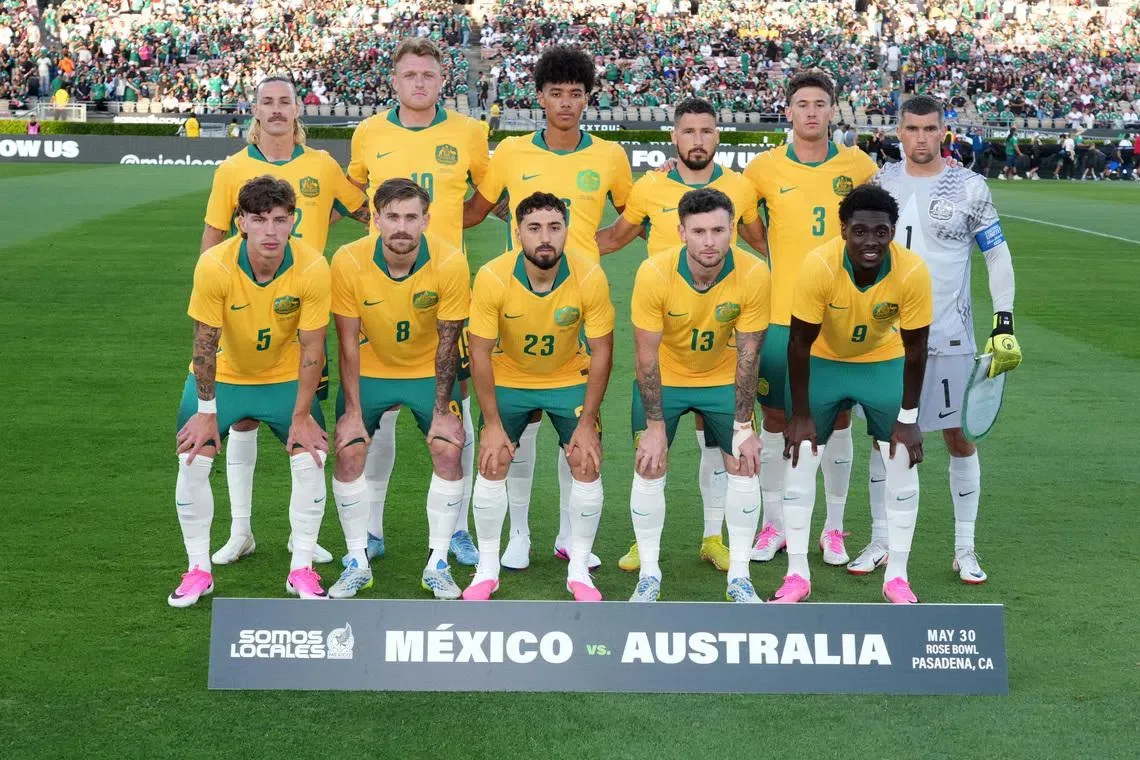
Australia has secured its place in the 2026 FIFA World Cup in North America, marking the country's sixth consecutive qualification for the tournament and continuing a run that includes two last-16 finishes, most recently at Qatar 2022 [1, 2]. The team, coached by Tony Popovic, qualified relatively easily, benefiting in part from the expanded 48-team format of the tournament [1, 2].
Drawn in a challenging group alongside co-host United States, Turkey, and Paraguay, Australia faces a tough path to progress beyond the group stage [1, 2]. Popovic’s squad includes many World Cup debutants and rising young talents such as 20-year-old Nestory Irankunda and 22-year-old Mohamed Toure, who have both impressed in England’s second-tier leagues [1, 2]. The late addition of Cristian Volpato, a former Italy under-20 international who recently switched allegiance to Australia, adds a fresh option for the attacking lineup [1, 2].
Despite the youthful energy, the Socceroos face criticism over a lack of a true target striker since Tim Cahill’s retirement and the absence of elite-level midfielders to support their forwards [1, 2]. Popovic has emphasized a style focused on physicality, defensive organization, and structural discipline. This approach could be effective in the group phase but may struggle in the unpredictability and intensity of knockout matches [1, 2].
Veteran midfielder Jackson Irvine expressed confidence in the squad’s potential, stating, "We're not hoping, we are really believing that we can go further than any Socceroos team ever before" [1].
Australia began preparations for the tournament in early June 2026 and will seek to build on their performance from Qatar 2022 when they reached the last 16 under former coach Graham Arnold [1, 2]. The 2026 World Cup will test the team’s blend of promising youth and disciplined tactics as they aim to secure knockout stage progression for the third time in history.