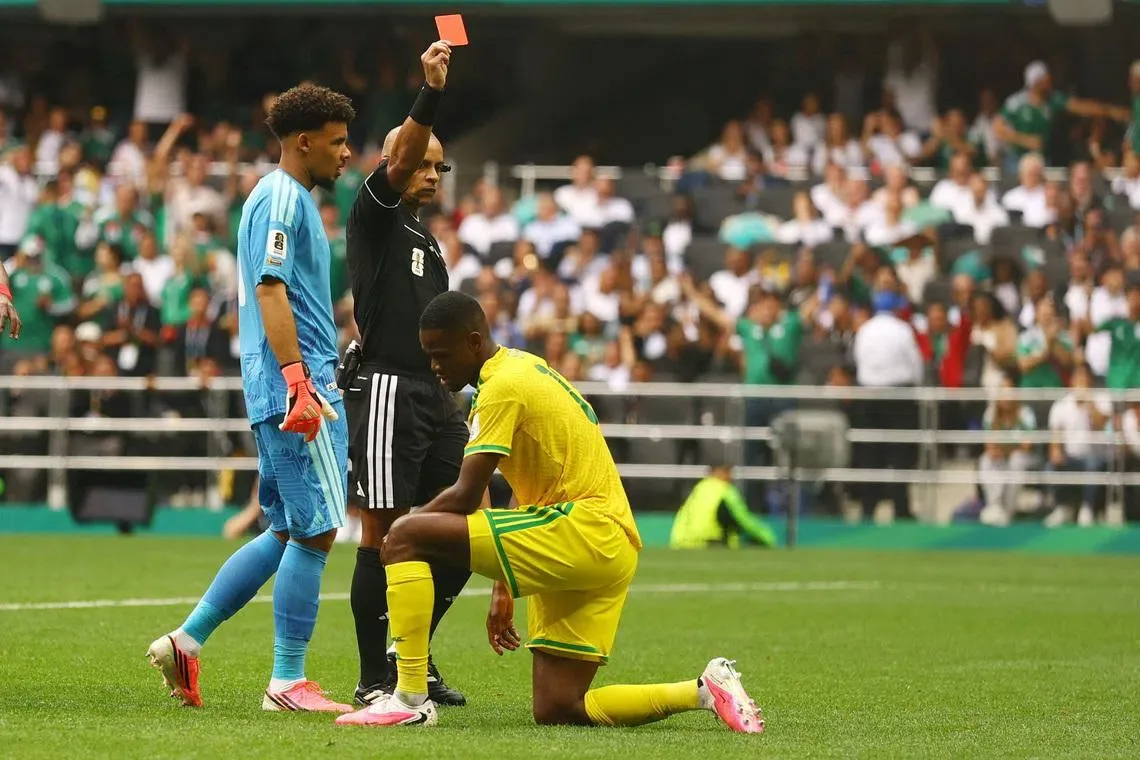
FIFA has introduced an additional yellow card amnesty at the 2026 World Cup to decrease the likelihood of players missing the final due to suspension [1, 2]. Players who receive one yellow card during the three-match group stage will have their record wiped clean before the knockout rounds begin, resetting their disciplinary status [1, 2].
A second yellow card amnesty will take place after the quarter-finals, clearing all yellow cards before the semi-finals start [1, 2]. This change builds on the existing rule since 2010, when cards were only expunged after the quarter-finals but not ahead of the knockout stage [1, 2].
Red cards still result in automatic one-match bans, with harsher sanctions possible for violent conduct [1, 2]. The opening match of the 2026 tournament on June 8 saw three players sent off as Mexico beat South Africa 2-0 [1, 2].
High-profile suspensions from past tournaments influenced the rule changes. Claudio Caniggia missed the 1990 final due to accumulated yellow cards, including a booking for a handball in the semi-final [1, 2]. Michael Ballack was suspended for the 2002 final for similar reasons [1, 2]. Meanwhile, Cristiano Ronaldo avoided a three-match ban for violent conduct in World Cup qualifying after an elbow incident in November 2025 [1, 2].
The introduction of the extra amnesty means players can better avoid missing key matches due to accumulated minor infractions. FIFA will monitor the impact during the 2026 event to assess the rule's effectiveness.