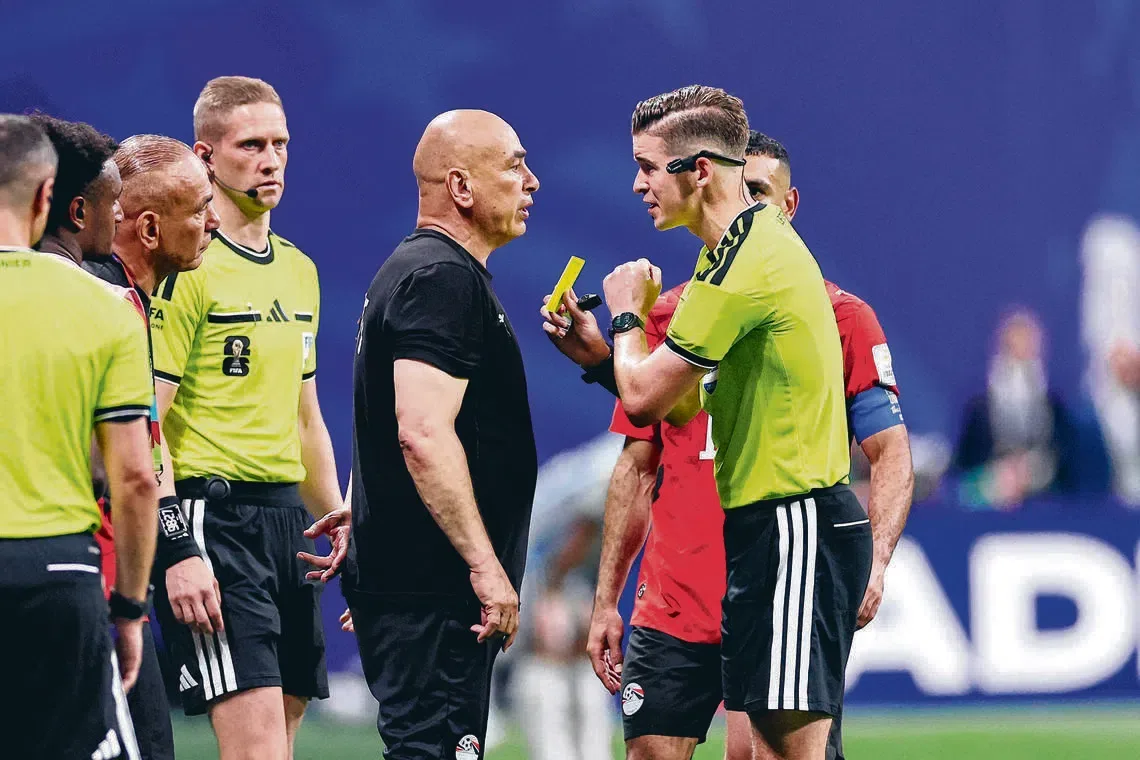
Several coaches and players raised complaints about refereeing decisions during the 2026 World Cup. Egyptian coach Hossam Hassan strongly criticized French referee Francois Letexier after Egypt’s 3-2 loss to Argentina on July 7, alleging that “pressure put on the referee before the match by the Argentine side succeeded” in influencing decisions [1]. Swiss defender Manuel Akanji also spoke out following Switzerland’s 3-1 quarterfinal loss to Argentina, pointing to a controversial red card against teammate Breel Embolo. Akanji said, “When you have the referee against you, it becomes difficult. Every little thing was called against us. Every dive and every foul by the Argentinians went unpunished” and called the match one-sided [2]. England coach Thomas Tuchel criticized refereeing as well, particularly concerning the red card for Jarell Quansah in England’s round of 16 win over Mexico [1, 2].
FIFA’s chief refereeing officer Pierluigi Collina responded on July 9, defending the integrity of match officials. He said, “Nobody can question the integrity of the FIFA World Cup match officials. When this happens, it may provoke reactions that lead to threats against them and their families. This is not right” [2].
Despite the complaints, FIFA confirmed it would wait until after the tournament concludes to sanction those who crossed the line in their criticism of refereeing [1, 2, 3]. The organization aims to maintain respect for referees and avoid inflaming tensions during the competition.
The key incidents include the Egypt vs. Argentina match on July 7, when Hassan’s accusation of external pressure on officials gained wide attention, and the quarterfinal game where Akanji called out referee Joao Pinheiro’s decisions [1, 2, 3]. FIFA’s stance signals strict enforcement against public denigration of officiating once the World Cup has ended.