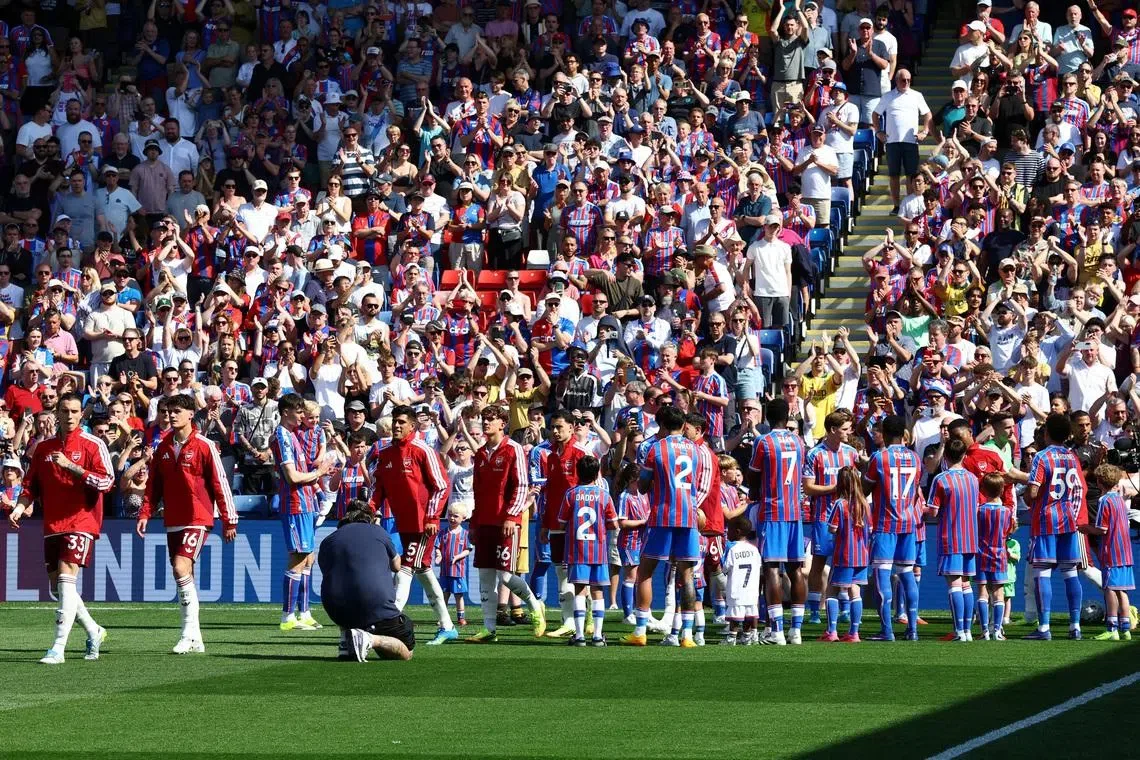
Five Arsenal players—David Raya, Martin Zubimendi, Declan Rice, Viktor Gyokeres, and Eberechi Eze—are projected to feature in 78 to 83 matchday squads across club and country this season [1, 2]. Martin Zubimendi has made the most appearances, playing 67 games for Arsenal and Spain, including all 38 Premier League matches [1, 2]. Declan Rice and Viktor Gyokeres have appeared 65 and 63 times respectively, with more games expected due to Arsenal reaching the League Cup final and FA Cup quarter-finals, as well as the Champions League final [1, 2].
FIFPRO and football experts warn that the escalating workload puts players at higher risk of injury and reduces physical performance [1, 2]. Darren Burgess said, "There is evidence to suggest that workload is a real issue, we have years of data to support it. We know injuries are now workload-related... Workload is increasing year after year even though we have evidence it's detrimental" [1]. He added, "Players involved in midweek matches don't return home until 3 or 4 am... They play on Wednesday night and they're being asked to perform on Saturday at midday, travelling away. The data shows their physical output during games is compromised when they play back-to-back matches. It's not guesswork, it's objective proof. The impact is enormous" [1].
Travel demands also contribute to fatigue, especially for European away fixtures scheduled midweek, which force players to recover quickly with little rest [1, 2]. The upcoming World Cup in Qatar compounds concerns. Scheduled 11 days after the Champions League final between Arsenal and Paris Saint Germain on June 10, players face a narrow window to prepare and acclimatize in conditions where 56% of matches are expected to be played above 28°C [1, 2]. Gregory Dupont said, "Players who play the Champions League final won't have time for full preparation, to acclimatise to the heat, to play at your full level of fitness. We need regulations if we want to protect not only players but football as well" [1].
FIFPRO highlighted these concerns publicly on May 26, emphasizing the risk to Arsenal players amid a congested season featuring multiple competitions and limited recovery time before the World Cup [1, 2]. With the Champions League final scheduled on June 10, attention now turns to how clubs and governing bodies address player welfare during this intense period [1, 2].