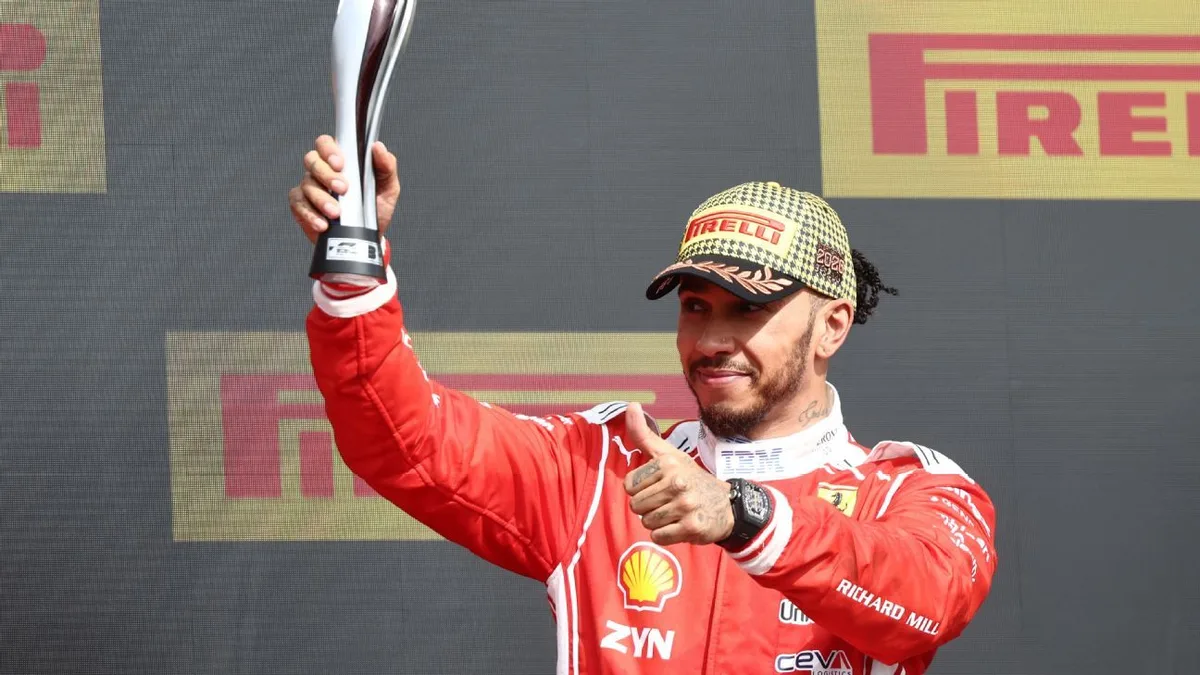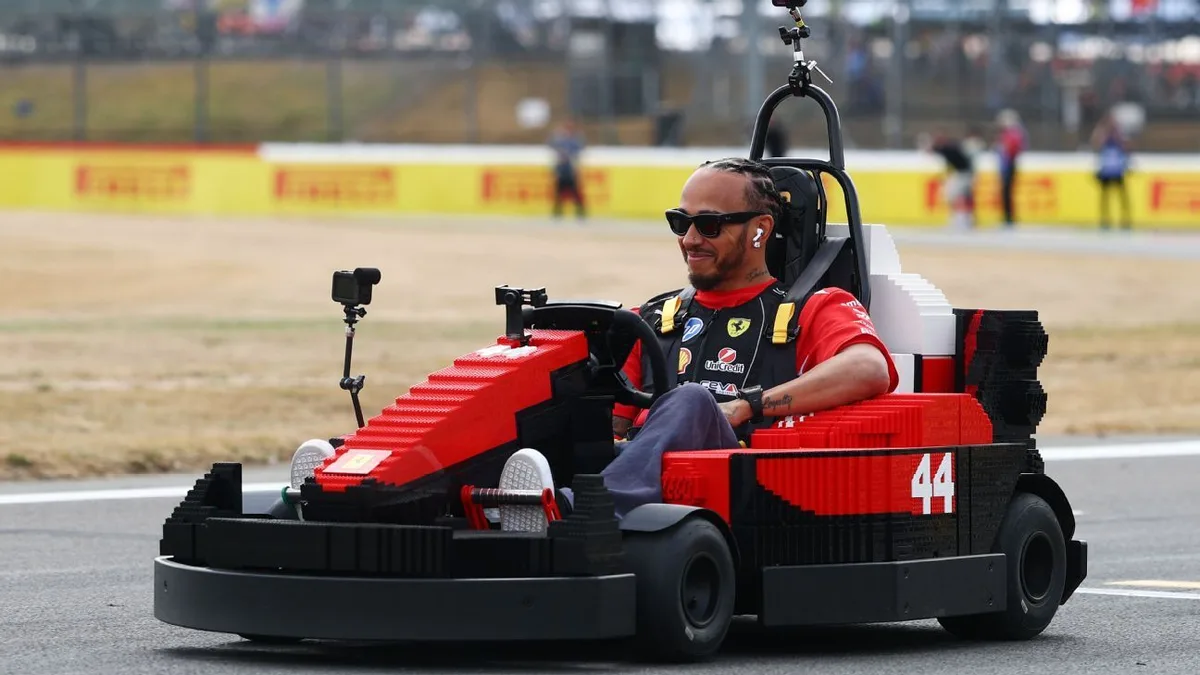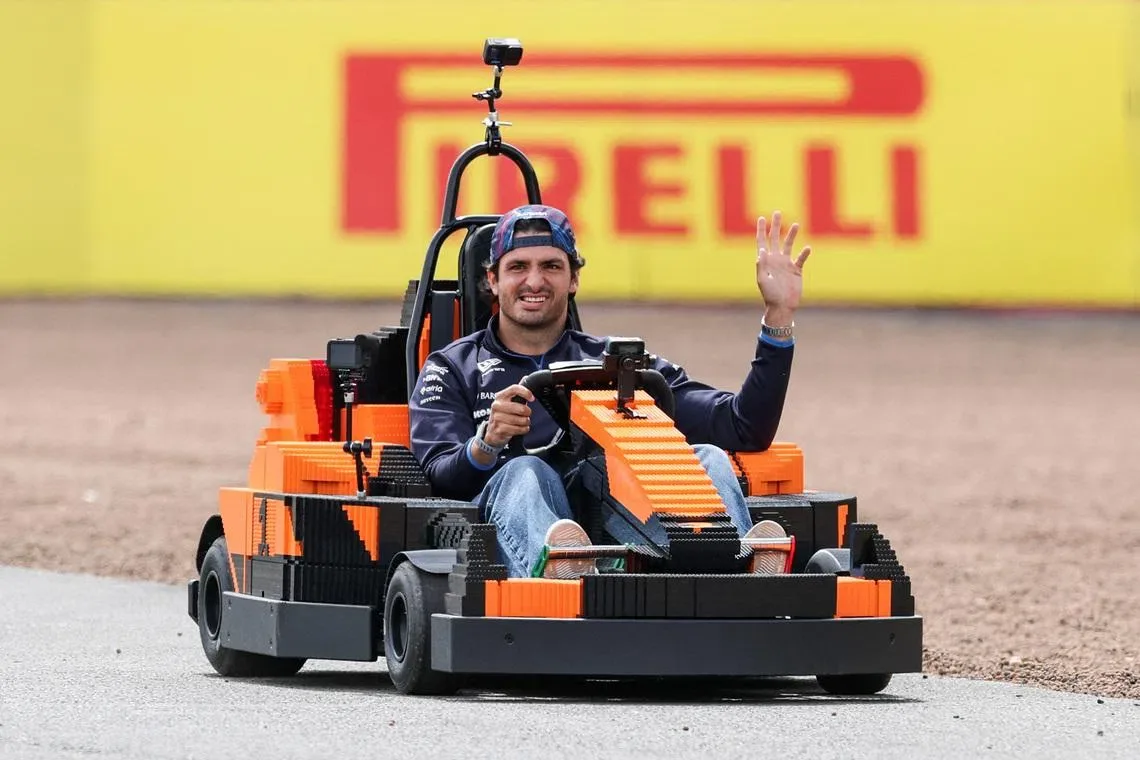
Formula One drivers participated in a parade lap driving Lego cars at the British Grand Prix on July 5, 2026, at Silverstone, England [1, 2, 3]. Each Lego car was made from more than 28,000 bricks and could reach speeds up to 25 kph (16 mph) [1, 2]. The cars featured the teams' 2026 liveries and driver numbers [1, 2].
A team of 20 designers, engineers, and builders in Kladno, Czech Republic, spent over 6,400 hours constructing the 22 Lego cars used for the event [1, 2]. Several drivers encountered difficulties during the parade lap, with Williams' Carlos Sainz getting stuck in the gravel and receiving a ride from McLaren’s Lando Norris to rejoin the track [1, 2, 3]. Fernando Alonso, who started last in the official race, won the Lego car parade lap among his peers [1, 2, 3].
Lewis Hamilton initially expressed reservations about taking part in the Lego race but ultimately joined the parade lap [1, 2, 3]. FIA president Mohammed Ben Sulayem also drove a minicar during the event but became stuck in gravel at times [1, 2, 3].
The Lego car parade follows last year’s British GP, where Lego trophies were awarded to the top three finishers, and continues a similar event held in Miami featuring Lego electric two-seater cars [1, 2].
After the race, Hamilton was summoned to the stewards over a potential penalty for failing to slow under a yellow flag [4]. Hamilton said, "I'm probably going to get a penalty right now as well, so I'll probably lose [it]. I went through a yellow flag and I didn't see it" [4]. The stewards found Hamilton had entered the yellow flag zone before the warning appeared on his steering wheel and took into account his focus on a recent overtake and mirrors [4]. They issued only a reprimand, allowing Hamilton to keep third place after he had already served a time penalty earlier for jumping the start [4].
The parade lap and stewards' decisions closed out a notable event at the British GP, blending spectacle with on-track drama [1, 4].