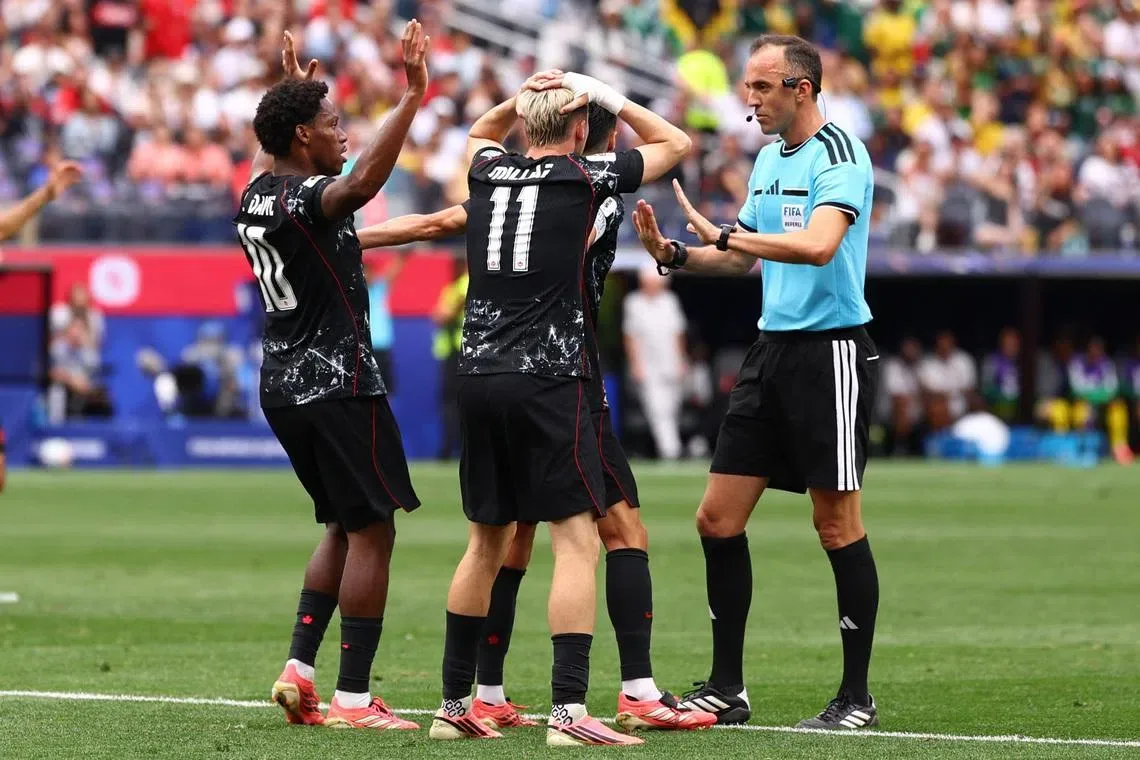
The 2026 World Cup adopted a more lenient refereeing style that prioritizes game flow over penalizing minor fouls, resulting in fewer stoppages and increased ball-in-play time, according to multiple sources [1, 2, 3, 4]. Referees have been encouraged to avoid whistling for trifling fouls, reducing interruptions during matches [1, 2, 3, 4].
NetSI Sport analysis found fouls per game dropped to 24.3 in 2026, down from 27.7 in 2022 and 29.3 in 2018, marking a clear decline in infractions called [1, 2, 3, 4]. While yellow card counts fell compared to previous tournaments, red cards increased, reflecting stricter enforcement of serious offenses [1, 2, 3, 4].
The group stage produced the highest scoring average in the modern era, with about 2.95 goals per game, indicating more open and attacking play styles [3]. FIFA’s Chief Refereeing Officer Pierluigi Collina explained the new rules aimed to improve game flow, which was otherwise hindered by excessive fouls [1, 2, 3, 4].
Soccer conditioning coach Chris West from the University of Connecticut said, "Looking at data from the last three World Cups, the distance covered by the athletes is similar, but there’s a lot more high-speed running, a lot more sprinting" [1]. He added that "most teams now press opponents not only to disrupt the build-up but also to win the ball back," describing the tournament as "a high-intensity game" [2, 4]. These tactical shifts paired with lenient refereeing make for quicker, more physically demanding matches [1, 2, 3, 4].
Brazilian television pundit Ledio Carmona praised referees for allowing physical contests, saying, "There are a lot of tackles that referees simply don’t call. Anything goes," during Uruguay’s group-stage game against Spain [1, 2, 3, 4].
Players not fully fit, especially those recovering from injuries affecting explosive movements like sprinting, may find the tournament’s demands difficult to meet [1, 2, 3, 4]. Teams have adapted by emphasizing aggressive pressing and rapid transitions, increasing high-speed running across matches [1, 2, 3, 4].
The tournament’s refereeing adjustments have helped achieve faster, more continuous gameplay, with the group stage showcasing these changes through record scoring and reduced fouls per game [3].