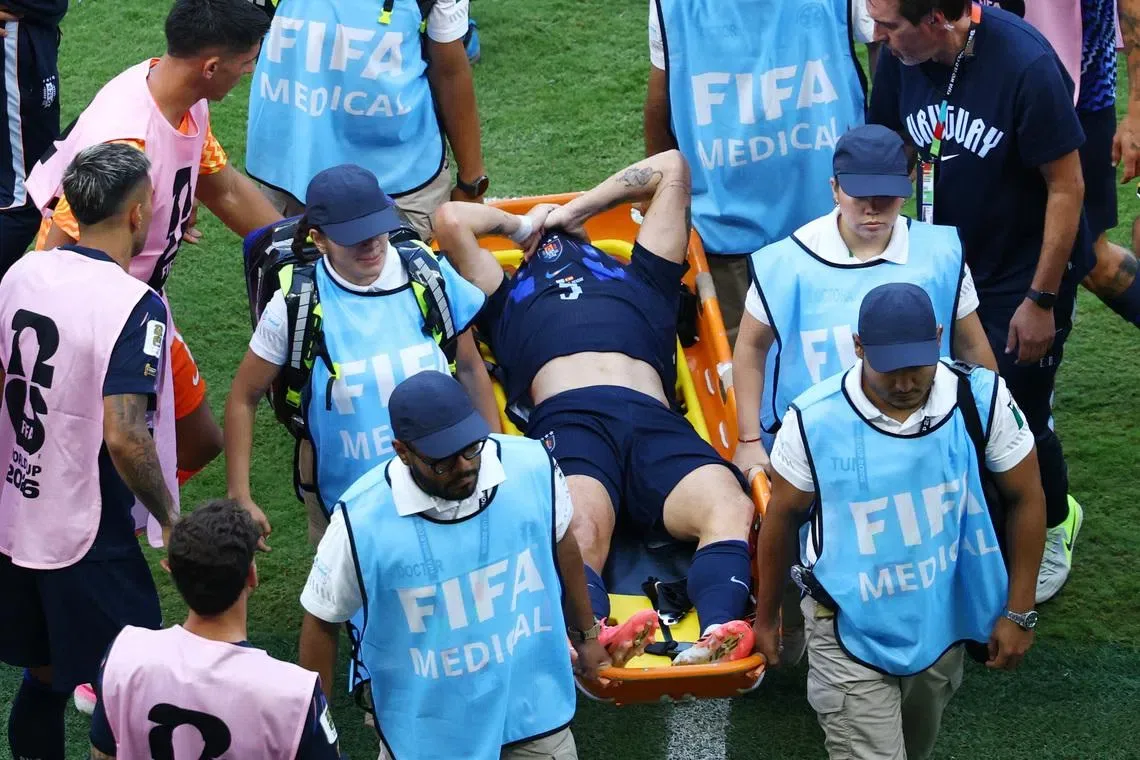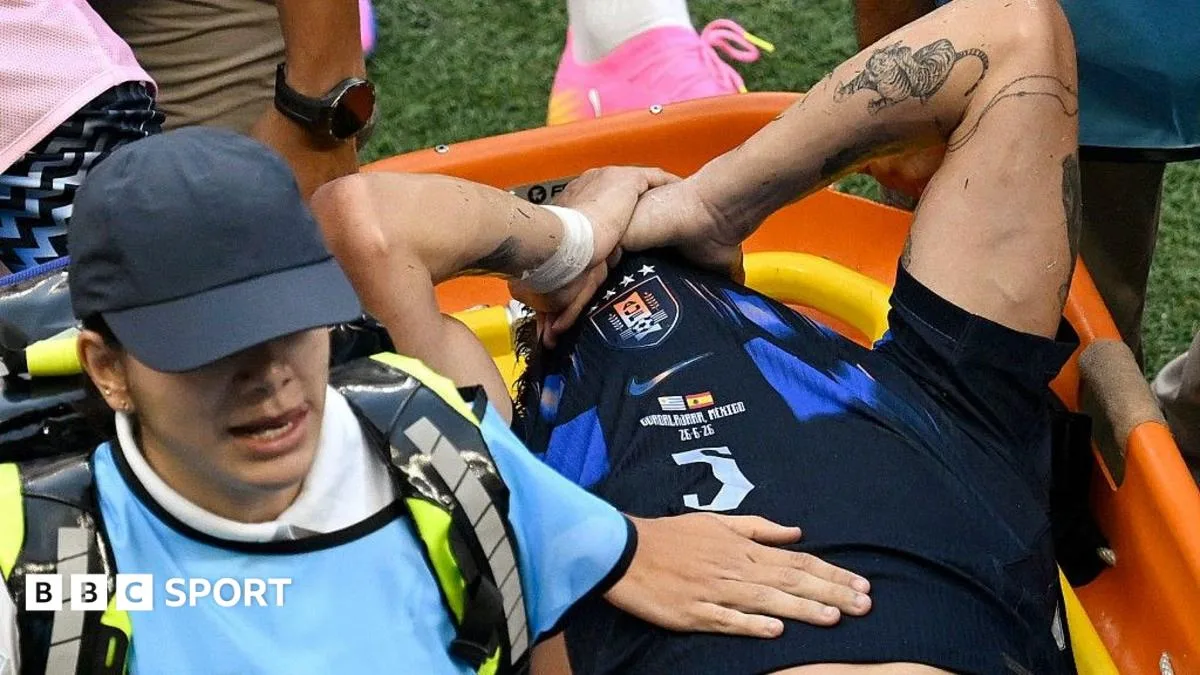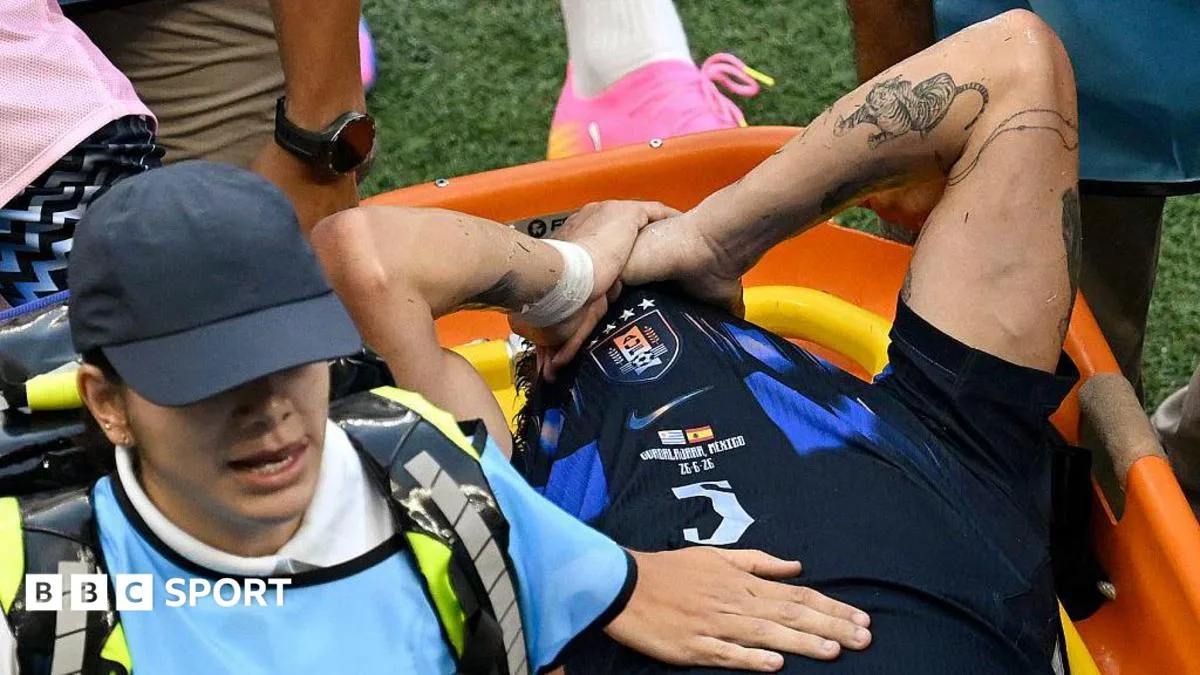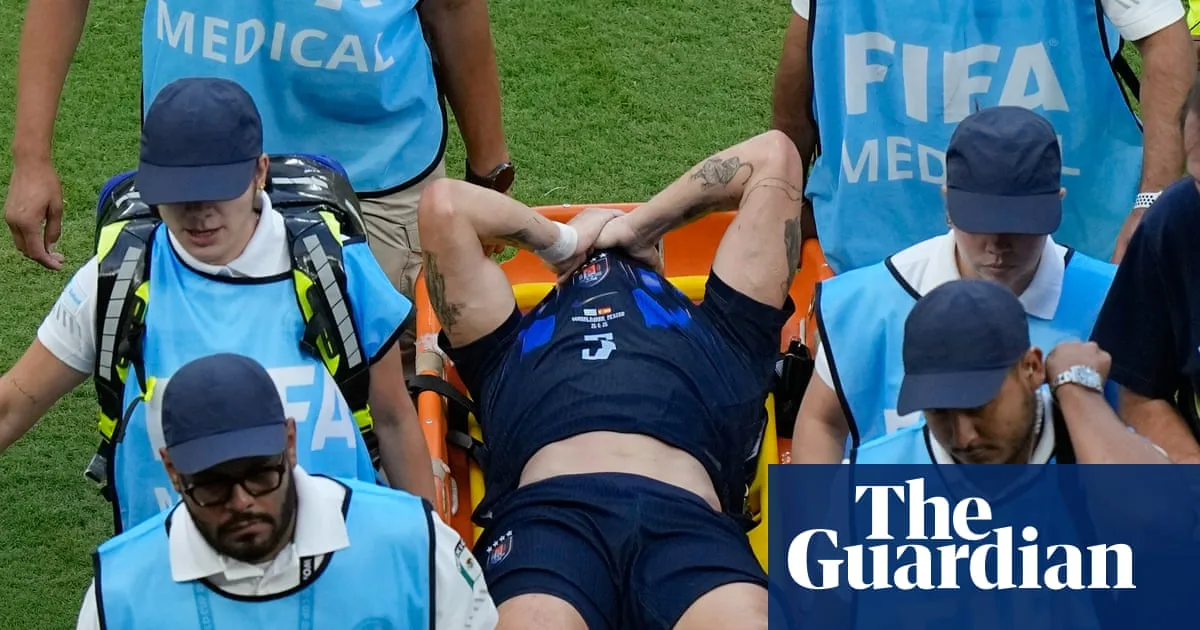
Manuel Ugarte suffered a serious knee ligament injury during Uruguay’s 1-0 defeat by Spain in the World Cup group stage on June 27 in Guadalajara. The 25-year-old midfielder twisted awkwardly trying to tackle Spain’s Pedri and was taken off on a stretcher before halftime, visibly distraught and covering his face with his shirt [1, 2, 3, 4].
Manchester United confirmed Ugarte sustained a knee ligament injury but have not yet specified which ligament is involved [1, 2]. The Uruguay Football Federation and Manchester United stated ongoing assessments are underway to determine the injury’s severity and treatment plan. The club said, "Assessment of the injury is ongoing to determine the best course of treatment and the rehabilitation timescale... Everyone wishes Manuel a successful recovery and we will be supporting him every step of the way" [2, 5].
Multiple outlets, including Uruguayan media and Ugarte himself on Instagram, indicated an anterior cruciate ligament (ACL) tear, often considered the most serious injury a footballer can face. Ugarte described it as "the most serious injury a footballer can face in one of the most important matches in my country's history... I will be back stronger" [5, 6]. However, official sources have not confirmed whether it is the ACL or another ligament [1, 3].
Ugarte joined Manchester United in 2024 from Paris Saint-Germain for around £50.8 million (€50 million) but has yet to reach expected form. Before the injury, he had started just eight Premier League matches in the 2025-26 season and had fallen out of the regular lineup [1, 2]. He was expected to move on loan or permanently this summer, but the injury now casts doubt on those plans [1, 5].
Uruguay finished third in Group H with two points and were eliminated at the group stage of the 2026 World Cup [2, 3].
On June 28, Uruguay’s medical team conducted early assessments while Ugarte posted about his injury on Instagram [5, 6]. The evaluation has continued on June 29, with further medical tests planned in Manchester as the full extent of the injury is determined [5, 6].