Around 23% of the France national football squad for 2026 were born in the Paris region, nearly three times the share from the 1998 World Cup squad [1, 2]. The Paris banlieues—working-class, often immigrant suburbs—have emerged as a dominant source of football talent in France, overshadowing the sport’s traditional national pipeline [1, 2].
Key national team players, including captain Kylian Mbappe and teammates William Saliba and Randal Kolo Muani, grew up in the northeastern Paris suburb of Bondy, a hotbed for prodigious football talent [1, 2]. Damien Durand, a football observer, said, "Honestly, there is no point looking elsewhere—most of the best players in France come from here. You could almost build a 100% Ile-de-France national team" [1].
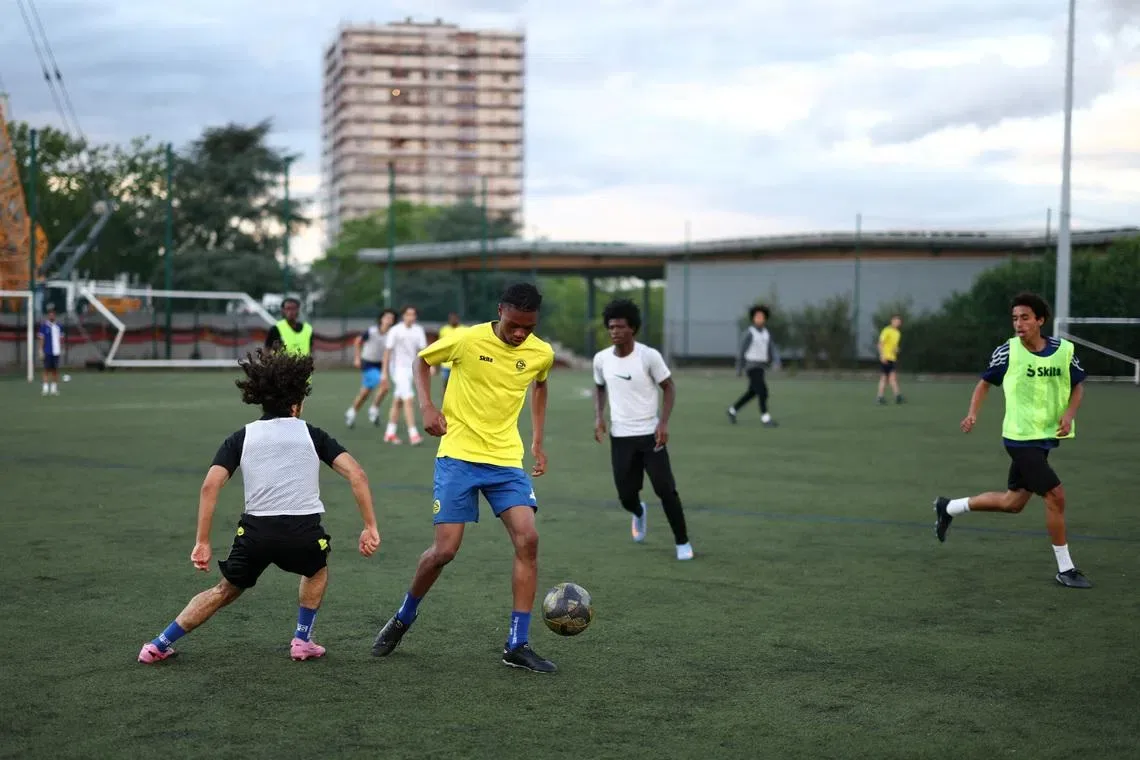
At the youth level, ES Nanterre’s Under-17 football team trains at the Stade Gabriel Peri despite its broken floodlight and lack of a professional academy. The team competes in France’s highest youth category, the U17 National Championship, and reached the quarter-finals in 2026 before losing 2-1 to Paris Saint-Germain [1, 2]. Gael Diarra, connected with the team, said, "If you feel you've shown your best tonight, no need to come back on Friday. If you think you were not at your best, you come back" [1].
The 1998 'Black-Blanc-Beur' World Cup winning French team symbolized the country’s multicultural unity but also masked ongoing social inequalities and discrimination [1, 2]. The current cohort continues to highlight the Paris suburbs as fertile ground for football talent.
The 2026 FIFA World Cup is set to kick off on June 11, with France considered one of the favorites to win the tournament [1, 2].