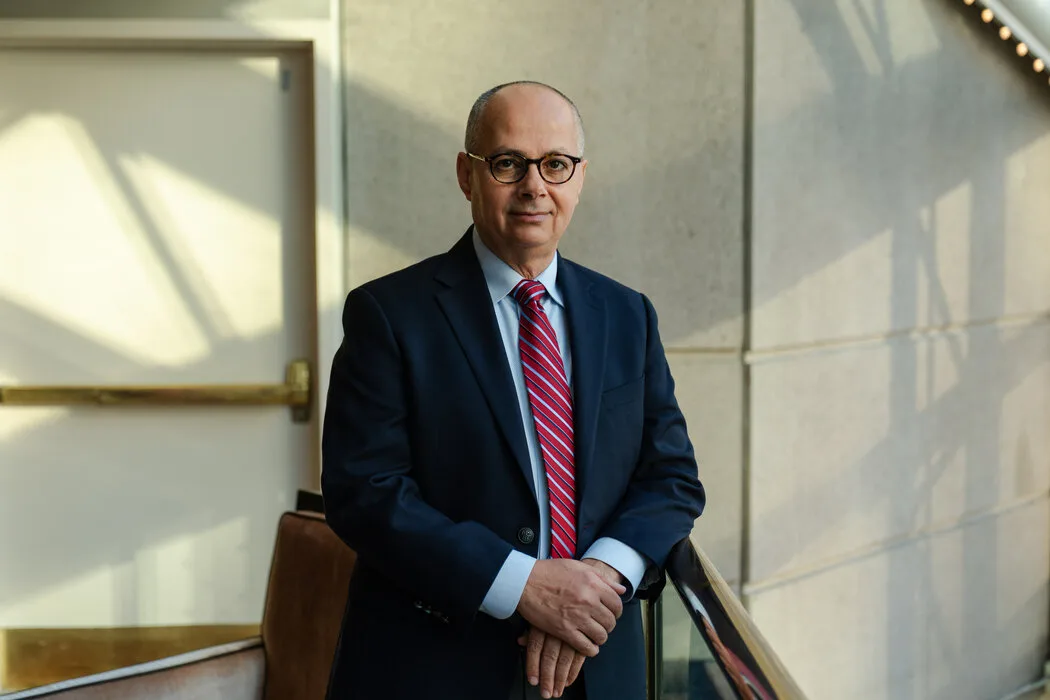
Omar Yaghi, the 2025 Nobel Prize-winning chemist, has left his faculty position at the University of California, Berkeley to lead a new artificial intelligence-focused materials science institute at Tsinghua University in Beijing, China [1, 2]. Yaghi earned the Nobel Prize in Chemistry for his pioneering work on metal-organic frameworks (MOFs), porous compounds that enable gas and vapor absorption through their large surface areas [1, 3, 2].
The institute at Tsinghua will use AI to speed the discovery and design of new materials, aiming to replace traditional trial-and-error methods in chemistry and materials sciences [1, 2]. Yaghi described his new role as an opportunity to "do science with more energy, intensity, and ambition than ever before" [2].
Experts note that China has overtaken the United States in many areas of materials science and chemistry, driven by massive investments and recruitment of international talent. "They've overtaken us in many areas of materials science and chemistry. They're willing to invest very large sums of money to attract new talent," said Ram Seshadri, a professor at UC Santa Barbara [1].
Yaghi himself is originally from Amman, Jordan, born to a Palestinian refugee family. He credits his childhood experience with water scarcity as the inspiration for his breakthrough work on MOFs [3, 2]. He also expressed concern that immigration policies under the Trump administration harmed the U.S. scientific ecosystem, saying the country risks losing its global innovation edge [1, 3, 2].
Tsinghua University had previously appointed Yaghi as an honorary professor in 2022 and maintains a close relationship with him [2]. The university formally welcomed him on August 3, 2026, holding an official appointment ceremony to mark his leadership of the AI materials institute [1, 2].
Yaghi joined the UC Berkeley faculty in 2012 and has since become a world-leading chemist. About 40% of U.S. Nobel science laureates in the 21st century were born abroad, highlighting the role of immigrant talent in innovation [1, 3].
Yaghi stated, "我们必须认识到,来自不同背景的人能提高所有参与者的水平,那是一个了不起的故事。伟大的思想家不仅能改善美国,也能改善整个世界," acknowledging the importance of diverse backgrounds to scientific progress [3].
Under Yaghi’s leadership, the Tsinghua institute aims to advance materials science by integrating AI technologies to accelerate research results. The institute’s work will be closely watched as China continues to invest heavily in science and technology research [1, 2]. The recent appointment ceremony is the latest step in strengthening Tsinghua’s position as a global hub for materials innovation.