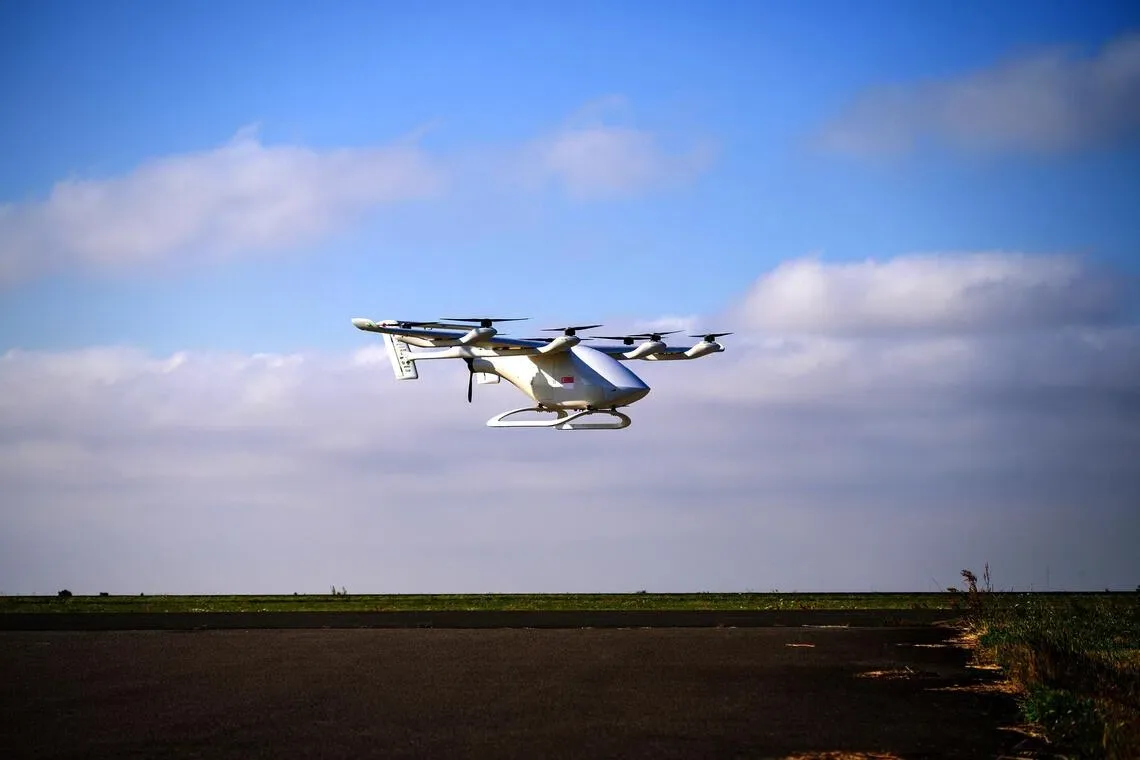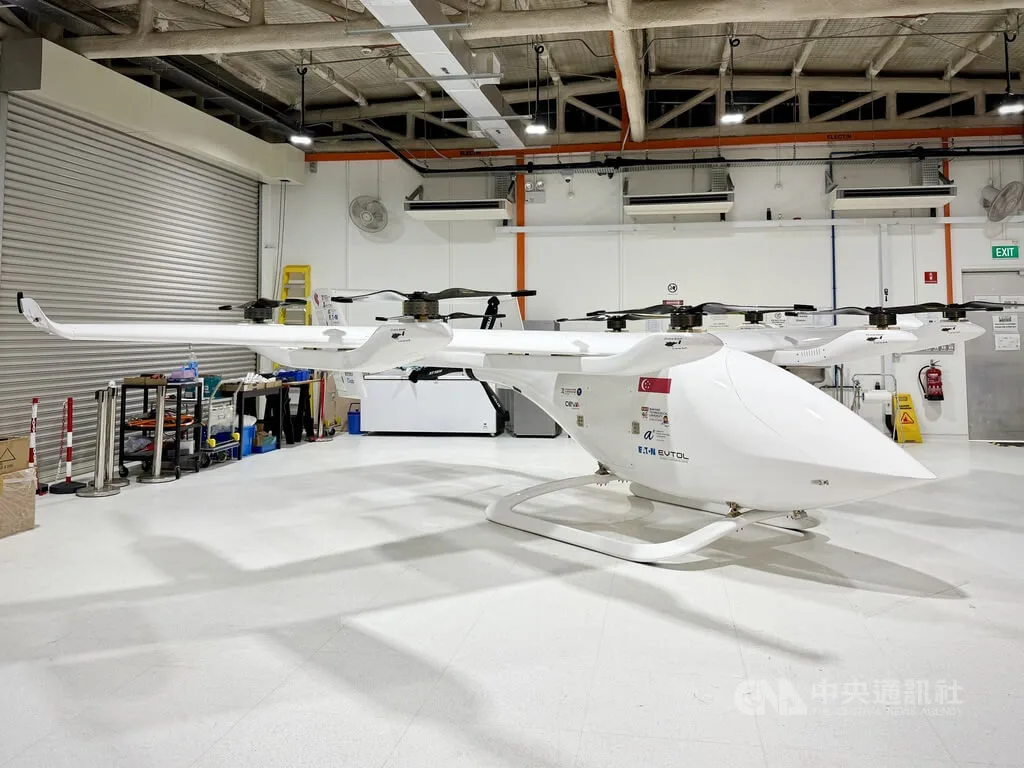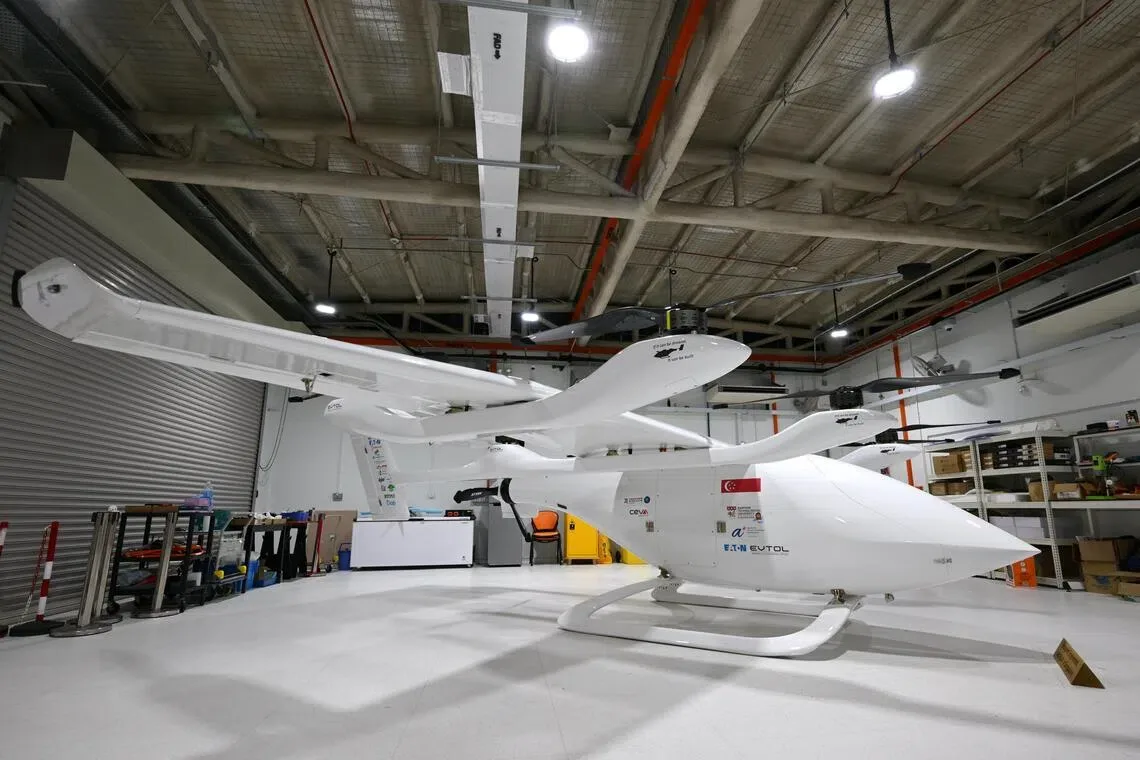
Nanyang Technological University (NTU) in Singapore completed the first phase of flight tests for its electric vertical take-off and landing (eVTOL) prototypes in Cochstedt, Germany [1, 2, 3]. The tests ran over 2½ weeks from July to early August 2026 and involved two unmanned research demonstrators with wingspans of 8 meters and 3 meters respectively [1, 2, 3].
The smaller 3-meter prototype flew a total of two hours, achieving a maximum altitude of 60 meters and speeds of around 120 km/h [1, 2]. The larger 8-meter variant flew 19 flights totaling 42 minutes and reached up to 92 meters in altitude [1, 2]. The tests took place within a 1.2 km by 2.4 km flight zone at the German Aerospace Centre, offering a larger free flight testing space than what is available in Singapore [1, 2].
Near the end of the test period, the larger prototype experienced a hard landing and was damaged. It could not be repaired in time to test forward propulsion capabilities and is being shipped back to Singapore, expected to arrive in October 2026 [1, 2].
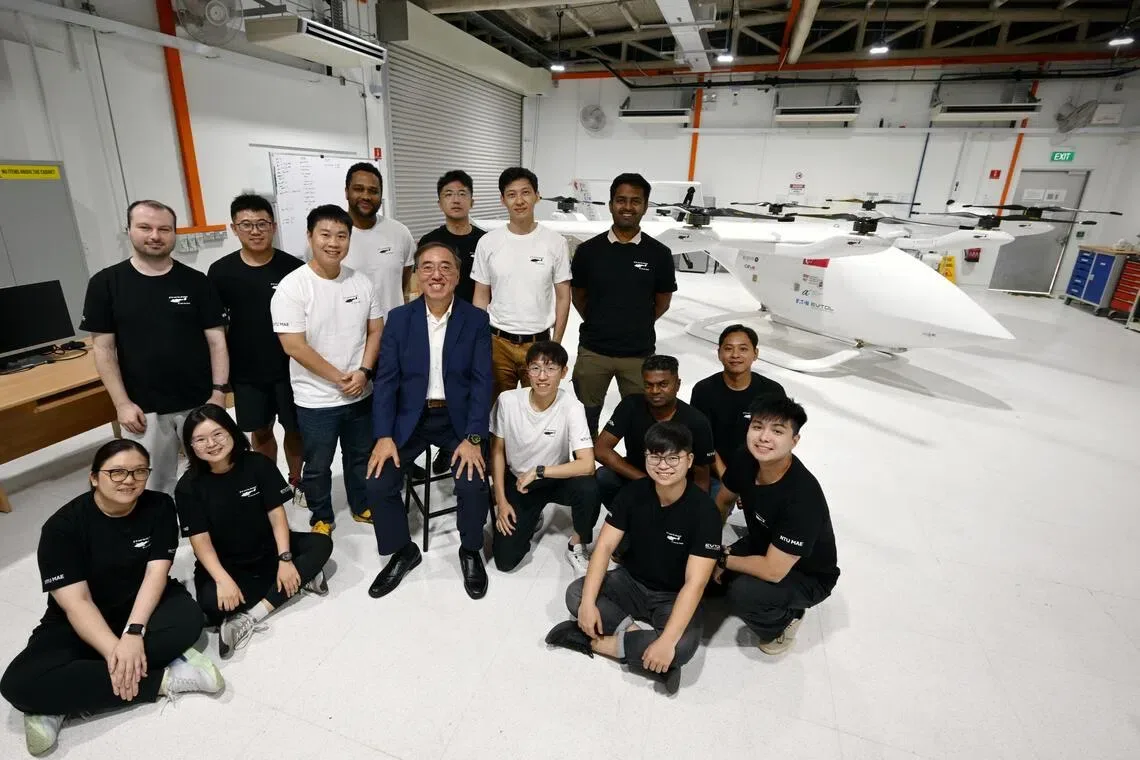
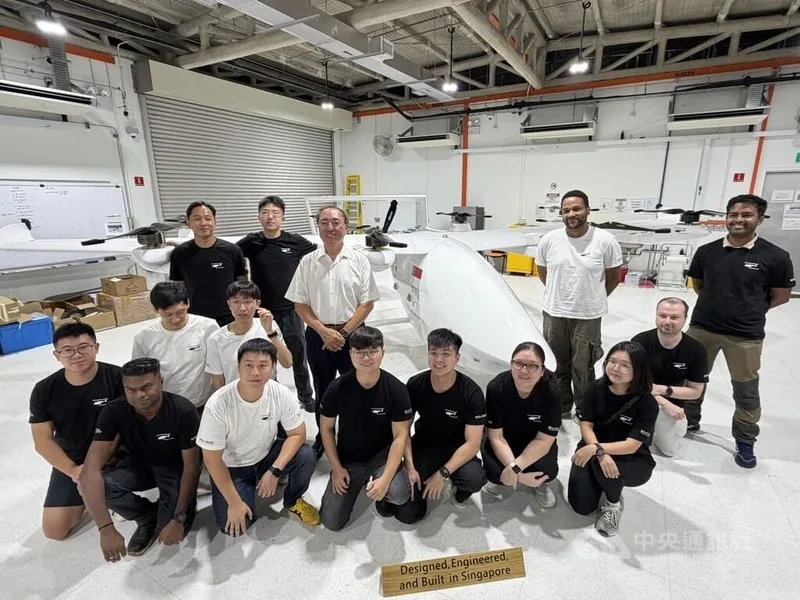
NTU's eVTOL team comprises over 20 students and alumni and is led by Professor James Wang, director of the eVTOL research and innovation centre [1, 2, 3]. Wang called the flight tests successful, adding the team has developed the knowledge to engineer and build eVTOL aircraft in Singapore [1]. He explained the team is exploring hydrogen propulsion and enhanced battery technology to improve aircraft range and flight autonomy [2].
The prototypes are research demonstrators and not designed to carry passengers. NTU aims to develop scalable eVTOL models, including a 14-meter wingspan version capable of carrying five passengers and smaller cargo-specific variants [1, 2, 3, 4]. The technology could serve logistics and urban air mobility needs with applications in ship-to-ship, ship-to-shore, and shore-to-ship freight transport in key maritime corridors like the Strait of Malacca and Singapore Strait [3, 4]. Wang noted the aircraft also have potential in emergency medical services, search and rescue, and law enforcement [3].
Over the past three years, NTU’s program has focused on structural and aerodynamic analysis, detailed design, system testing, and integration to build intellectual property and a systems engineering base to support Singapore’s advanced electric aircraft ambitions [3]. The team has conducted tethered tests at Singapore’s Kranji racecourse but has yet to gain regulatory approval from the Civil Aviation Authority of Singapore for commercial operations [1, 2].
NTU estimates it needs about 975 million SGD in funding from investors and government support to commercialize eVTOL operations in Singapore [1, 2]. The 8-meter wingspan prototype is expected back in Singapore by October 2026 for further development and testing [1, 2].