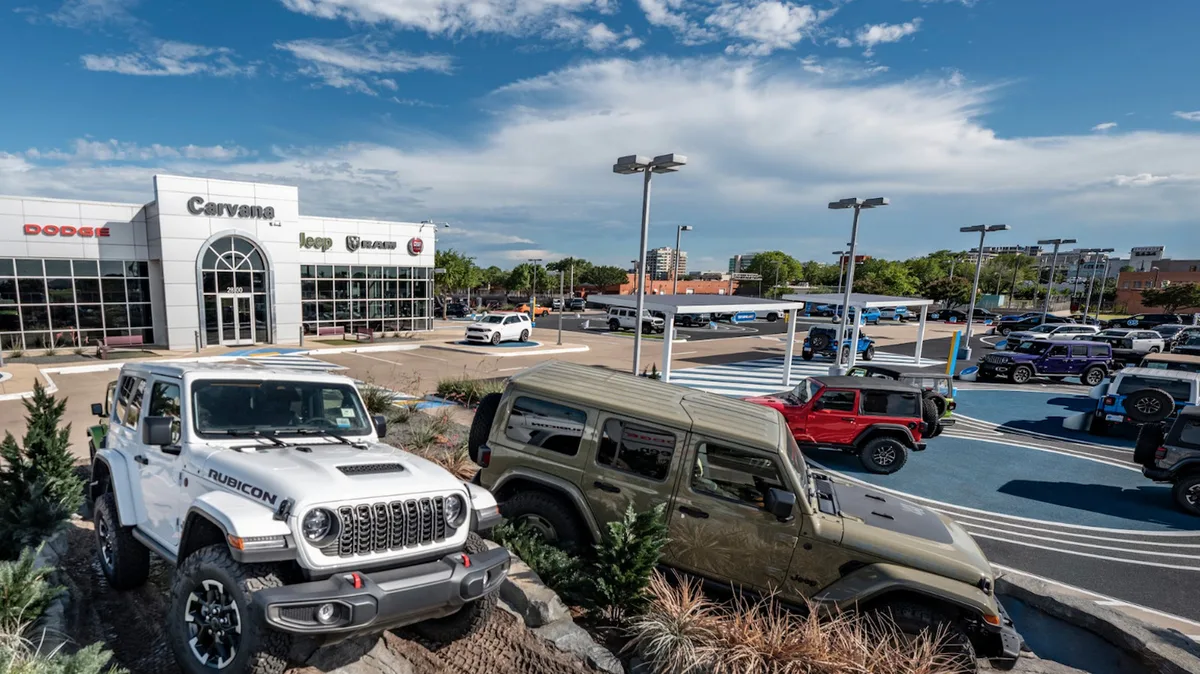
Carvana has shifted its franchised dealerships into centers for vehicle service, test drives, and consumer exploration, while completing all vehicle sales exclusively through its online platform [1, 2]. The company acquired multiple new vehicle franchises from Stellantis brands including Chrysler, Dodge, Jeep, and Ram in markets such as Arizona, California, Texas, Georgia, Ohio, and Massachusetts [1, 2].
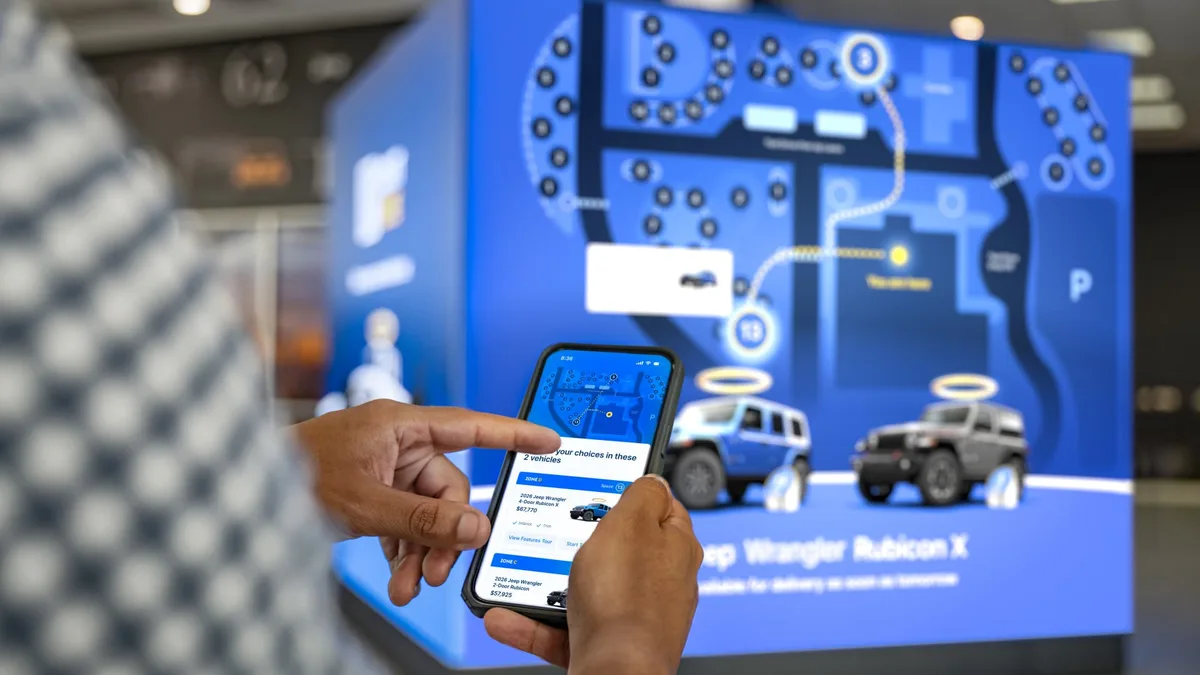
Its Dallas location is the company’s first test drive center and features a novel design. Cars are unlocked and grouped by model, allowing customers to choose vehicles freely. A large LED screen can be controlled via QR code by customers, and staff are present mainly for support rather than traditional in-person sales efforts [2]. Test drives are unsupervised with no hard sell, requiring customers only to provide contact and license details before taking suggested routes [2].
Carvana spent about $171 million on acquiring these Stellantis franchised dealerships, not including its latest purchase in Ohio [1]. The company’s new approach differs from typical franchised dealers, which rely heavily on in-person sales teams to complete deals onsite [1, 2]. Carvana president of special projects Tom Taira said, "Every single car that we sell, whether it's used or new, is online. That's a very inherent difference. Even coming into the store, you're buying it online, and that's a big difference in how people think about it" [1]. He added, "When we got into new cars, we said the only way we're going to make this happen is to ensure that it goes the Carvana way. That we actually sell cars exactly the same way that we do to used car customers. Why break something that already works?" [1]
Carvana aims to grow its share of new vehicle sales and support used vehicle sales through trade-ins at these locations [1, 2]. The company is currently the most valuable U.S. auto retailer, with a market capitalization exceeding $70 billion [1].
Carvana began its franchised dealership expansion by purchasing its first Stellantis store in Arizona in early 2025 [1]. By mid-2026, it had expanded to markets including Sacramento, San Diego, Dallas, Atlanta, Cleveland, and Boston [1]. The Dallas test drive center launched in mid-2026 marked a key step in the rollout of this new retail format [2].