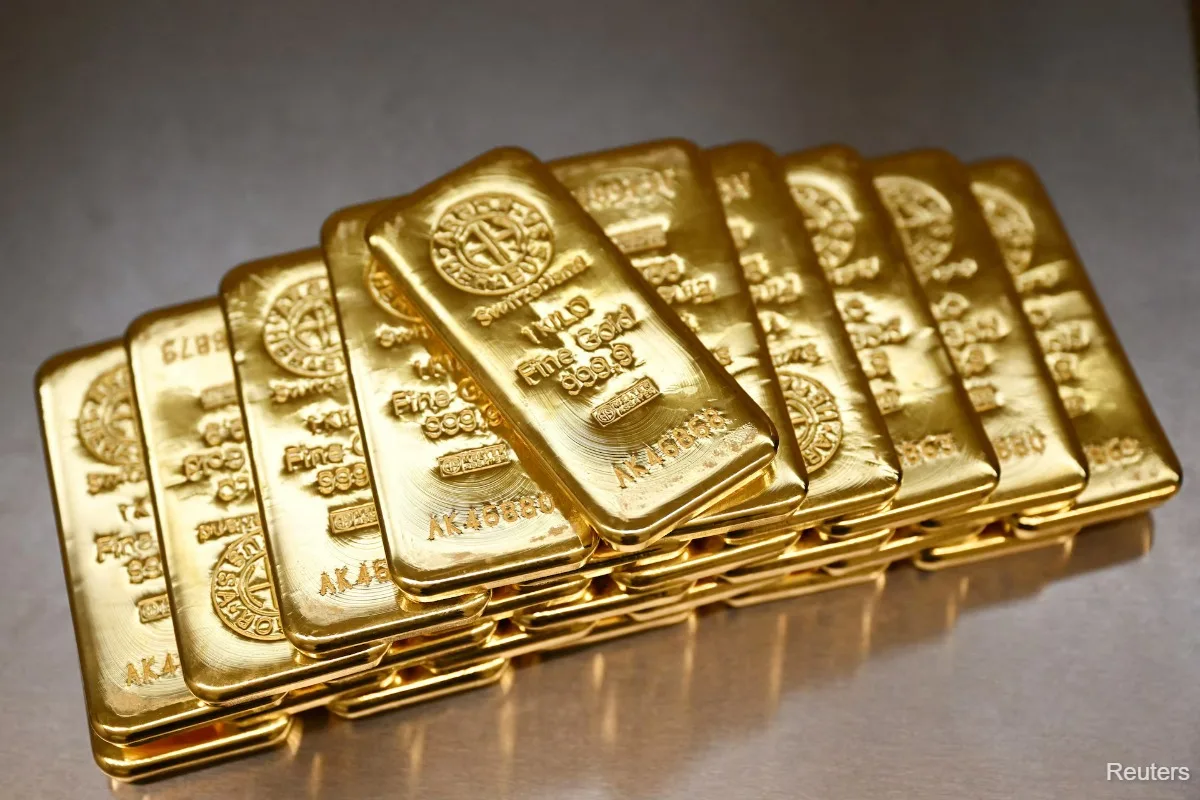
Gold prices rose about 3% over two days around July 21-22, trading near $4,120 an ounce amid dip-buying despite intensified hostilities in the Middle East. On July 22, gold hit a peak near $4,165.87 an ounce as renewed conflict between the US and Iran escalated, with Iran’s Revolutionary Guards striking US military assets across the region and the US responding with nightly attacks on Iranian targets [1, 2] [3, 4, 5, 6].
However, gold prices slipped 0.9% to $4,091.24 per ounce on July 23, pressured by rising oil prices and fears that surging energy costs would fuel US inflation and prompt Federal Reserve rate hikes [7]. Brent crude crossed above $100 per barrel amid Gulf supply disruptions and Middle East tensions, hitting multiweek highs on July 23-24 [1, 7, 8, 5].
On July 24, gold edged lower another 0.2% to $4,037.29 while Brent crude surged 7%, further strengthening expectations for higher US interest rates in the near term [8]. Despite the declines, gold remained largely above the $4,000 level, which analysts say acts as an important support floor. "Markets have shown they are not prepared to give up the US$4,000 level without a fight,” said Nikos Tzabouras, senior market analyst at Tradu.com. He noted that even if the Fed holds rates steady next week as expected, Middle East conflict continues to fuel inflation risks, supporting expectations for tighter monetary policy [7].
Brian Lan, managing director at GoldSilver Central, said, "In the short term, we expect more volatility... gold has been trading between US$3,980 all the way to about US$4,170 and has been stuck this way for weeks. Every time prices hit close to US$4,000 or slightly below, we see that there will be big buyers coming to buy it back up" [8]. Another strategist, Ryan McKay of TD Securities, described the recent rebound as mainly flow-driven dip-buying and said rising energy prices will cap gold’s upside [2].
Meanwhile, the US dollar index stayed broadly steady around 100.7 to 100.9 from July 20-21 as investors weighed Middle East risks and softer US inflation data, according to multiple sources [3, 4, 5, 6]. Jimmy Jean, chief economist at Desjardins, said a significant US dollar depreciation is more likely in 2027, with dollar strength expected to continue over the next few months as inflation remains uncertain [5].
The Federal Reserve is widely expected to keep interest rates unchanged at its upcoming July 2026 meeting but the market prices in a 63-81% chance of a hike in September 2026 [7, 8, 5]. The European Central Bank also held rates steady late July but did not rule out possible hikes in September [7, 8].
Iran-aligned Houthis attacked two Saudi oil tankers in the Red Sea, threatening critical oil supply chokepoints, heightening geopolitical risks [7, 8]. Diplomatic efforts are ongoing with reports of a 10-day ceasefire proposal to Tehran around July 20-21 [5, 6].
The next major event is the US Federal Reserve’s meeting in late July 2026, which will be closely watched for guidance on interest rate policy amid persistent inflation risks and geopolitical uncertainty.