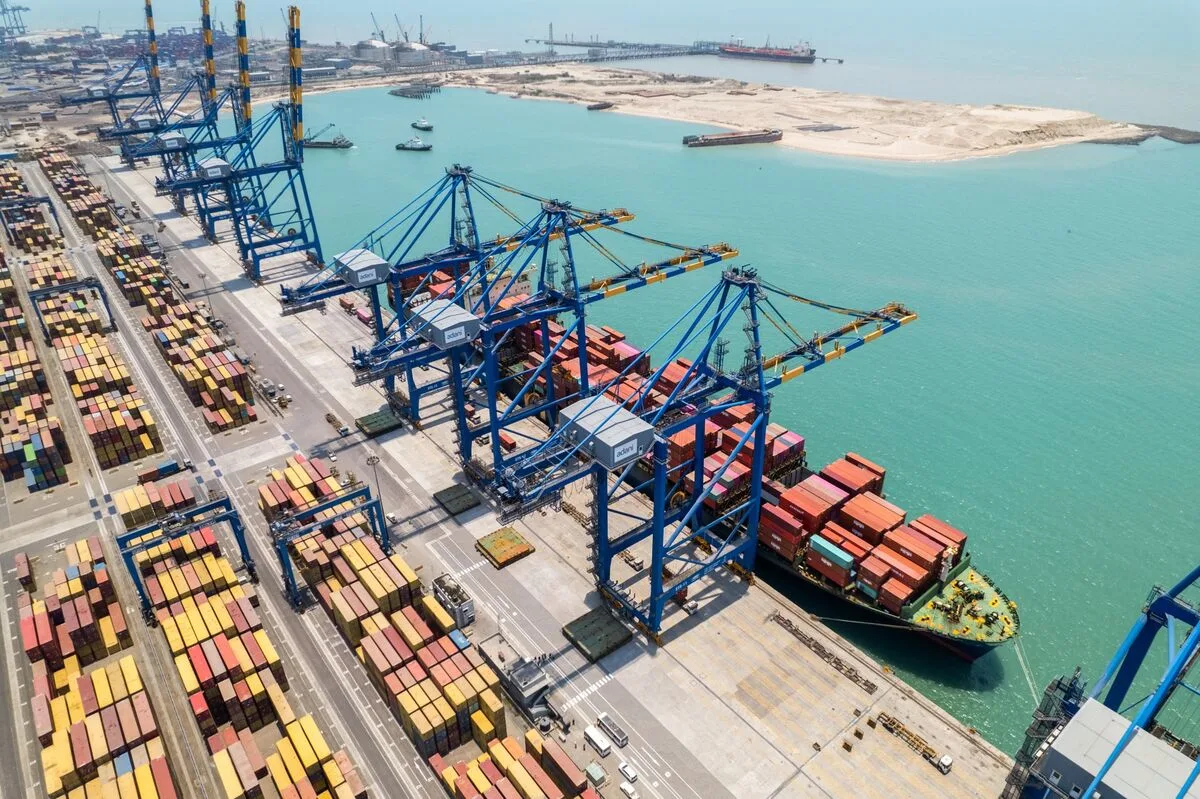
India's trade deficit for May 2026 narrowed marginally to US$28.21 billion from US$28.38 billion in April, according to official data released this week [1]. The deficit, however, exceeded economists' median forecast of US$27.2 billion. [1]
Imports rose 20.6% year-on-year to US$73.41 billion in May, while exports gained 18% to reach a record high of US$45.20 billion for goods shipments [1]. Export growth was led by strong shipments to the US, UK, and Singapore, highlighting sustained demand from key trading partners [1].
Exports to the Middle East continued despite regional disruptions by routing cargo through alternative hubs, mainly ports in Oman, ensuring supply chain continuity [1]. India depends heavily on the Middle East for crude oil, liquefied petroleum gas, and fertiliser imports, with most cargo transiting through the Strait of Hormuz [1].
Officials expressed optimism that the recent interim US-Iran agreement reopening the Strait of Hormuz, which took effect on June 5, would ease pressure on India's energy imports and improve the trade outlook [2, 1]. Commerce Secretary Rajesh Agrawal said, "Many of our problems will go away" if the peace deal holds, adding, "Hope this is a sustained deal that will bring peace in the region." [1]
Agrawal also noted preparations for an upcoming US Trade Representative visit scheduled for June 23-24 aimed at concluding an interim trade pact. "It is a short visit but will be centred around giving final touches to the framework deal and on the larger bilateral trade agreement," he said [1]. The interim trade deal is expected to address ongoing US investigations under Section 301 related to forced labour and excess production capacity concerns. [1]
The narrowing of the trade deficit comes amid rising import costs but also record export performance and evolving geopolitical conditions. The next concrete step is the planned US Trade Representative visit in late June, poised to finalize an interim trade agreement between the two countries.