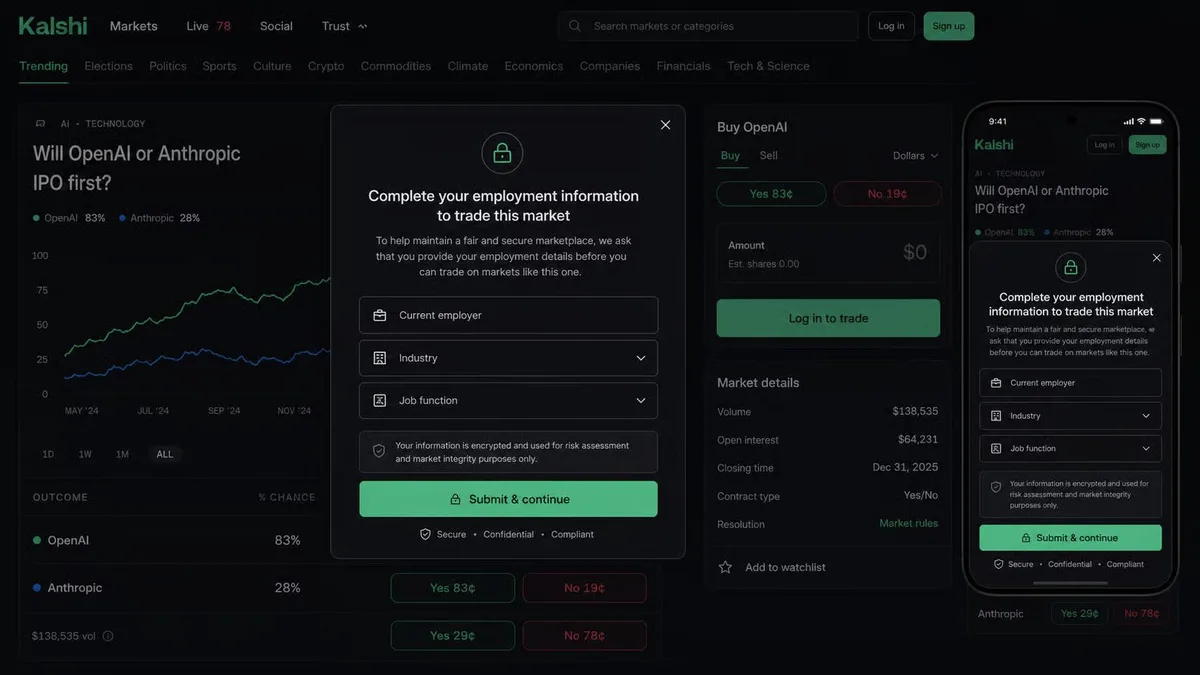
Kalshi introduced employment verification for traders on prediction markets identified as having a higher risk of insider trading or manipulation. The platform collects each trader’s current employer name, industry, and job function before allowing trading to begin on these markets [1, 2].
Alongside employment checks, Kalshi added risk scoring for new markets and whistleblower reporting tools to boost market integrity. These efforts build on existing guardrails that block politicians, political candidates, and college and professional athletes from trading on the platform [1, 2].
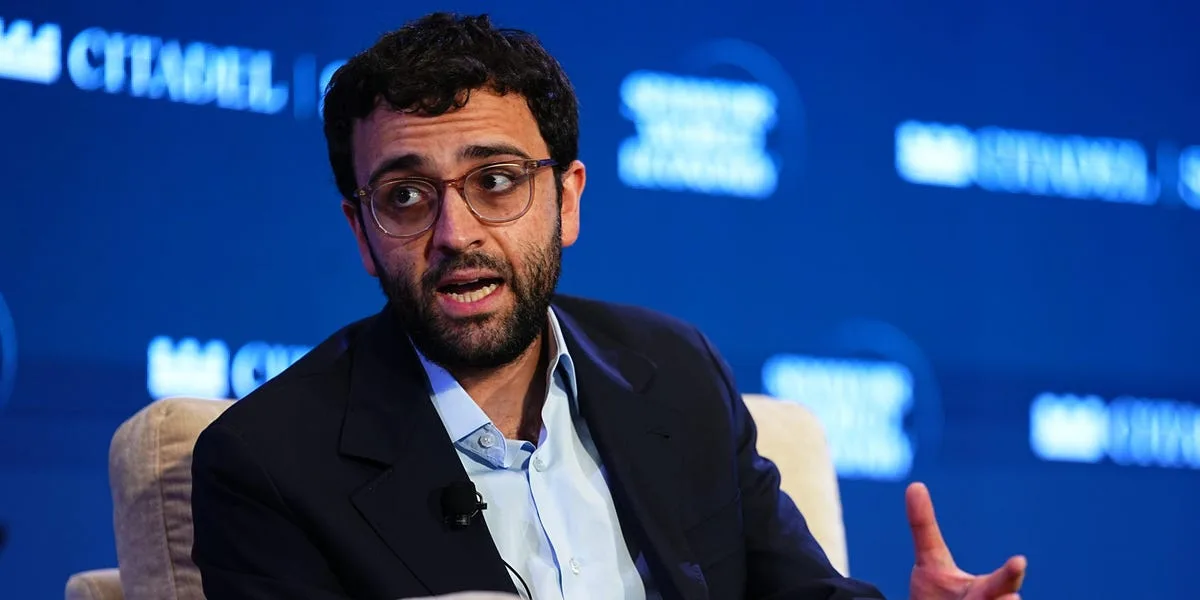
Bobby DeNault, a Kalshi spokesperson, said, "This lets us identify presumptive insiders — people who have material, non-public information about a market's outcome — and screen them out before a trade is ever placed." He emphasized that "Kalshi users [are] the natural first line of defense against abusive behavior." [2]
The announcement came shortly after the US Commodity Futures Trading Commission (CFTC) released a proposed regulatory framework for prediction markets in June 2026 [1]. This regulatory activity follows Minnesota’s decision in May 2026 to propose a statewide ban on prediction markets, signed by Governor Tim Walz [2]. The CFTC responded by suing Minnesota and Gov. Walz, arguing that state law cannot criminalize prediction markets regulated federally [2].
Kalshi's new integrity measures mark a concrete step to address concerns over insider trading risks in a market segment facing increasing regulatory scrutiny. These changes were rolled out by late June 2026, signaling Kalshi’s commitment to transparency and compliance [1, 2].