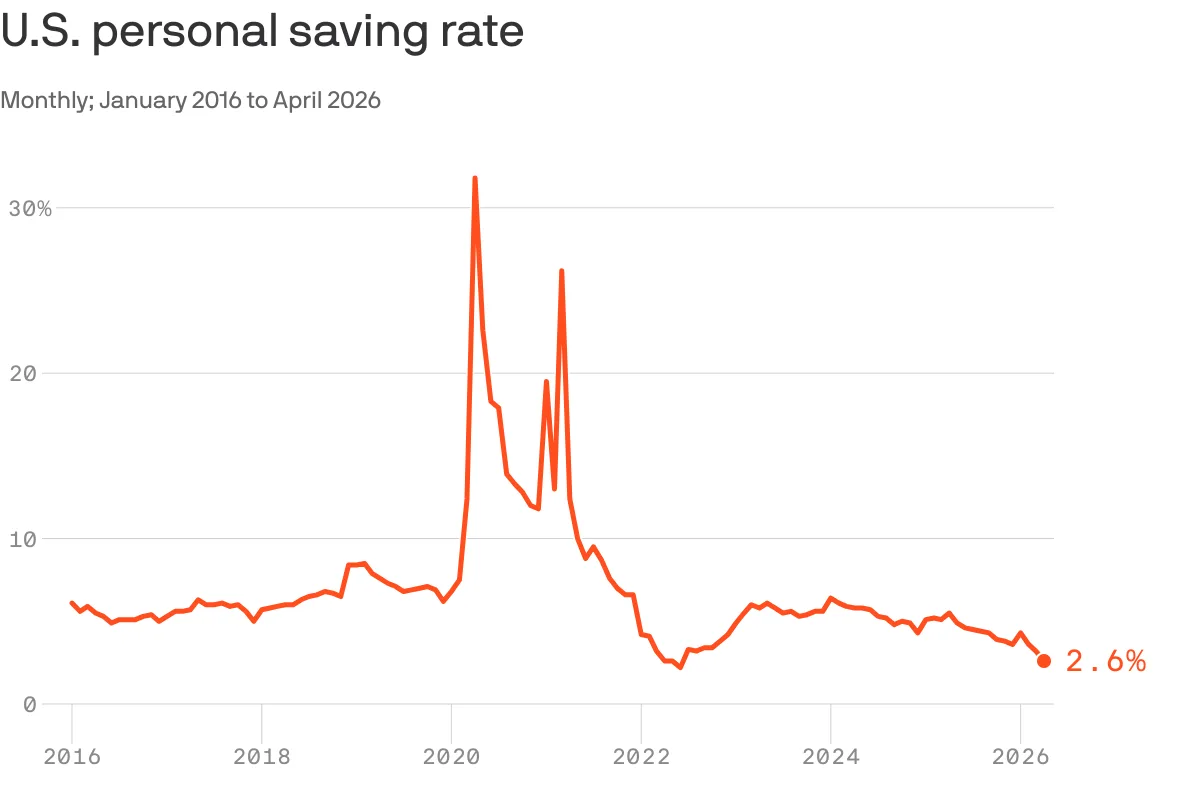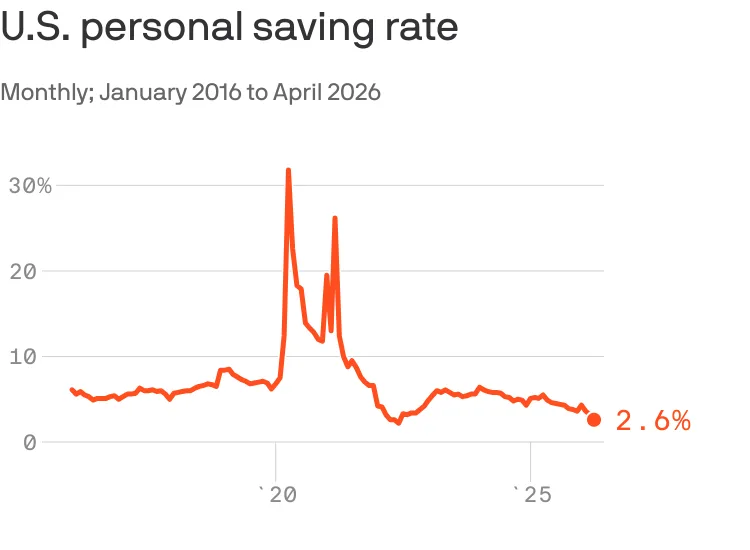
The U.S. personal savings rate fell to 2.6% in April 2026, down from 3.2% in March and 5.8% a year earlier, marking its lowest level since mid-2022 when it was 2.2% in June amid record-high inflation [1, 2]. Heather Long, chief economist at Navy Federal Credit Union, said, "I thought 2.6% for April was a typo at first. It is so low. Outside of the revenge spend era of 2022, the personal savings rate has almost never been this low in the past 65 years" [1].
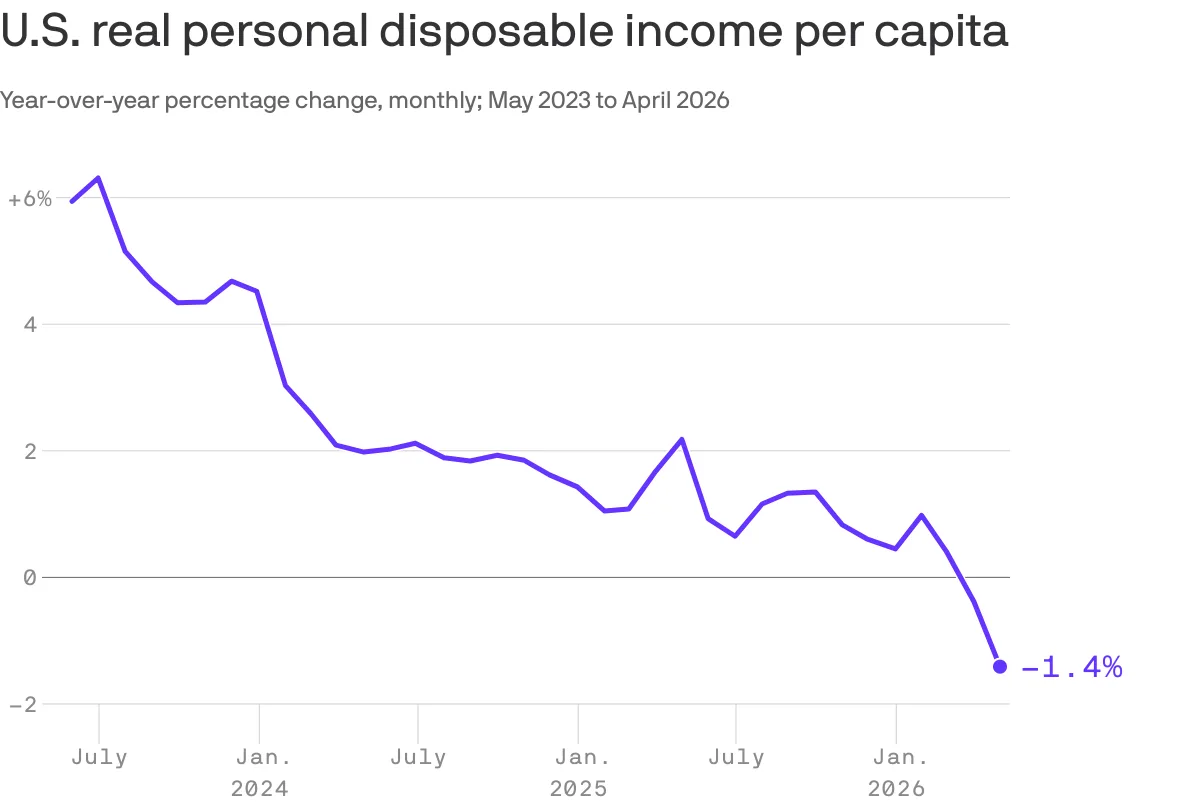
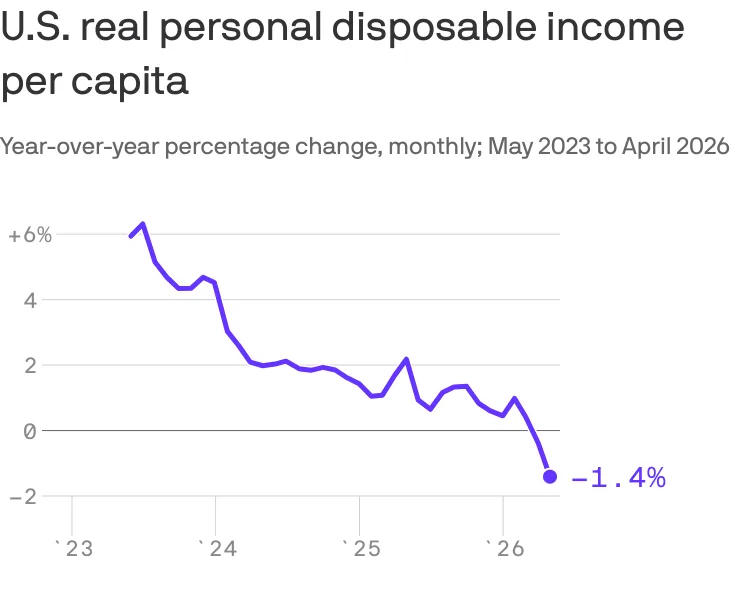
Inflation rose 3.8% year-over-year in April 2026, the highest since May 2023, while average hourly wages increased 3.6% year-over-year, failing to keep pace with rising prices [1]. As Elizabeth Renter, senior economist at NerdWallet, observed, "While prices are rising faster than comfortable, incomes are not, putting consumers in an uncomfortable spot" [2].
Consumer spending increased by 0.5% in April despite a 0.1% decline in disposable personal income, indicating households are drawing down savings or using credit to maintain spending levels [2]. Higher gasoline and energy prices, driven by the ongoing war in Iran, have added further strain to household budgets [1, 2]. Long noted, "Even with tax cuts, paychecks aren't keeping up with inflation right now. It's more than just high gas prices. It's rising electricity, healthcare and food prices. These are the basics that people must pay. It's harder to skimp on these items" [1].
Credit usage also rose, with 37% of Americans reporting in May 2026 that they need to use credit cards or loans to cover some expenses [1]. Additionally, more workers took loans from their 401(k) retirement accounts in the first quarter of 2026, with 19.2% having an outstanding loan, up from previous periods [1].
Fed Governor Lisa Cook said plainly, "Inflation is clearly moving in the wrong direction" [2]. Renter warned that "Rising prices, sluggish income and economic uncertainty could set the stage for a broader pullback in consumer spending and therefore economic growth" [2].
Heather Long cautioned that many consumers still have enough cash for now but will need to tighten budgets later in the year as tax refunds are spent and no additional income increases are expected for most households [1].