Over 140 companies including Visa, Mastercard, Coinbase, BlackRock, and Alphabet formed the Open Standard consortium to introduce Open USD, a new US dollar-pegged stablecoin, the group announced on June 30, 2026 [1, 2, 3]. Open USD is designed as an open, low-cost, high-throughput, and neutral stablecoin network suitable for enterprise use and global digital payments [1, 2, 3].
Zach Abrams, founder and CEO of Open Standard, said existing stablecoins have strengths but businesses need "something that's open, low-cost, high-throughput, broadly accessible and aligned to their interests" for wide adoption [2]. He added Open USD will allow consortium members to mint and redeem tokens without fees or transaction volume limits, with yield from reserve assets shared among partners instead of kept solely by one issuer [1]. Governance of Open USD will be managed by a board composed of consortium companies rather than a single issuer firm [1].
BlackRock’s Samara Cohen called the effort "a constructive step towards giving enterprises more options" in stablecoin choices [1]. The consortium aims to create "an open shared digital payment infrastructure not controlled by any single company" [1, 3].
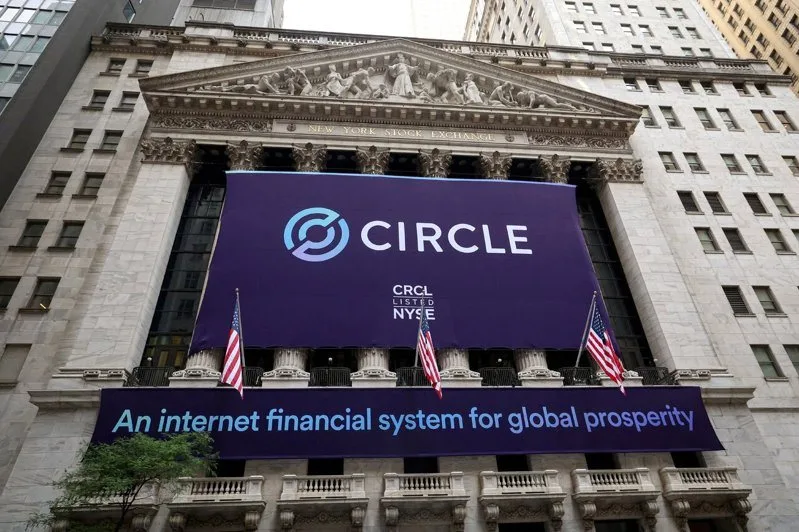
Despite the announcement, Circle’s stock dropped about 17%, reaching its lowest level since February 2026 [1]. Circle co-founder and CEO Jeremy Allaire reaffirmed USDC’s position as "the most trusted, widely adopted and institutionally appropriate stablecoin in the world" [1].
The initiative follows the 2025 passage of the GENIUS Act, signed by former President Trump, which clarified the US regulatory environment for stablecoins by requiring 1:1 reserve backing and consumer protections [2, 3]. Currently, stablecoins are predominantly used in crypto trading, but consortium members plan to broaden their use for enterprise payments and cross-border transfers [2, 3].
The launch of Open USD is planned later in 2026 [1, 2, 3]. The new stablecoin is positioned to tap into the projected $1.5 trillion stablecoin market by 2030, according to estimates cited by the consortium [1].